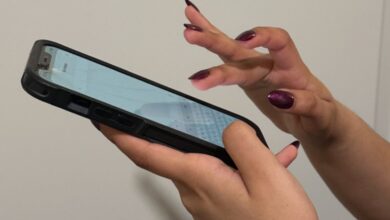
Clear Nail Polish Turns Fingernails into Touchscreen Styluses

▼ Summary
– A student and professor developed a clear, electrically conductive nail polish that allows fingernails to activate capacitive touchscreens.
– The polish is designed to help people with long nails, calluses, or dry skin who struggle to use standard touchscreen devices.
– Its conductivity works through a chemical formula using additives like taurine, enabling proton exchange that mimics human skin.
– The current prototype is a proof of concept but lacks durability, as it loses effectiveness too quickly for regular daily use.
– The inventors have filed a provisional patent and are refining the formula to improve its longevity and non-toxic properties.
A new development in chemistry could soon transform a simple cosmetic into a vital accessibility tool. Researchers have created a clear nail polish that makes fingernails conductive, effectively turning them into functional touchscreen styluses. This innovation, presented at the American Chemical Society’s annual meeting, promises to help individuals who struggle with capacitive screens due to long nails, calloused fingertips, or dry skin.
For many, the inability to reliably use a smartphone or tablet is a daily frustration. Manasi Desai, a student at Centenary College of Louisiana, identified this problem and partnered with her research supervisor, Dr. Joshua Lawrence, to find a solution. Their collaborative effort focused on developing a polish that could bridge the gap for people like phlebotomists with long nails or carpenters with thick calluses, whose fingertips often fail to register on touchscreens.
The team pursued a novel chemical approach rather than relying on metallic additives. They experimented with over fifty different compounds before identifying a successful combination of taurine and ethanolamine. This formula creates a conductive surface through a process of proton exchange, mimicking the ionic conductivity of human skin. “We think that the materials we are producing are working via protons hopping from acidic to basic groups,” Dr. Lawrence explained. This mechanism allows a painted nail to interact with a screen’s electric field just like a fingertip.
A major advantage of this invention is its versatility and cosmetic appeal. The polish is transparent and can be applied over any manicure or bare nails. “Our final, clear polish could be put over any manicure or even bare nails, which could help people with calluses on their fingertips too,” Desai noted. This design ensures the product offers both a lifestyle benefit and an aesthetic one, removing the stigma sometimes associated with assistive devices.
Despite the promising proof of concept, significant challenges remain before the polish is market-ready. The current formulations lack the necessary durability for regular use, losing their conductive properties too quickly. The research team is actively working to improve the polish’s longevity and ensure it is non-toxic. “All our formulations lose efficacy too quickly,” Lawrence admitted. “We want them to work for days or weeks, minimum.”
The researchers have filed a provisional patent for their conductive nail polish, protecting the invention as development continues. While more work is needed to create a durable, consumer-ready product, this innovation represents a meaningful step toward greater touchscreen accessibility. It highlights how creative scientific inquiry can address everyday barriers, potentially improving digital interaction for countless individuals.
(Source: Indiandefencereview.com)