Lululemon Invests in Epoch Biodesign for Recycled Apparel
▼ Summary
– The oil and gas industry sees future profits in plastics, but Epoch Biodesign aims to disrupt this by recycling plastic waste.
– Epoch uses a series of enzymes, not microbes, to break down waste textiles into plastic’s basic building blocks, or monomers.
– The company’s initial focus is on recycling nylon 6,6, a durable synthetic fiber used in products from clothing to airbags.
– Epoch’s process uses waste fabric as a stable-priced feedstock, avoiding the price volatility of petroleum-based precursors.
– The company raised $12 million from investors including Lululemon to build a demonstration facility, targeting commercial production by 2028.
While the oil and gas sector increasingly views plastics as a future profit center, innovators like Jacob Nathan are building an alternative model. His company, Epoch Biodesign, is pioneering a method to turn plastic waste back into virgin-quality materials, starting with discarded textiles. Nathan, who began exploring plastic breakdown in high school, now leads a firm using specialized enzymes to dismantle synthetic waste at a molecular level.
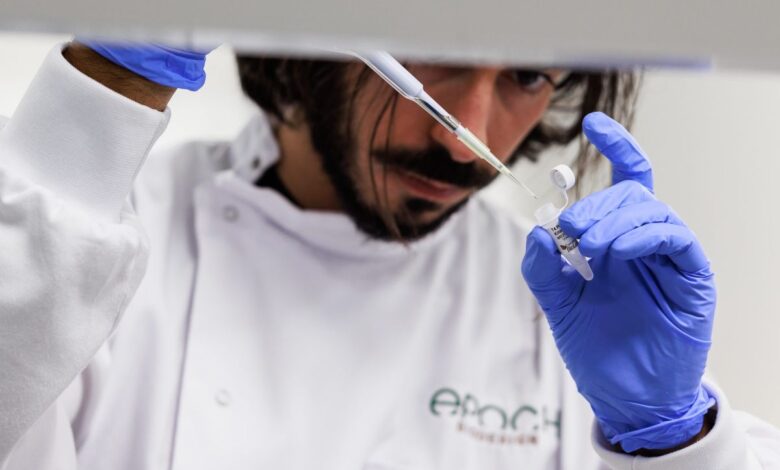
Epoch’s core technology focuses on breaking down both pre- and post-consumer plastic into its fundamental chemical monomers. These are the essential building blocks for creating new plastic. The company harnesses the power of enzymes, the workhorse molecules of biology, but sources them industrially rather than using live microbes. This approach provides greater control and scalability. Through a cascade of enzymatic treatments, the process can recover over 90% of the target monomers, leaving only dyes as a separate byproduct.
The initial application is for nylon 6,6, a durable synthetic found in apparel, automotive airbags, carpets, and climbing gear. Nathan notes this material remains irreplaceable for many high-performance uses. The business case is strengthened by recent market volatility. Precursor prices for nylon and similar materials have spiked dramatically, sometimes by 150%. By using waste fabric as its primary feedstock, Epoch decouples production from fossil fuel extraction and its associated price instability.
This vision has attracted significant investment. Apparel leader Lululemon, a major producer of plastic-based clothing, recently joined a $12 million funding round. Other participants included Exantia, Happiness Capital, Kompas VC, and Leitmotif. The capital will support a demonstration plant near Imperial College London, with a full-scale commercial facility slated for 2028. That site is projected to produce 20,000 metric tons of monomer annually.
Looking ahead, Nathan confirms the enzymatic platform is adaptable. While nylon 6,6 is the first target for commercial maturity, the technology can be repurposed for different plastics. The company is already developing processes for other materials, signaling a broader ambition to redefine the lifecycle of synthetic polymers.
(Source: TechCrunch)