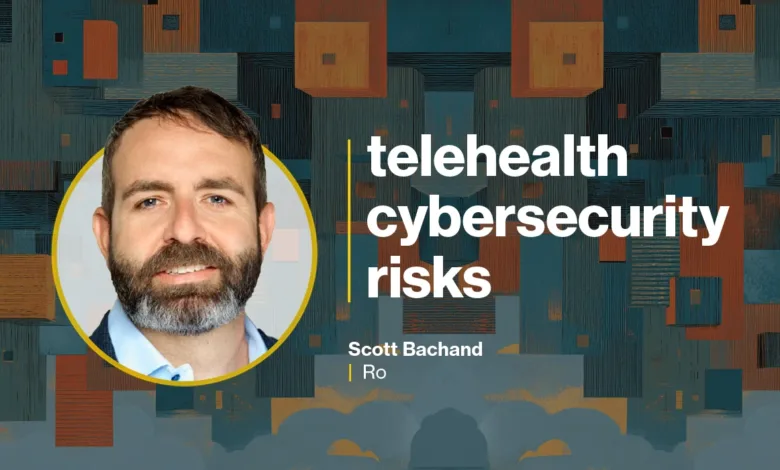
Ro’s CISO: Securing Telehealth Data Flows
▼ Summary
– Telehealth creates a constant, complex flow of sensitive patient data across cloud, mobile, and third-party platforms, increasing security risks.
– A foundational security challenge is the lack of universal, exacting data classification, which is essential for prioritizing protection and applying effective controls.
– Regulatory frameworks like HIPAA lag behind technology, creating gray areas as telehealth uses modern tools like mobile apps, cloud services, and AI that handle sensitive data.
– A future-proof security stack requires zero-trust access, intelligent data classifiers, and specific controls for shadow AI and evolving email threats.
– Adopting standards for data (like HL7/FHIR) and security (like OCSF and NIST 800-53) is key to achieving interoperability and cohesive defense across a fragmented vendor landscape.
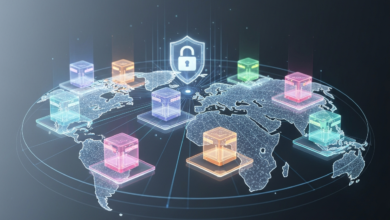
The rapid expansion of telehealth has fundamentally transformed how patient data moves, creating a dynamic environment where sensitive information flows constantly across cloud, mobile, and third-party platforms. This shift demands a security strategy that is equally dynamic, moving beyond static compliance to ensure continuous protection of patient privacy. The core challenge lies in managing this complexity without hindering the innovation that improves healthcare access and outcomes.
A primary vulnerability in this new data chain is the frequent lack of rigorous and universal data classification. When organizations cannot accurately identify what constitutes their most sensitive information, they cannot apply appropriate protections as that data traverses diverse systems. The idea of a single, all-encompassing data loss prevention solution is a myth; the modern reality requires precise classification so that tailored controls can be validated for each application and software partner. Mature programs must actively and continuously hunt for data across their entire ecosystem, because every new connection point introduces risk. The objective is continual assurance, not just checking a compliance box.
While regulations like HIPAA provide a critical foundation, they often lag behind the technological tools that define telehealth, such as mobile apps and cloud-native services. This creates a gray area where data may not fit the classic definition of protected health information yet remains highly sensitive. The future likely calls for a more flexible, principle-driven regulatory model that safeguards privacy without stifling the innovation that benefits patients. In anticipation of new mandates, leading organizations are investing deeply in data visibility, mapping exactly what information they have, where it resides, and every vendor that touches it. This foundational work enables proactive governance and cross-functional collaboration, embedding privacy directly into daily workflows.
Given the naturally fragmented vendor landscape driven by rapid innovation, standardization is crucial. Existing health data protocols like HL7 and FHIR provide a structural foundation. Vendors can build on this by adopting frameworks like the Open Cybersecurity Schema Framework (OCSF) for unified threat data and NIST 800-53 for control baselines. This standards-based approach transforms security from a collection of isolated tools into a cohesive, interoperable defense system that maintains visibility and governance as data moves.
Looking ahead, several capabilities are non-negotiable for a robust telehealth security posture. Zero trust access, with continuous verification of every user and device, must be standard. This should be paired with intelligent, data-centric classifiers that tag health information and trigger context-aware security policies based on sensitivity. Furthermore, organizations require robust shadow AI controls. The risk is no longer just new AI websites; it’s legacy vendors quietly adding generative AI features to existing software, potentially processing sensitive data without security review. Continuous monitoring is essential to detect and manage these embedded capabilities.
Finally, security teams must not overlook established channels like email, a persistent major vector for breaches. The future stack should leverage AI not as a black box, but as a detection engineer that learns an organization’s unique communication patterns. By analyzing behavioral cues like sentiment and relationship strength, such systems can spot novel, socially-engineered attacks that appear technically safe. This tailored intelligence must then integrate seamlessly with identity and response systems to take immediate action. In telehealth, protecting the patient experience means building security that is both deeply adaptive and seamlessly integrated.
(Source: HelpNet Security)