Bluesky’s ‘Privacy-First’ Contact Import: Here’s How It Works
▼ Summary
– The “Find Friends” feature requires mutual participation, meaning both users must have each other’s contact info and have opted in for a match to occur.
– Users must first verify ownership of their phone number to prevent bad actors from uploading random numbers to gather information.
– Contact data is protected using hashed pairs of phone numbers, making it extremely difficult to reverse-engineer, and encryption is tied to a separate hardware security key.
– Users can delete their uploaded contacts and opt out of the feature entirely at any time if they change their mind.
– If a user never uses the feature, they will not be findable through it, and others cannot look them up unless mutual contact sharing has occurred.
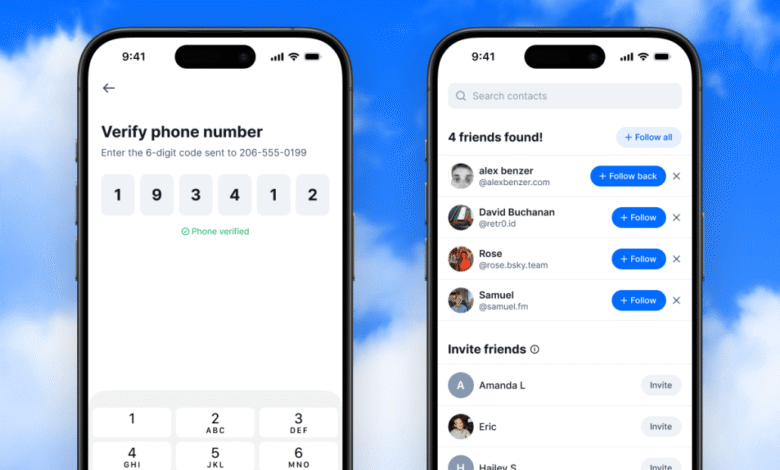
Finding people you know on a new social platform can be a challenge, but Bluesky’s “Find Friends” feature aims to make it easier while prioritizing user privacy. This contact import tool is designed with a multi-layered approach to security, ensuring you maintain control over your personal information and connections. The system operates on a principle of mutual consent, meaning no one can discover you through it without your active participation.
The process only functions when both individuals are involved. You will only be matched with another user if you have each other’s phone numbers saved in your respective device contacts and you have both enabled the Find Friends feature. If you choose never to use this option, you remain completely invisible to searches through this method. For instance, a colleague cannot look you up unless you have also uploaded their contact information from your own phone.
A critical first step involves verifying your ownership of your phone number. Before any matching occurs, you must confirm you control the number you provide. This verification step acts as a barrier, preventing malicious actors from uploading random numbers to probe for information about who is using the service.
Bluesky states that your contact data receives robust protection, even in a worst-case scenario. The company explains that phone numbers are not stored in plain text. Instead, they are saved as cryptographically hashed pairs, a scrambled combination of your number and each contact’s number. This technical measure makes the data extraordinarily difficult to decipher or reverse-engineer. Furthermore, this encryption is linked to a hardware security key that is stored separately from the main user database, adding an extra layer of defense.
Ultimately, you retain the power to manage your data. If you reconsider using the feature, you have the option to delete your uploaded contacts at any time and opt out of the Find Friends system completely. This ensures you can withdraw your information and stop participating whenever you wish.
(Source: The Verge)