Satellite Constellations Threaten Future Space Telescopes
▼ Summary
– Planned satellite constellations like Starlink will significantly interfere with upcoming orbital telescopes, with one proposed observatory facing nearly 100 satellite tracks per exposure.
– Measures intended to reduce the impact on ground-based telescopes could actually worsen the interference for space-based observatories.
– The rapid growth of large satellite constellations, driven by lower launch costs, is a new and serious threat to astronomy.
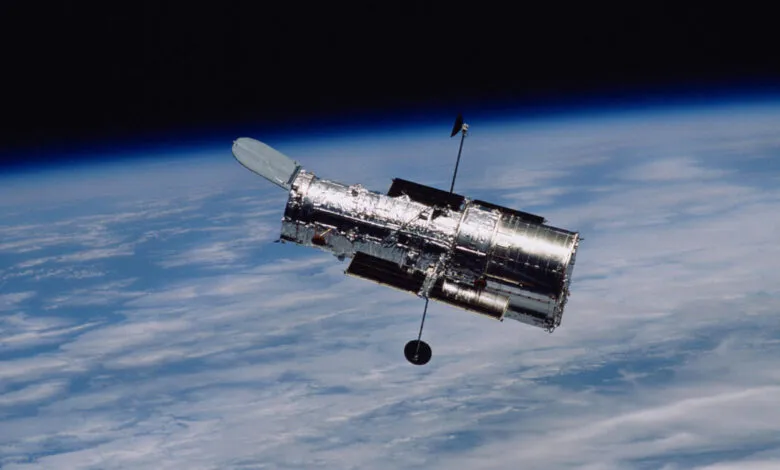
– Even space-based telescopes like Hubble are affected, with over 4% of recent images now containing satellite tracks.
– The problem is projected to intensify, as current satellites represent only about 3% of the total expected to be in orbit within a decade.
The rapid expansion of satellite constellations, driven by companies like SpaceX, is creating a new and significant challenge for space-based astronomy. While the impact on ground-based observatories has been widely discussed, a new analysis reveals that future orbital telescopes are also at serious risk, with some missions potentially seeing their images marred by nearly a hundred satellite streaks in every single exposure. This interference threatens to degrade the quality of scientific data collected from orbit, a problem previously thought to be minimal for hardware above the atmosphere.
A team of NASA astronomers has examined the issue, finding that the current population of satellites represents a mere fraction of what is planned. Based on regulatory filings, they project that today’s numbers could grow by over thirty times within the next decade if all proposed constellations launch. This massive influx will not be confined to low orbits; many new satellites will operate at altitudes that directly intersect the lines of sight for crucial space telescopes. Even the venerable Hubble Space Telescope has not been immune, with recent data showing that over four percent of its images now contain the telltale tracks of satellites, a stark increase from earlier in its mission.
Ironically, some mitigation strategies designed to protect ground-based observations could exacerbate the problem for instruments in space. Techniques like applying special dark coatings to satellites or angling their solar panels can reduce their brightness as seen from Earth, but these same satellites may remain glaringly bright from the perspective of an orbiting telescope. This creates a complex dilemma where solving one aspect of the interference inadvertently worsens another.
It is important to note that not all space telescopes face this threat. Observatories positioned far from Earth, such as the James Webb Space Telescope at the Sun-Earth Lagrange point, operate in a region free from this orbital congestion. However, these distant missions come with their own set of constraints, including exceptionally high launch costs and an inability to receive the kind of servicing missions that have famously extended Hubble’s life. They represent a valuable but limited and expensive alternative.
The core of the issue lies in the sheer scale of planned expansion. Current constellations like Starlink are just the beginning, with numerous competitors preparing their own fleets. This projected growth means that for certain proposed observatories, particularly those with wide-field cameras designed to survey large swaths of the sky, satellite streaks could become a dominant feature, not a rare nuisance. Astronomers are now forced to consider this pervasive interference in the design and planning of future missions, potentially requiring complex new software to identify and remove these artifacts from scientific data, a process that is not always perfect and can result in permanent data loss.
The findings underscore an urgent need for coordinated dialogue between the astronomical community, satellite operators, and regulators. Without proactive measures and potential operational agreements, the clarity of our view from space, a vantage point that has revolutionized our understanding of the cosmos, faces a new and growing layer of obstruction. The challenge is to balance the undeniable benefits of global satellite connectivity with the preservation of our ability to explore the universe.
(Source: Ars Technica)