Apple Killed Netbooks. Is a Comeback Next?

▼ Summary
– Apple is rumored to be developing a low-cost MacBook, potentially priced around $599, marking a shift from its premium market focus.
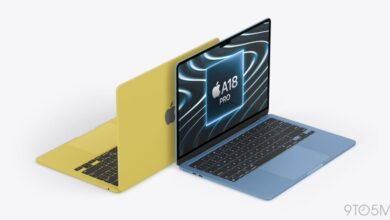
– The laptop would feature a smaller screen, lower resolution, and a new design built around an iPhone processor like the A18 or A19 chip.
– This concept resembles netbooks from the late 2000s, which prioritized portability, battery life, and low prices but were often underpowered.
– Netbooks declined due to poor performance, rising prices, and competition from iPads and Chromebooks, which better handled web-based tasks.
– Apple’s affordable MacBook may revive the netbook idea with a laptop form factor for users who prefer it over tablet-keyboard combinations.
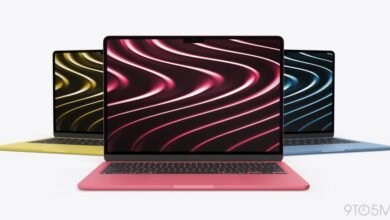
Speculation is mounting that Apple may be preparing to launch a surprisingly affordable MacBook, potentially priced around $599. This move would mark a significant departure for a brand synonymous with premium technology, aiming to capture a broader audience without sacrificing its core design principles. Rather than repackaging existing components, the company is reportedly engineering a completely new, smaller laptop built around an iPhone-derived processor.
This device is expected to feature a lower-resolution display and a fresh chassis design. The heart of the machine could be a variant of the A19 chip found in current iPhones, though some analysts have suggested it might utilize the previous generation A18 processor. The concept of a compact, budget-friendly laptop running on an ultra-efficient mobile chip evokes a strong sense of déjà vu, harkening back to the era of netbooks.
Netbooks first appeared during a pivotal shift toward web-centric computing in the late 2000s. They were defined by an uncompromising focus on portability, long battery life, and extremely low prices. The trailblazer, the ASUS Eee PC, was available with either a 7-inch or 10-inch screen and was initially powered by an Intel Celeron M processor. To manage thermals and power in such a small device, ASUS famously underclocked that CPU to a mere 630 MHz.
Intel responded to this new product category by creating its Atom line of processors. These chips were Intel’s strategic counter to the rising influence of ARM architecture and later became the foundation for its own mobile computing ventures. This approach is essentially the inverse of Apple’s strategy, which successfully scaled its mobile A-series chips upward to power capable laptops. Now, Apple appears to be circling back to a mobile-first philosophy for a new class of portable computer.
The netbook’s reign was ultimately short-lived. A primary reason for their downfall was that most models offered a mediocre user experience. While a basic 7-inch Eee PC could be had for roughly $200, more capable versions like the HP Mini 210 HD approached $385 by 2010. When adjusted for today’s dollars, that price nears $580. As the cost of full-featured laptops began to drop, the value proposition of netbooks quickly eroded.
However, the two most significant factors that sealed the netbook’s fate were the concurrent rise of the Chromebook and, most notably, the iPad. Launched in 2010, the iPad immediately began cannibalizing the netbook market. By 2012, tablets had surpassed netbooks in popularity, and by the following year, the netbook category was effectively extinct. The iPad excelled at the very tasks netbooks were built for, web browsing, email, and social media, and when paired with a Bluetooth keyboard, it offered a passable productivity experience for many users.
With the netbook era firmly in the past, Apple’s rumored budget MacBook seems to be drawing inspiration from that same playbook. For users who find the tablet-and-keyboard workflow unsatisfactory, this new device would provide a traditional laptop form factor in a highly portable package.
Although the final screen size remains unknown, it is confirmed to be smaller than the 13.6-inch MacBook Air. This could mean a return to a 13.3-inch display, or perhaps Apple will revisit the 12-inch or even 11-inch dimensions of its past models. Such a compact size would firmly place it in what was once considered netbook territory.
Combining this smaller chassis with a mobile System-on-a-Chip (SoC) creates a machine designed for everyday tasks and web browsing with exceptional efficiency, though it will not be suited for demanding work like video editing or high-end gaming. This description closely mirrors the original netbook concept. While Apple would never use the term “netbook” for its new product, by reviving the idea under a different name, it might just make the affordable, ultra-portable laptop cool again.
(Source: The Verge)