Ploopy’s Tiny Open-Source Trackball Gets a New Button
▼ Summary
– Ploopy announced the Nano 2, an updated ultra-compact trackball with a new button, improved performance, and a USB-C port replacing the original USB-B.
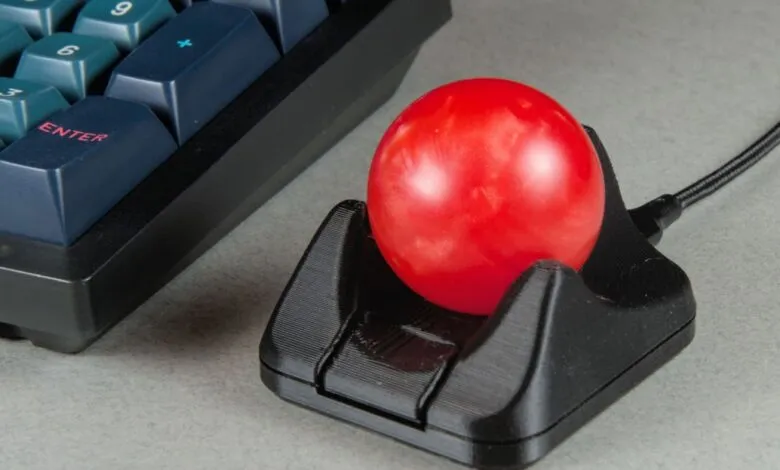
– The Nano 2 is designed for a “pure cursor experience” to complement split keyboards or macro pads, with the new button potentially making it a tiny trackball mouse.
– The new button is pre-programmed for drag scrolling mode and can be customized using the VIA web app, as the device runs open-source QMK firmware.
– Performance is enhanced with a new PAW-3222 sensor supporting over 1,000Hz polling rate, and all components can be upgraded or modified using documentation on GitHub.
– Unlike other Ploopy products, the Nano 2 is only sold fully assembled and tested for $59.99 CAD (approximately $43), not as a DIY kit.
For those seeking a minimalist and highly customizable pointing device, the newly announced Ploopy Nano 2 offers a compelling upgrade to its ultra-compact predecessor. This Canadian-based company has refined its popular tiny trackball with a new button, a modern USB-C connection, and enhanced sensor performance, all while maintaining its open-source, user-modifiable philosophy.
The most noticeable addition to the Nano 2 is a single, programmable button. Out of the box, this button is set to activate a drag scrolling mode. This clever function allows you to temporarily transform the trackball from a cursor controller into a scrolling wheel, which is perfect for navigating lengthy web pages or documents. The true power of this button, however, lies in its customizability. Since the device runs on the open-source QMK firmware, users can completely redefine the button’s action through the VIA web app. This means you could reprogram it to serve as a standard primary mouse click, effectively turning the Nano 2 into a fully functional, albeit tiny, trackball mouse.
Beyond the new button, Ploopy has made significant internal improvements. The trackball now features a new PAW-3222 optical sensor that supports a polling rate exceeding 1,000Hz. This upgrade translates to smoother, more responsive cursor movement and a generally improved user experience. The physical connection has also been brought into the modern era, with the previously bulky USB-B port being replaced by a sleek and reversible USB-C port.
Staying true to its core values, Ploopy continues to offer full documentation for all its hardware on its GitHub page. This commitment to openness means that even though the Nano 2 is sold fully assembled, every single component, from the sensor to the main board, can be upgraded, modified, or repaired by the user. This stands in contrast to some of Ploopy’s other products, which are often available as more affordable DIY kits. The Nano 2 is being sold exclusively as a pre-assembled and tested unit for a price of $59.99 CAD (approximately $43 USD), positioning it as a ready-to-use peripheral designed to complement a split keyboard or a compact macro pad setup.
(Source: The Verge)

