Windows Is the Real Problem With Windows Handhelds
▼ Summary
– The Xbox Ally handheld device has significant reliability issues with sleep, wake, and battery drain that Microsoft and Asus have not addressed with a fix timeline.
– Installing the Linux-based Bazzite operating system resolves these problems, providing reliable sleep functionality and eliminating the need for hibernation or shutdowns.
– Bazzite delivers substantially better gaming performance than Windows, with framerate improvements up to 30% across multiple game benchmarks.
– The author found Bazzite provides a more responsive interface, simpler button mapping, and overall better user experience compared to the problematic Windows implementation.
– Microsoft acknowledges some player challenges and claims fixes are coming soon, but the author recommends dual-booting with Bazzite rather than waiting for Microsoft’s solutions.
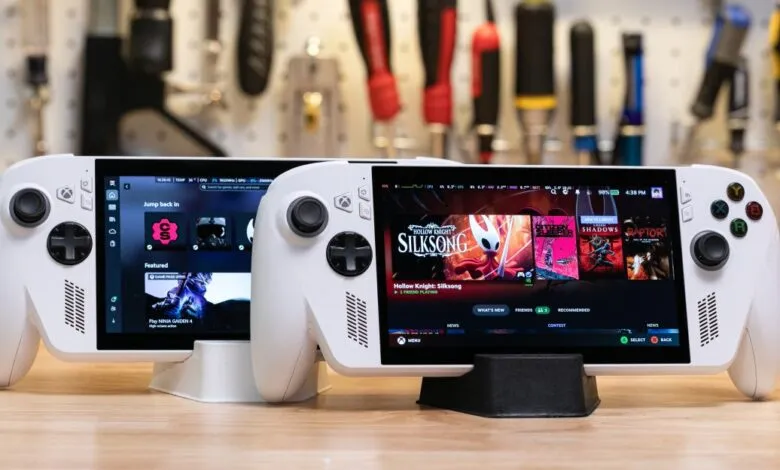
The fundamental challenge facing modern Windows handheld gaming devices isn’t their hardware specifications or price points, the core issue lies with Microsoft’s Windows operating system itself. Despite being developed by a multi-trillion dollar corporation, the recently released $600 Xbox Ally handheld demonstrates significant reliability problems with basic functions like sleep mode, wake functionality, and battery management during standby. Neither Microsoft nor manufacturing partner Asus has acknowledged systemic issues or provided concrete timelines for resolution after repeated inquiries.
My solution involved replacing Windows entirely with Bazzite, a Linux-based operating system designed to mimic SteamOS functionality. The transformation proved remarkable, the same hardware that previously struggled with fundamental operations now handles sleep and wake cycles flawlessly. Throughout an entire weekend of gaming sessions, I never once needed to hibernate or completely shut down the device, enjoying uninterrupted gameplay through demanding titles without any system instability.
Performance metrics reveal even more compelling advantages. Bazzite delivers substantially improved frame rates across multiple game titles compared to Windows 11 on identical hardware. Testing showed performance improvements ranging from approximately 15% to over 30% in various gaming scenarios, with the handheld frequently outperforming even the Steam Deck OLED in benchmark comparisons. Cyberpunk 2077 demonstrated a 25% performance boost at 15-watt TDP, while Deus Ex: Mankind Divided showed similar gains across multiple power profiles.
The user experience extends beyond raw performance numbers. Steam interface responsiveness improves dramatically without Windows processes running in the background. The system now functions intuitively like a Nintendo Switch, pressing the power button instantly suspends gameplay, with the device waking precisely where you left off hours or days later. Game launches occur faster, wake-from-sleep happens nearly instantaneously, and the interface becomes genuinely controller-friendly without requiring touchscreen interaction.
Button mapping becomes more logical under Bazzite’s default configuration. The upper left button activates Steam’s home menu, while the upper right triggers quick settings. The Xbox button summons Handheld Companion software, with a long-press providing access to system updates. I’m currently running the unstable build since that version first resolved the sleep functionality issues.
Battery life testing highlights Windows’ fundamental instability. Two separate Xbox Ally units, one with standby assistance features enabled, the other with them disabled, consistently woke themselves autonomously while sitting idle on a desk. The more efficient unit drained 10% of its battery over 12 hours, while the other lost 23% during the same period. After 24 hours, both devices retained only 30% battery capacity, with evidence suggesting one attempted to install Windows Updates during supposed sleep mode. Multiple users across Reddit and other platforms report similar wake failures and unexpected battery depletion.
The development timeline underscores the advantage of community-driven solutions. Bazzite initially struggled with the Xbox Ally’s sleep functionality when I installed it on October 19th. However, once programmers obtained the hardware and consulted with AMD specialists, they resolved the issue within two days, simultaneously making the device’s programmable RGB joystick lighting functional under Linux.
Microsoft’s official statement acknowledges “challenges a limited number of players have experienced” and promises that “initial fixes will be rolling out soon.” The company describes optimizing Windows for gaming handhelds as “an ongoing journey” that benefits from community feedback. When pressed for clarification regarding what constitutes a “limited number” of affected users or the definition of “soon,” Microsoft provided no additional details.
For prospective Xbox Ally owners, dual-booting presents a practical compromise, maintaining access to Windows for BIOS updates while using Bazzite for actual gaming sessions. Common misconceptions about Linux gaming often deter adoption, but the reality contradicts these assumptions. The platform supports multiple game stores beyond Steam, including Epic Games Store, Battle.net, Ubisoft Connect, and GOG. Community-developed compatibility layers like Proton enable numerous Windows games to run effectively, sometimes even outperforming their native Windows performance, particularly with older titles that struggle on modern Windows versions. ProtonDB provides comprehensive compatibility information for specific game titles.
(Source: The Verge)