FCC Grants Itself Authority to Enforce DJI Drone Ban
▼ Summary
– The FCC voted to retroactively ban previously approved gadgets from companies deemed national security risks, potentially blocking Chinese electronics like DJI drones.
– New DJI products will be automatically banned from US import starting December 23rd unless a security agency certifies they pose no risk, with no audit currently underway.
– The ban could apply retroactively to products but won’t require consumers to replace existing gear, with decisions made case-by-case after public comment periods.
– DJI has reportedly used shell companies to evade potential bans, and the FCC can now block products containing DJI-designed or manufactured radio components.
– DJI’s unique OcuSync radio transmitter signature makes disguised products easier to identify, potentially hindering efforts to bypass the import restrictions.
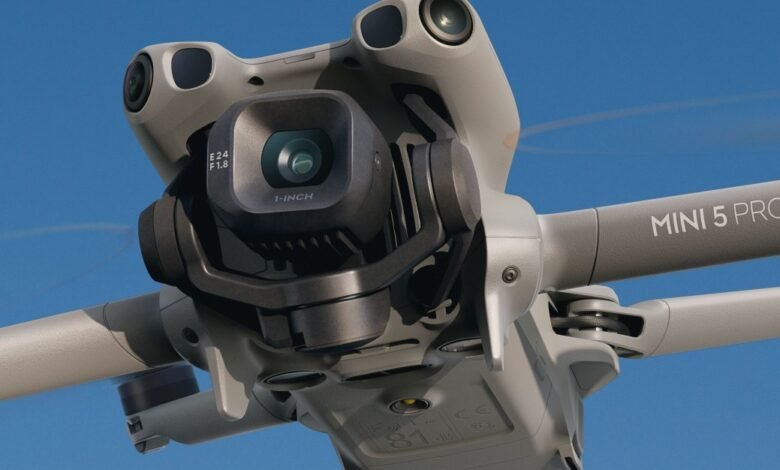
The Federal Communications Commission has granted itself significant new authority, voting unanimously to retroactively ban electronic devices and their radio components from the U.S. market, even if previously approved. This decision specifically targets companies considered national security threats, effectively creating a mechanism to block consumer electronics from Chinese manufacturers like the drone company DJI. While officially framed as closing loopholes to protect American networks from potential backdoors in foreign telecom equipment, this move provides the administration with a powerful tool to restrict products that operate over public airwaves, despite the absence of publicly available evidence demonstrating an actual threat.
Starting December 23rd, new DJI products will face an automatic import ban into the United States. This prohibition will be enforced unless a designated national security agency proactively certifies that the items do not pose a risk. The ban stems from DJI’s impending addition to the FCC’s “Covered List” under the Secure and Trusted Communication Networks Act. Inclusion on this list prevents the FCC from authorizing the company’s internal radios for use in the U.S., making it illegal to import those products for sale.
DJI confirms that no U.S. security agency has initiated the required audit. Adam Welsh, DJI’s global policy head, stated, “More than ten months have now passed with no sign that the process has begun.” He emphasized that DJI welcomes an investigation, urging the U.S. government to either begin the mandated review or grant an extension to ensure a fair and evidence-based process that also considers the impact on American jobs, safety, and innovation.
The situation has evolved from earlier expectations. Eight months ago, DJI believed any ban would not be retroactive, allowing current models to remain on sale while newer versions might be unavailable. However, the FCC’s new order appears to allow for retroactive application, though with several key nuances. The government has clarified it will not confiscate existing DJI equipment owned by consumers. Any retroactive ban will be applied on a case-by-case and product-by-product basis, and the public will be given an opportunity to comment before any such action is finalized.
A 60-page fact sheet detailing the FCC order states, “We emphasize that we are currently not requiring manufacturers to replace equipment in the hands of consumers.” It confirms that the continued use of already-purchased DJI gear remains authorized.
For each product considered for a retroactive ban, the FCC is directed to perform a “public interest analysis,” giving particular weight to any perceived national security risks. The commission must also provide a public comment period of at least 30 days. While concrete evidence of DJI posing a greater security risk than other companies selling aerial cameras is scarce, the theoretical concern of data being transmitted to a company with ties to the Chinese government persists. DJI is currently appealing a court ruling that allowed the Pentagon to continue labeling it a “Chinese Military Company,” as the judge was not convinced the company is actively controlled by the Chinese government.
For those concerned about such risks, closing these regulatory gaps seems logical, especially given reports that DJI has established numerous shell companies to circumvent a potential ban. In July, the company did not deny that a drone sold under the Skyrover brand was a disguised DJI product. Similarly, three weeks ago, it would not confirm or deny that cameras branded as Xtra were also DJI products.
An observer of the company, Konrad Iturbe, maintains a public list of alleged “DJI front companies” on GitHub. Many entries have compelling evidence linking their products back to DJI. Iturbe recently explained that he identifies many of these companies by scanning FCC records for the unique radio frequencies used in DJI’s proprietary OcuSync transmitters, which are responsible for the long-range, low-latency video that gives their drones a competitive edge.
The FCC’s new authority allows it to crack down on these disguised or legally licensed DJI products. The commission can now block a product simply because it contains a DJI radio transmitter or if DJI was involved in designing or manufacturing any of its components. According to the FCC document, a device is considered produced by an entity if that entity “designed, manufactured, assembled, or developed the device.”
DJI might attempt to circumvent the ban, playing a game of whack-a-mole with U.S. authorities, but the unique radio signature of its OcuSync technology could make this difficult. It would be simpler for the company to import cameras that use standard Wi-Fi and Bluetooth, such as the popular Osmo Pocket 3, but these products are not exempt from the potential ban.
By default, DJI will be forced to halt imports of all new products utilizing radio transmitters, which includes far more than just drones, unless a security agency intervenes before the December 23rd deadline.
(Source: The Verge)