Sky-Hunters: Bats Snatch Birds Mid-Flight
▼ Summary
– Three bat species eat birds, confirmed by avian remains found in their feces, but their hunting methods were unknown due to birds being heavier and faster than typical insect prey.
– Researchers attached ultra-light sensors to greater noctule bats, Europe’s largest bats, to study their hunting behavior, requiring sensors under 10% of the bat’s weight (4-6 grams).
– Greater noctule bats have a 45 cm wingspan, weigh 40-60 grams, and are the largest bird-eating bats, posing a challenge for sensor attachment without impeding flight.
– The sensors, weighing about 4 grams, recorded sound, altitude, and acceleration, providing detailed data on the bats’ movements and echolocation during hunts.
– Combining altitude and accelerometer data allowed scientists to trace the bats’ fast-paced maneuvers, revealing their previously unobserved hunting strategies.
The remarkable hunting strategies of greater noctule bats, which are known to prey on birds, have long puzzled scientists. Understanding how these relatively small mammals successfully capture larger, faster avian species required innovative technology and years of dedicated observation. Recent research has finally unveiled the secrets behind their impressive aerial pursuits.
Biologist Elena Tena, working with a team at Spain’s Doñana Biological Station, led a groundbreaking study focused on Nyctalus lasiopterus, Europe’s largest bat species. To uncover the mechanics of their bird-hunting behavior, researchers developed specialized ultra-light sensors that could be attached directly to the bats. These devices needed to be exceptionally lightweight to avoid interfering with the animals’ natural flight patterns while still collecting meaningful data.
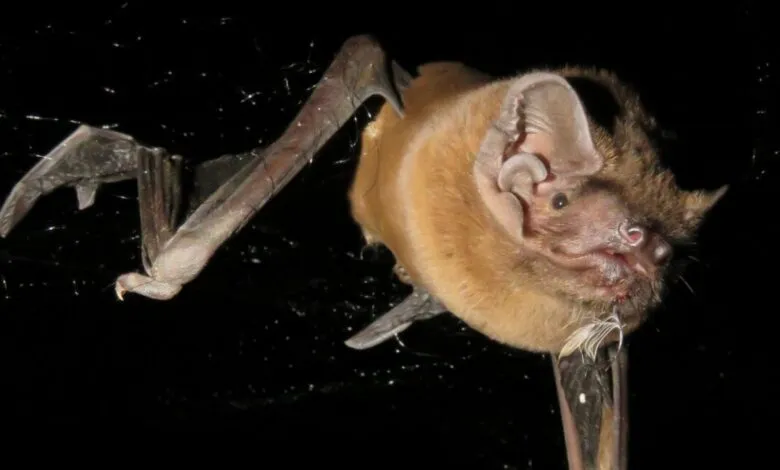
Greater noctule bats possess a wingspan reaching approximately 45 centimeters and typically weigh between 40 and 60 grams. Their reddish-brown or chestnut-colored fur, combined with their substantial size compared to other bird-eating bats, made them ideal subjects for this investigation. The primary technical hurdle involved creating monitoring equipment that wouldn’t hinder their movement. Traditional camera systems proved impractical due to the limitations of nighttime filming and the excessive weight of night vision equipment combined with power sources.
Over the past ten years, Tena’s team experimented with various monitoring techniques, including ground-based observations and advanced radar systems. Despite these efforts, directly witnessing the bats’ hunting behavior remained elusive. The technological breakthrough came with recent advances in miniaturization, allowing the development of tags weighing roughly four grams, well within the acceptable range for the bats to carry comfortably.
During the two-year study period, researchers successfully fitted fourteen greater noctule bats with these sophisticated tracking devices. The tags operated for multiple hours while recording critical information including audio, altitude changes, and acceleration patterns. This comprehensive dataset provided unprecedented insight into the bats’ nocturnal activities. The acoustic recordings captured both environmental sounds and the high-frequency pulses used for echolocation navigation. By correlating altitude data with accelerometer readings, scientists could reconstruct the bats’ complex aerial maneuvers, including rapid turns, steep dives, and other sophisticated flight patterns used during hunting.
(Source: Ars Technica)