Leica Ditches Rangefinder for EVF in New M Camera
▼ Summary
– Leica has launched the M EV1, its first M-mount camera without a rangefinder, featuring a 5.76-million dot electronic viewfinder and priced at €7,950 in Europe, with a US release delayed.
– Based on the M11-P, the M EV1 retains the same 60-megapixel sensor, processor, and no video recording, but weighs 46 grams less due to the removal of the rangefinder and aluminum construction.
– The camera uses manual focus through the electronic viewfinder or rear LCD, offering live exposure preview and focusing aids like focus peaking and magnification for improved usability.
– Full-time live view simplifies using ultrawide and telephoto lenses, eliminating the need for external finders and enabling easier close-focusing beyond traditional M lens limitations.
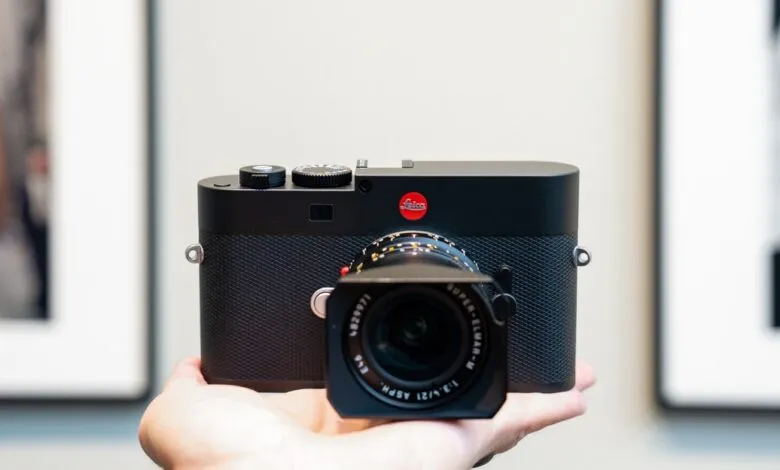
– The M EV1 introduces customizable front lever buttons for focus aids and removes the ISO dial, but its design omits the viewfinder window, leaving a blank space that the reviewer finds jarring.
Leica has officially broken from its long-standing tradition by introducing the M EV1, the company’s first M-mount camera that replaces the classic optical rangefinder with a high-resolution electronic viewfinder. This bold move marks a significant shift for the iconic brand, offering a modern shooting experience while retaining the revered M-series lens compatibility. The new model is now available in Europe and select markets for €7,950, with a US release pending FCC approval and an anticipated price of $8,995.
Built upon the foundation of the M11-P, the M EV1 inherits its 60-megapixel full-frame sensor, processing power, 64GB of internal storage, and Content Credentials support. It also continues the M11 lineage’s complete lack of video recording capabilities. By removing the complex rangefinder mechanism and utilizing an aluminum body, the camera achieves a noticeable weight reduction, tipping the scales at 484 grams without a lens, a 46-gram decrease equivalent to the weight of a standard golf ball.
While maintaining manual focus operation, the shooting experience transforms completely. Photographers no longer align images through an optical viewfinder patch. Instead, they compose and focus directly through the lens using either the half-inch, 5.76-million dot EVF or the 2.95-inch rear LCD display. This live view system provides real-time exposure simulation and incorporates modern focusing aids such as focus peaking and magnification.
The implementation of constant live view dramatically improves usability with challenging lenses. Ultrawide optics narrower than 28mm, which previously demanded bulky external viewfinders, now frame naturally through the EVF. Similarly, telephoto lenses of 90mm and longer become far easier to focus accurately. The system also unlocks closer focusing distances with newer M-mount lenses that break the traditional 0.7-meter barrier, and facilitates adapting macro lenses from other systems.
Though live view capability existed in M cameras since the 2012 M (Typ 240), it previously required using the rear screen or attaching an accessory electronic viewfinder. The M EV1’s integrated EVF shares specifications with the fixed-lens Q3’s finder, though it operates at 60Hz rather than 120Hz. Externally, the camera adopts the diamond-patterned leatherette grip from the Q series, though the physical resemblance largely ends there.
A particularly innovative redesign involves the front lever, traditionally used for frameline preview on mechanical M cameras. Leica has transformed this control into two customizable function buttons. A left or right toggle activates focus peaking or magnification, while a long press accesses a menu to modify these functions, a clever repurposing of what would otherwise become a redundant control element. The camera also reverts to menu-based ISO adjustment, eliminating the dedicated ISO dial introduced with the M10 series.
Hands-on experience reveals the M EV1 as precisely what rumors suggested: a straightforward M11 platform with its rangefinder swapped for an electronic viewfinder. The execution feels minimalist, particularly the decision to leave the viewfinder window area completely blank rather than relocating the iconic red dot. The rangefinder patch window remains, now housing an LED timer indicator, creating an aesthetic that some may find visually disjointed.
This departure from established design language may require an adjustment period for longtime enthusiasts. While the removal of the expensive rangefinder mechanism might suggest more substantial cost savings, the price differential between the M EV1 and M11-P amounts to approximately $845. The resulting $9,000 price point matches the original M11’s 2022 launch price, potentially serving as strategic positioning to maintain value for Leica’s traditional rangefinder models should electronic viewfinders prove unexpectedly popular.
(Source: The Verge)