Sony Hints at Next-Gen PlayStation GPU Technology

▼ Summary
– Sony and AMD are collaborating on graphics technology advancements for Sony’s next console, which is expected in a few years.
– The partnership focuses on improving GPU capabilities for upscaling, ray tracing, and path tracing to enhance game realism.
– New Radiance Cores will handle ray and path tracing, boosting performance and freeing up other GPU components for tasks like shaders and textures.
– Universal Compression technology will increase GPU bandwidth, enabling higher detail, frame rates, and efficiency in future hardware.
– These advancements could benefit a rumored PlayStation handheld by reducing GPU stress and improving power efficiency for portable gaming.
Sony has offered a glimpse into the graphics processing technology that will power its future gaming hardware, with key architect Mark Cerny revealing collaborative developments with AMD. During a recent technical discussion, Cerny and AMD’s Jack Huynh outlined several co-developed innovations destined for Sony’s next console generation, though they emphasized these technologies currently exist only in simulation and remain in early development stages.
The core focus involves overcoming current graphical limitations by fundamentally rethinking how future GPUs manage demanding tasks like upscaling, ray tracing, and the computationally intensive path tracing techniques that create incredibly realistic lighting and reflections. Cerny explicitly stated that existing approaches have hit their ceiling, prompting Sony’s deepened collaboration with AMD to integrate next-generation RDNA architecture components into upcoming hardware.
A central innovation comes in the form of Radiance Cores, specialized processing units dedicated specifically to ray tracing and path tracing calculations. These function similarly in concept to Nvidia’s RT Cores, handling complex lighting workloads separately from the main GPU. This dedicated processing allows other components to concentrate on shaders and textures rather than being overwhelmed by parallel tasks. Beyond Sony’s future consoles, these Radiance Cores will almost certainly appear in AMD’s forthcoming desktop graphics cards and potentially in Microsoft’s next Xbox hardware through AMD’s separate partnership.
These architectural improvements will work in concert with AMD’s latest AI-driven upscaling technology, FSR Redstone, which includes features like Neural Radiance Caching. This combination promises significant performance gains while maintaining visual fidelity, essentially allowing games to run smoother and look better without requiring proportionally more hardware power.
Another critical advancement involves compression technology, where Sony is moving beyond the Delta Color Compression used in PS5 and PS5 Pro. The new Universal Compression method applies efficient compression across the entire graphics pipeline rather than just specific elements. Huynh explained this innovation enables the GPU to deliver heightened detail, improved frame rates, and greater overall efficiency. Enhanced compression effectively raises the performance ceiling while potentially enabling more effective low-power operation modes when necessary.
These efficiency gains naturally lend themselves to portable gaming applications. The work Sony and AMD are undertaking to reduce GPU strain could theoretically be adapted to any form factor, including the rumored PlayStation handheld device reportedly in development. Sony has already demonstrated commitment to power efficiency with the PS5’s Power Saver mode, which intelligently scales performance to reduce energy consumption. The combination of specialized processing cores, advanced upscaling, and superior compression creates the essential foundation for running demanding games on handheld hardware without compromising visual quality.
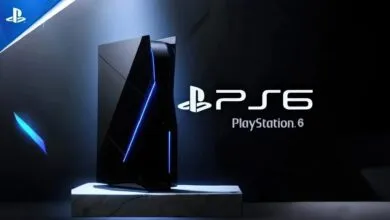
This proactive disclosure demonstrates Sony’s commitment to pushing graphical capabilities in its future devices, whether that be the anticipated PS6 or new portable systems. While these developments understandably draw attention away from current-generation hardware, they signal meaningful progress toward solving the complex challenges of next-generation gaming visuals.
(Source: The Verge)