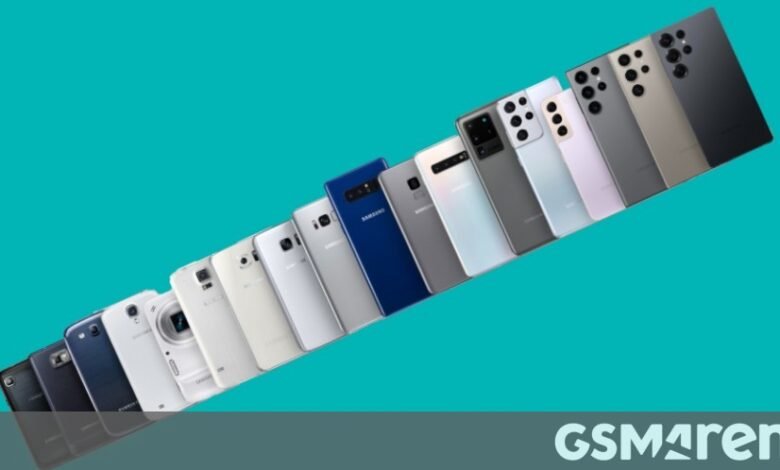
Samsung’s 15-Year Camera Evolution: From Galaxy S to Today
▼ Summary
– The original Samsung Galaxy S phone was released 15 years ago, marking the beginning of major smartphone camera evolution.
– The Galaxy S25 Ultra features a 200MP main camera and 8K video recording, representing a 40x increase in still image resolution and 36x more video pixels than the original.
– Modern Galaxy phones like the S25 Ultra have multiple rear cameras, including a 50MP ultra-wide, a 50MP periscope telephoto, and a 10MP mid-range telephoto.
– The infographic details 15 years of camera improvements and innovations across the Samsung Galaxy S series.
– The first Galaxy S model had a 5MP camera capable of recording 720p video, highlighting the technological advancements since its launch.
Over the past fifteen years, Samsung’s Galaxy S series has completely transformed the way we think about mobile photography. What began with a modest 5-megapixel sensor has evolved into a sophisticated multi-lens system capable of professional-grade imaging. The journey from basic smartphone snapshots to high-resolution computational photography represents one of the most dramatic technological shifts in consumer electronics.
The original Galaxy S introduced in 2010 featured a single rear camera that captured 5MP still images and recorded 720p video. Fast forward to today’s Galaxy S25 Ultra, and you’ll find a 200MP primary sensor that delivers forty times the resolution of that pioneering device. Video capabilities have seen equally impressive growth, with current models supporting 8K recording, equivalent to 4320p resolution and representing a thirty-sixfold increase in pixel count.
Beyond sheer resolution numbers, the most noticeable transformation lies in camera system complexity. Where early Galaxy phones relied on a single rear shooter, modern flagships like the S25 Ultra incorporate a versatile quad-camera array. This sophisticated setup includes a 50MP ultra-wide lens for expansive landscapes, a 50MP periscope telephoto with 5x optical zoom (equivalent to 111mm), and a dedicated 10MP telephoto offering 3x magnification (67mm equivalent). Each lens serves a distinct photographic purpose, giving users unprecedented creative flexibility.
Samsung’s camera evolution hasn’t been limited to hardware alone. The company has consistently introduced software enhancements that leverage artificial intelligence and computational photography. Features like multi-frame processing, night mode, and portrait lighting effects have become standard expectations among smartphone photographers. These intelligent systems work alongside the physical hardware to produce images that often rival those from dedicated cameras.
The progression from single-lens simplicity to multi-camera sophistication reflects broader industry trends while establishing Samsung as an imaging innovator. Each generation has introduced meaningful improvements, whether through higher resolution sensors, advanced optical zoom mechanisms, or smarter image processing algorithms. This relentless pursuit of photographic excellence has positioned Galaxy devices as serious tools for both casual shooters and photography enthusiasts alike.
Modern smartphone photography represents the convergence of multiple technological disciplines, with Samsung consistently pushing boundaries in sensor design, lens engineering, and computational imaging. The company’s fifteen-year camera journey demonstrates how persistent innovation can transform a basic phone feature into a comprehensive photographic system that challenges traditional camera manufacturers.
(Source: Info Graphic)