Raleigh One E-Bike Review: A Surprising Redemption
▼ Summary
– The Raleigh One is a new commuter e-bike developed by VanMoof’s founders, featuring anti-theft systems, integrated lighting, and a simplified, serviceable design with off-the-shelf parts.
– It is equipped with a single-speed, belt-driven transmission and a 250W rear-hub motor, but its 35Nm of torque is weak for hills and it lacks a boost button, limiting its performance on inclines.
– The e-bike offers a pleasant, sturdy ride for flat city commuting with a claimed range of up to 80km, a removable battery for indoor charging, and relatively fast recharge times.
– Key drawbacks include significant battery drain when idle, a buggy companion app, and essential anti-theft tracking features locked behind a monthly subscription service.
– Priced around €2,700, the Raleigh One is positioned as a premium option for tall riders in flat European cities, with its long-term durability still to be proven.
Navigating city streets requires a reliable companion, and the Raleigh One e-bike emerges as a compelling option for urban commuters seeking a blend of sophistication and practicality. Born from the creative minds behind VanMoof, this new model incorporates valuable lessons in design and serviceability while offering a distinctly refined riding experience. It stands as a testament to evolving e-bike technology, focusing on durability and user-friendly features without unnecessary complexity.
Testing the Raleigh One on the flat terrain of Amsterdam revealed its strengths and limitations. The bike is equipped with a 250W rear-hub motor generating 35Nm of torque, which provides adequate assistance for maintaining the 25km/h top speed on gentle inclines. However, tackling steeper hills proves challenging due to the single-speed configuration and the notable absence of a boost button. This makes it less suitable for cities with significant elevation changes, though it excels in flatter urban environments.
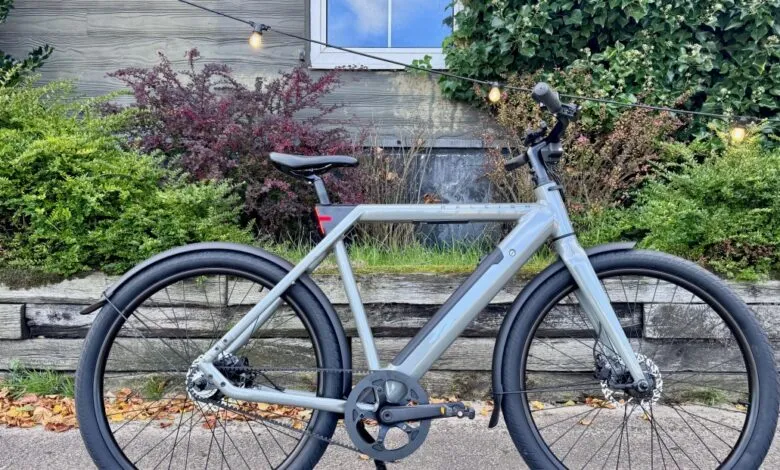
Priced at approximately £2,399 or €2,699, the Raleigh One positions itself in the premium e-bike market. While this is a higher price point for the Raleigh brand, it remains competitive with other European offerings. The bike’s construction includes an aluminum frame with internally routed cables, wide 27.5-inch tires, integrated lighting, and a practical Gates Carbon belt drive that promises minimal maintenance. A significant advantage is the removable battery, which can be charged separately from the bike, offering flexibility for apartment dwellers.
Riding the Raleigh One feels solid and assured. The combination of the nearly silent Mivice motor, hydraulic disc brakes, and the weighty frame creates a stable, confident ride. The pedal assist is intuitive, delivering power smoothly in response to the rider’s effort. While the experience is serious and competent, some riders might find it lacks the playful acceleration of more powerful models.
Battery performance is a key consideration. Raleigh advertises a potential range of up to 80 kilometers on the lowest assist setting. In real-world testing at the maximum power level, the bike achieved just under 48 kilometers, a respectable figure given challenging conditions like strong headwinds. Charging is relatively swift, with the battery reaching a full charge in under three hours using the provided high-amperage charger.
The connected features of the Raleigh One are a mixed bag. The accompanying smartphone app provides control over settings like the automatic lights and security functions. However, the software currently shows room for improvement. The review unit experienced a battery drain of about three percent per day while parked, and the app itself was occasionally buggy. The manufacturer has acknowledged these issues and committed to forthcoming firmware updates to enhance power management and app stability.
Anti-theft capabilities, including GPS tracking and an alarm, are central to the bike’s appeal, but they are part of a subscription service. For a monthly fee, riders can activate tracking and receive theft alerts. A higher-tier subscription bundles these features with insurance for a potential replacement if the bike is stolen. While subscriptions are becoming commonplace, this model means essential security features require an ongoing cost.
A few practical details are worth noting. The integrated SP-Connect phone mount requires a separate compatible case, which might be an inconvenience. More importantly, the bike is only available in a step-over frame with a high standover height, making it a better fit for taller riders. Anyone below six feet should definitely try a test ride before purchasing.
For commuters in flat cities, the Raleigh One presents a well-considered package. It integrates the sleek, practical design philosophy of its VanMoof heritage with a focus on simpler, more serviceable components. The current software hiccups and locked security features are drawbacks, but the core riding experience is pleasant and dependable. Its long-term durability remains to be seen, but the initial impression suggests a thoughtful step forward in urban e-bike design.
(Source: The Verge)