Passkeys: Are They Really Secure? Your Essential Guide
▼ Summary
– Passwords are a major cybersecurity weakness, with stolen credentials involved in 88% of breaches according to Verizon’s 2025 report.
– Passkeys are a passwordless authentication method that uses public key cryptography, storing a private key securely on the user’s device.
– Unlike passwords, passkeys are resistant to phishing and brute-force attacks because the private key never leaves the user’s device.
– Major companies like Microsoft are adopting passkeys, reporting high login success rates and significant reductions in support requests.
– Despite their advantages, passkeys face challenges including device dependency, setup complexity, and limited compatibility with legacy systems.
The persistent vulnerability of passwords represents one of the most significant challenges in modern cybersecurity. With threats ranging from phishing scams to brute-force attacks, relying on memorized secrets has proven increasingly inadequate. Verizon’s 2025 Data Breach Investigations Report underscores this reality, revealing that a staggering 88% of breaches involved stolen credentials. This alarming statistic fuels the growing momentum behind passwordless authentication, where passkeys have emerged as a leading solution poised to potentially render traditional passwords obsolete.
Many users are already recognizing the advantages. According to the FIDO Alliance, over half of users find passkeys more convenient than passwords, and a similar percentage believe they offer superior security. But what lies behind this promising technology?
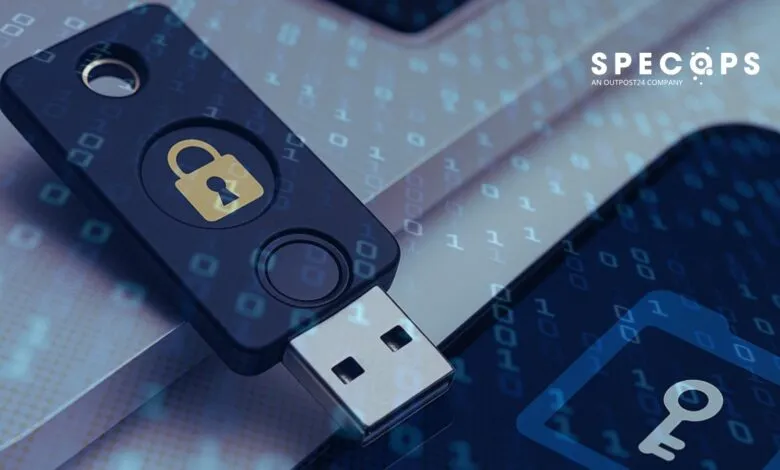
Understanding passkeys requires a shift in thinking from “what you know” to “what you have.” Instead of a memorized phrase, a passkey is a digital credential tied to a physical device like your smartphone, computer, or a dedicated security key. The system operates on public key cryptography. When you create an account, your device generates a mathematically linked pair of keys: a public key and a private key. The website or application stores only the public key, which is harmless on its own. The critically important private key remains securely stored on your device and is never transmitted or shared. To authenticate, your device simply proves possession of the private key by signing a unique challenge from the service.
The security benefits of this approach are profound. Unlike passwords, passkeys are inherently immune to phishing attacks because there is no secret for a user to accidentally divulge to a fake website. They cannot be reused across different services or cracked through brute-force guessing. Even in the event of a major data breach at a company, attackers would only obtain public keys, which are useless without the corresponding private keys safeguarded on users’ personal devices.
This robust security model is driving adoption among major technology players. Microsoft made a significant move in May 2025 by making passkeys the default for all new accounts. The company reports that nearly one million passkeys are now registered daily, achieving an impressive 98% login success rate, a dramatic improvement over the mere 32% success rate associated with passwords. Beyond tech giants, industries like insurance are also embracing the change. Aflac, for instance, became the first major US insurance provider to adopt passkeys, resulting in a 32% reduction in password recovery requests and saving its support team from approximately 30,000 identity-related calls each month.
The appeal for organizations is multi-faceted. Passkeys provide stronger security by design, effectively neutralizing common threats like credential stuffing. For users, the experience is often simpler and faster, typically requiring just a biometric scan or PIN instead of recalling complex passwords. This ease of use naturally leads to reduced support costs for helpdesk teams. Furthermore, passkeys are built on industry standards, promising a consistent and secure login experience across different devices and platforms.
Despite the clear advantages, passkeys are not a perfect solution without hurdles. Implementation can be complex and costly, particularly for organizations with legacy systems. The FIDO Alliance identifies complexity, cost, and a lack of clarity as the top barriers to adoption. A significant limitation is device dependency; losing access to your primary device can complicate account recovery. Additionally, since not all services currently support passkeys, many companies must operate hybrid authentication models during a transition period, which can introduce its own security complexities. Widespread user education is also essential, as the concept is still new to many.
So, will passkeys completely replace passwords? While their adoption is accelerating, especially in security-conscious and mobile-centric environments, a full transition will take time. Legacy systems and users without compatible devices mean that passwords will remain a necessary fallback for the foreseeable future. This hybrid reality makes it more critical than ever to maintain rigorous password security wherever passwords are still in use. Ensuring strong, unique passwords and protecting against compromised credentials remains a fundamental aspect of a layered defense strategy.
(Source: Bleeping Computer)