iPhone Air Hints at a Foldable Future
▼ Summary
– The iPhone Air is thinner and lighter than other models but has a shorter battery life and lacks features like an ultrawide camera and macro photography compared to the iPhone 17.
– It is priced at $999, which is 22% more expensive than the base iPhone 17, and for $100 more, consumers can upgrade to the iPhone 17 Pro.
– The device incorporates the most Apple-designed chips in an iPhone, including the A19 Pro, N1, and C1X, aimed at improving performance and energy efficiency.
– Apple positions the iPhone Air as an experimental platform to advance hardware design, optimize battery life, and explore new form factors like foldables for future iPhones.
– The Air’s design elements, such as Ceramic Shield 2 on the back and a horizontal camera bar, have already influenced the iPhone 17 Pro, suggesting it may shape future base models.
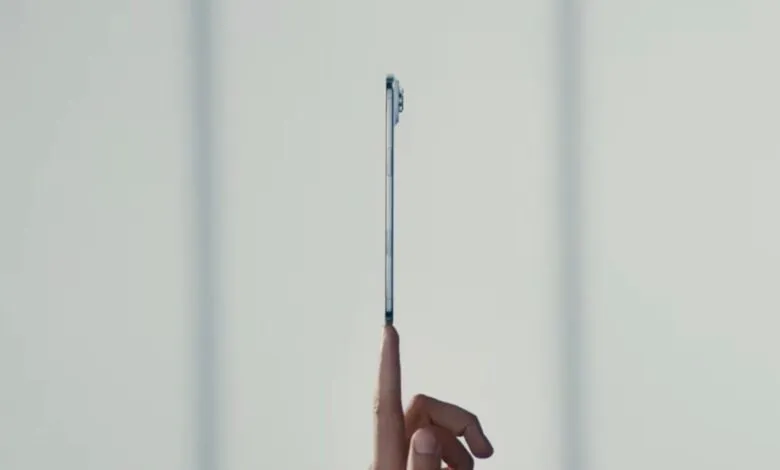
The iPhone Air represents a bold new direction for Apple’s smartphone lineup, blending sleek aesthetics with a clear focus on hardware innovation. With its ultra-thin 5.6mm profile and lightweight design, the device stands out visually, though it may not yet be the ideal choice for everyone seeking a daily driver.
At first glance, the Air appears to sacrifice some practical features in favor of its slender form. Its battery life maxes out at 27 hours, falling short of the base iPhone 17’s 30-hour endurance. The device also omits the ultrawide and macro photography capabilities found in its more affordable sibling. With a starting price of $999, it sits at a notable premium over the $799 iPhone 17, and for just an additional $100, buyers can step up to the feature-rich iPhone 17 Pro.
Yet the Air’s true significance lies not in what it lacks, but in what it signals about Apple’s future ambitions. This model serves as a testing ground for the company’s in-house silicon and design philosophy, incorporating a suite of custom chips including the A19 Pro CPU, N1 wireless networking chip, and the highly efficient C1X cellular modem. By designing around its own components, Apple gains greater control over performance and energy management, a critical advantage as smartphones take on more demanding tasks like advanced photography and on-device AI.
Battery technology remains a persistent challenge across the industry, improving at a slower pace than processors or displays. The Air doesn’t solve this problem outright; in fact, its battery performance lags behind other models. But it does represent a conscious step toward understanding how to optimize power consumption through architectural refinements, software adaptations, and component integration.
Apple openly recommends using a MagSafe battery pack with the iPhone Air to extend usage time, framing the accessory not as a compromise but as part of a cohesive power strategy. This emphasis on efficiency is woven throughout the device’s design, from its internal layout to its iOS 26 software, which includes an adaptive power mode to intelligently manage energy use.
The influence of the Air is already visible in other products. Both it and the iPhone 17 Pro feature Ceramic Shield 2 on the rear panel, and the horizontal camera bar, reminiscent of Google’s Pixel phones, has inspired the Pro model’s updated layout. These shared elements suggest a gradual trickle-down of design and material innovations across the lineup.
Looking further ahead, the iPhone Air could eventually evolve into Apple’s entry-level offering, freeing the Pro series to cater to power users while creating space for entirely new form factors. Rumors of a foldable iPhone have circulated for years, and the engineering lessons learned from the Air, especially around thermal management, structural integrity, and component integration, may prove essential in bringing such a device to market.
In many ways, the iPhone Air is less a finished product and more a promise of what’s to come. It showcases Apple’s willingness to experiment with design, materials, and its own silicon, all while laying the groundwork for a more diverse and adaptable iPhone family in the years ahead.
(Source: TechCrunch)