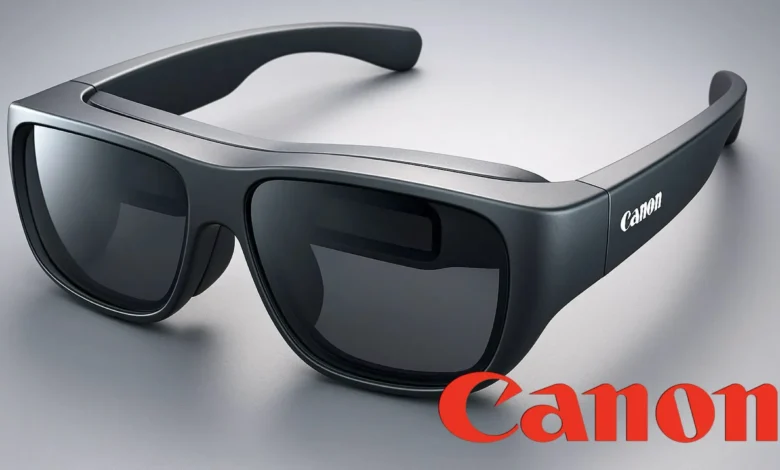
Canon’s New Patent Could Make VR Glasses as Thin as Regular Eyewear
▼ Summary
– Canon’s new patent aims to create compact, immersive AR/VR glasses that resemble normal eyewear rather than bulky headsets.
– The design uses a triple-pass optical system that folds light three times within the lens to achieve a wide field of view in a thin frame.
– A negative-power lens is strategically placed to correct chromatic aberration and maintain image sharpness without adding thickness.
– This approach targets mass adoption by making the technology comfortable for extended wear and consumer-friendly.
– Canon is positioning itself to compete with major players like Apple and Chinese companies in the lightweight AR/VR market.
Canon’s latest patent reveals a significant leap forward in optical engineering, aiming to produce virtual reality glasses as sleek and lightweight as everyday eyewear. This innovation centers on a sophisticated triple-pass optical system that folds light within the lens structure, enabling a wide field of view and high image clarity without the bulk associated with traditional VR headsets. By rethinking how light travels from microdisplay to eye, Canon brings us closer to a future where immersive technology blends seamlessly into daily life.
The core of this advancement lies in a method where light bounces between two half-mirror layers before reaching the viewer’s eye. This approach effectively condenses the optical path, eliminating the need for long projection tubes or thick, heavy lenses. To maintain image precision, Canon incorporates a single negative-power lens positioned where light passes through it just one time. This clever placement corrects chromatic aberration and flattens the image without adding unnecessary thickness, ensuring both visual fidelity and a slim profile.
What sets this design apart is its focus on wearability and user comfort. Rather than producing another cumbersome headset, Canon is pursuing a form factor that resembles standard glasses, making extended use practical and socially acceptable. This direction aligns with broader industry efforts to miniaturize AR and VR hardware, moving it from specialized applications into the consumer mainstream.
The implications of this patent are substantial. Consumers have consistently shown reluctance to adopt bulky, isolating headsets for daily use, and Canon’s proposed design directly addresses that barrier. By integrating advanced optics into a familiar glasses format, the company positions itself at the forefront of a shift toward wearable, accessible immersive technology. This isn’t just an incremental improvement, it’s a foundational step toward making VR and AR part of ordinary life.
(Source: YM Cinema)


