Switch 2 Preorders Differ in Japan vs. US Due to Fairness Views
▼ Summary
– Nintendo used a lottery system for Switch 2 preorders in Japan but a “first-come, first-served” system in the U.S., influenced by cultural perceptions of fairness in each market.
– A study by Osaka University and Mercari’s R&D Department examined this difference, noting Nintendo prioritized “willingness-to-play” over “willingness-to-pay” to deter resellers.
– Both markets faced supply shortages, but Nintendo avoided profit-maximizing tactics like dynamic pricing to focus on long-term game and subscription revenue.
– In Japan, lotteries are socially accepted as fair, while U.S. customers may view “first-come, first-served” as fairer for rewarding individual effort.
– Nintendo Japan continues using lotteries for official sales, but some retailers are shifting to “first-come, first-served” as supply improves.
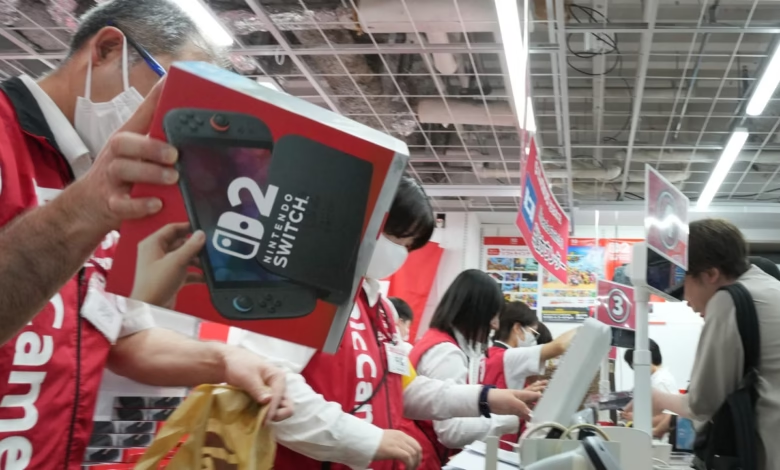
Nintendo’s approach to Switch 2 preorders varied significantly between Japan and the U.S., reflecting deeper cultural differences in perceptions of fairness. A recent study from Osaka University explored why the company opted for a lottery system in Japan while using a first-come, first-served model in America. The findings suggest that consumer expectations and societal norms played a major role in shaping these distinct strategies.
The research, conducted by Osaka University’s ELSI Center and Mercari’s R&D team, analyzed how Nintendo managed preorders despite limited supply. Both markets faced shortages, prompting executives in Japan and the U.S. to reassure fans about future production. Yet instead of leveraging scarcity for higher profits, through tactics like dynamic pricing, Nintendo prioritized long-term engagement by targeting dedicated players.
In Japan, eligibility for the Switch 2 lottery required an active Nintendo account with at least 50 hours of gameplay on the original Switch. Similarly, U.S. customers received invitation emails based on the same criteria, giving them a 72-hour window to secure their purchase. This focus on “willingness-to-play” rather than “willingness-to-pay” helped curb scalping, with Japan taking additional measures to block resellers on online marketplaces.
So why the different systems? The study proposed that cultural attitudes toward fairness influenced Nintendo’s decisions. In Japan, lotteries are widely accepted as an equitable way to distribute high-demand items, from concert tickets to gaming consoles. Consumers there expect companies to provide equal opportunities, even if the process is more complex. Meanwhile, American buyers often view first-come, first-served as fairer, valuing individual effort over random chance.
Reputation also factored into Nintendo’s strategy. A poorly managed launch could damage brand trust, so the company tailored its approach to align with regional expectations. While Japan’s lottery system remains active on Nintendo’s official site, some retailers like Geo have begun shifting to first-come, first-served sales as supply stabilizes. This gradual transition hints at how market dynamics and consumer behavior continue to evolve.
The study underscores how global companies must adapt to cultural nuances, even in seemingly straightforward processes like product launches. By understanding what fairness means in different regions, Nintendo balanced supply constraints with customer satisfaction, a strategy that could influence future console releases worldwide.
(Source: IGN)