Pluto’s Heart Revealed 10 Years Ago-When Will We See More?
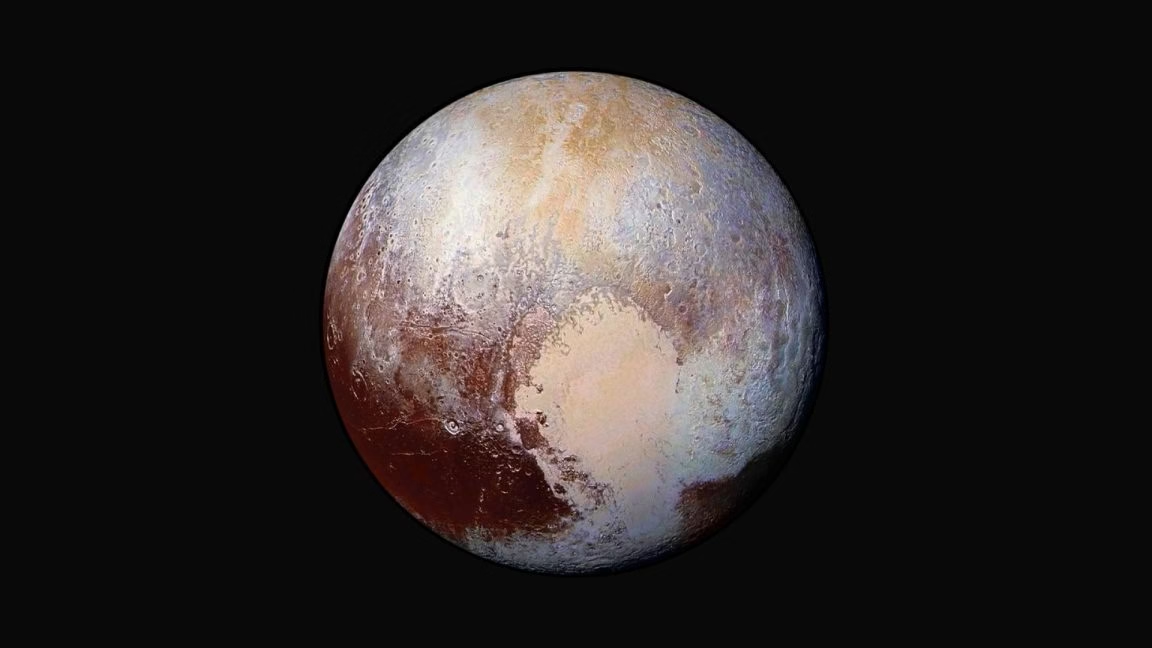
▼ Summary
– NASA’s New Horizons spacecraft revealed Pluto as a dynamic world with refreshing landscapes during its 2015 flyby, raising new questions about its formation.
– The mission provided over 50 gigabits of data, which, along with telescope observations, remains the primary resource for studying Pluto for decades.
– No future missions to Pluto are currently planned, leaving a significant gap in exploration for the foreseeable future.
– Under normal budget conditions, a new Pluto mission might launch in 10-20 years, potentially reaching Pluto by the 2050s.
– Proposed NASA budget cuts threaten future Solar System exploration, operating missions like New Horizons, and research funding for analyzing existing data.
A decade has passed since humanity’s closest encounter with Pluto, revealing a world far more complex than anyone imagined. The New Horizons spacecraft captured stunning images of the dwarf planet’s icy plains, towering mountains, and its iconic heart-shaped feature, reshaping our understanding of this distant realm. Yet despite these groundbreaking discoveries, Pluto remains shrouded in mystery, with no immediate plans for a follow-up mission.
The 2015 flyby provided scientists with an unprecedented look at Pluto’s dynamic geology, nitrogen glaciers, and hazy atmosphere. But the data also raised new questions—how does such an active world sustain itself so far from the Sun? For now, researchers must rely on archived observations from New Horizons or distant telescopic studies, as no return mission is in development.
Future exploration of Pluto faces significant hurdles. Even under ideal circumstances, a follow-up mission would take decades to plan and execute, competing with higher-priority targets like Mars, Uranus, and Saturn’s moon Enceladus. Budget constraints further complicate the picture, with proposed cuts threatening NASA’s planetary science programs. These reductions could jeopardize not only future missions but also critical research analyzing existing data.
The New Horizons mission continues its journey through the Kuiper Belt, but its legacy remains tied to Pluto. Without renewed investment in deep-space exploration, the next close-up view of this enigmatic world may not come until the latter half of the century—if at all. For scientists and space enthusiasts alike, the wait for answers grows longer with each passing year.
(Source: Ars Technica)