Why calorie counting fails on fitness trackers: My Fitbit Air test
▼ Summary
– Fitbit Air heart rate readings were within 2.5% error of the Polar H10 chest strap during treadmill and strength training tests.
– During treadmill running, the Fitbit Air lagged behind the Polar H10 in capturing rapid heart rate increases, but matched readings at steady paces.
– The Fitbit Air underestimated calories burned by 11.9% during the treadmill session and by 30.9% during strength training.
– Maximum heart rate data was less accurate during strength training (11.3% error) than during treadmill exercise, likely due to missed brief spikes.
– The article recommends using Fitbit Air as a reliable health tracker for heart rate but advises treating calorie estimates as ballpark figures.
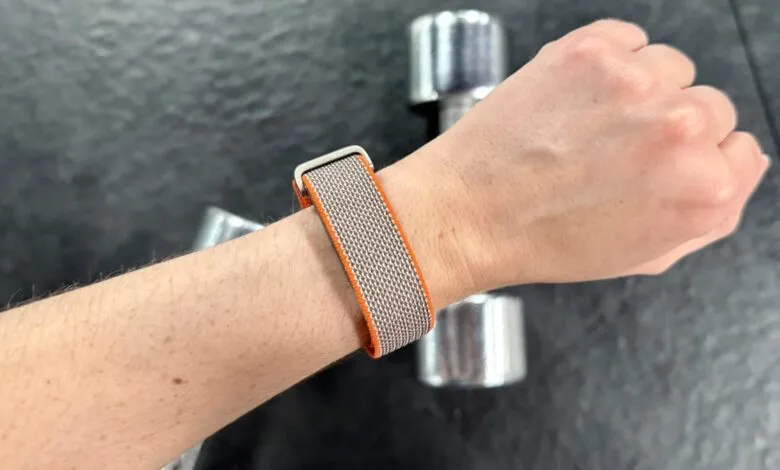
Wearing a fitness tracker might give you the illusion of precision, but the reality is more complicated. When I strapped on the Fitbit Air and compared it to the Polar H10 chest strap , widely regarded as a benchmark for heart rate accuracy , I discovered just how much your choice of device can skew the numbers, especially when it comes to calorie counting.
The Fitbit Air is Google’s latest screenless wearable, and at $99, it’s designed for simplicity. But how well does it actually track your body during real workouts? To find out, I took both devices through a standard gym session: a mix of treadmill running and strength training. The Polar H10, which uses electrodes placed directly over the heart, served as my control. Research has shown it aligns closely with clinical ECG systems, making it a reliable reference point.
On the treadmill, the heart rate data looked promising. While walking, the Fitbit Air stayed within one or two beats per minute of the Polar. But when I broke into a run, a clear lag appeared. At the moment Polar captured a heart rate of 141, the Fitbit Air still read 109. The next minute, Polar showed 128 while Fitbit sat at 112. Once my pace steadied, both devices converged, but any change in speed introduced a brief disconnect. This makes sense: a chest strap detects electrical signals near the heart instantly, while a wrist-based sensor must wait for blood flow changes to reach the arm.
Despite this lag, the average heart rate over the entire treadmill session was nearly identical , 124 bpm on Polar versus 122 bpm on Fitbit, a difference of just 1.6%. Minimum and maximum readings were also close. The real shock came with calories burned. Fitbit calculated 126 kcal, while Polar estimated 143 kcal , a gap of nearly 12%. That’s a significant discrepancy, and it only grew during weight training.
During a full-body strength workout involving lat pulldowns, dumbbell squats, lateral raises, and hip abductor machine exercises, the calorie count fell apart entirely. Polar recorded 152 kcal burned, while Fitbit logged just 105 kcal , a 30.9% difference. The average heart rate was again close (100 vs. 101 bpm), but the maximum heart rate diverged sharply: Polar hit 151 bpm, while Fitbit maxed out at 134 bpm, an 11.3% error.
This pattern reveals a critical limitation. Strength training involves short, intense bursts of effort followed by rest. The Fitbit Air appears to miss those quick spikes, smoothing out the peaks. Your heart rate might jump to 150 during a heavy set, but by the time the blood reaches your wrist, you’ve already stopped and it’s falling again. The tracker never sees the peak, so it underestimates both intensity and calorie burn.
Of course, two gym sessions aren’t a lab trial. But this test highlights a broader truth about wearable technology. Wrist-based trackers are excellent for steady-state activities like jogging or walking, where heart rate changes gradually. They are less reliable for interval training, lifting, or any workout with rapid fluctuations. If you rely on your device for weight management or diet planning, the calorie numbers should be treated as rough estimates , not hard facts.
For its part, the Fitbit Air delivered impressive heart rate accuracy overall. The graphs from both devices aligned closely in shape, and the average readings were consistently within a few beats of the chest strap. For general fitness tracking, sleep monitoring, and step counting, it’s a solid choice. But if you need precise calorie expenditure or real-time max heart rate data for serious training, a chest strap remains the superior tool. The Fitbit Air will tell you you’re working hard , just don’t bet your meal plan on the exact number.
(Source: ZDNet)