Aqara’s New Matter Camera: Hands-On Review
▼ Summary
– The Aqara Camera Hub G350 is the first indoor security camera to support the Matter smart home standard, featuring dual lenses and a pan-tilt mechanism.
– Currently, the G350’s Matter functionality only works with Samsung SmartThings, as other platforms have not yet adopted the Matter 1.5 update.
– The camera offers advanced features like high-resolution video, local storage, and integration with multiple platforms, but its Matter implementation is currently limited to basic live streaming and two-way talk.
– The article highlights that Matter promises unified camera management and advanced automations across brands, but full multi-platform support and feature availability are not yet realized.
– The author concludes that while the G350’s current Matter experience is basic, it demonstrates the potential for a more open and integrated smart home camera ecosystem in the future.
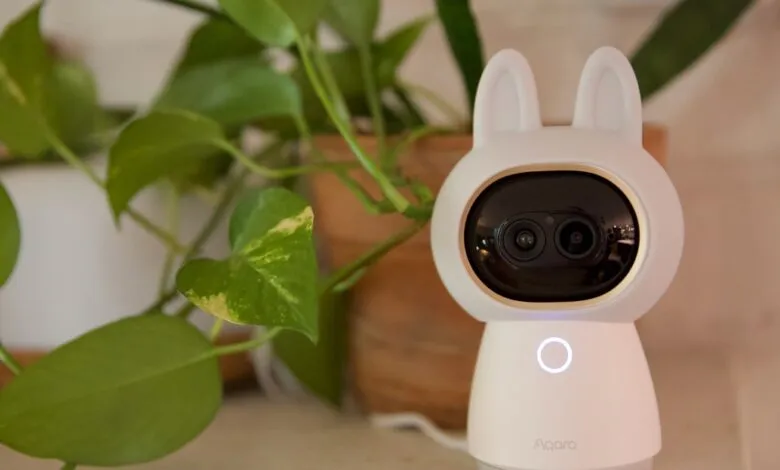
The arrival of the first Matter-compatible security camera marks a significant, if tentative, step toward a more unified smart home. Aqara’s Camera Hub G350, a pan-and-tilt indoor model, is now available and represents the initial hardware to adopt the camera support introduced in the Matter 1.5 specification. This device promises to reduce the app fragmentation that plagues multi-brand security setups, though its full potential remains locked behind pending software updates and broader platform adoption.
Currently, the G350’s Matter functionality is exclusive to Samsung SmartThings, as other major ecosystems have yet to implement the latest Matter standard. Initial setup required multiple firmware updates before the camera could be added as a Matter device. At present, the integration only allows for a live video stream, a far cry from the comprehensive feature set Matter ultimately promises for security cameras. The core idea is compelling: managing feeds, recordings, and settings for cameras from different manufacturers all within one primary smart home app, eliminating the need to juggle multiple applications.
On paper, the G350’s specifications are impressive for an indoor camera. It features a dual-lens system with a 4K wide-angle lens and a 2.5K telephoto lens, offering up to 9x hybrid zoom. Its mechanical pan-and-tilt mechanism provides 360-degree coverage with auto-tracking for people and pets. A physical shutter closes over the lens for privacy when the camera is powered off. Beyond Matter, it supports Apple HomeKit Secure Video and can connect to Alexa and Google Home via the cloud. It also supports local storage via a microSD card and RTSP streaming for use with network video recorders or platforms like Home Assistant.
The setup process highlighted the early-state complexities of this new standard. Attempting to add the camera directly to SmartThings via its Matter QR code initially registered it as a hub rather than a camera. This is because the G350 also functions as a Zigbee hub for other Aqara devices, a Matter controller, a bridge, and a Thread Border Router. The successful method involved first setting up the camera in the Aqara app, applying several firmware updates, including one that enabled Matter 1.5, and then using Matter’s multi-admin feature to add it to SmartThings as a camera.
The Matter specification outlines a robust set of capabilities for supported cameras, including live streaming, two-way audio, pan-tilt-zoom controls, configurable detection zones, and both continuous and event-based recording with local or cloud storage options. In the SmartThings app, however, only a subset of these features was operational. The live stream was high-quality and responsive, with minimal lag, and two-way talk worked clearly. Controls for pan, tilt, and zoom were visible but non-functional, and the video history tab showed no recordings despite a microSD card being installed. Settings for motion-activated recording and smart alerts were also unavailable, meaning users must still rely on the Aqara app for those advanced functions.
A curious discrepancy emerged between mobile operating systems. On an Android device, the SmartThings app displayed only the live stream with no controls or settings. On iOS, the interface correctly showed all available buttons and configuration pages, even if many options did not yet work. Questions also remain about how recorded video playback will be handled through SmartThings, and whether a subscription to Aqara’s cloud service or another plan will be required for users not utilizing local storage.
The broader ecosystem challenge is significant. Only Samsung SmartThings currently supports Matter cameras. While Apple is expected to add support and Home Assistant is working on it, neither Google Home nor Amazon Alexa has committed to integrating Matter cameras, as both have invested heavily in their own proprietary camera ecosystems. This means the vision of simple, centralized camera management is still distant for many users.
Despite the limited initial experience, the G350 demonstrates the promise of Matter. The local protocol delivered a fast, reliable stream, and the framework is in place for much richer functionality. The future it points toward resembles the integration and privacy of Apple’s HomeKit Secure Video, but built on an open, interoperable standard. For now, the Aqara G350 is a foundational first step, a capable camera whose most anticipated Matter features are still on the horizon, waiting for the software and the wider smart home world to catch up.
(Source: The Verge)