Steam Frame Game Certification: Valve’s Official Requirements
▼ Summary
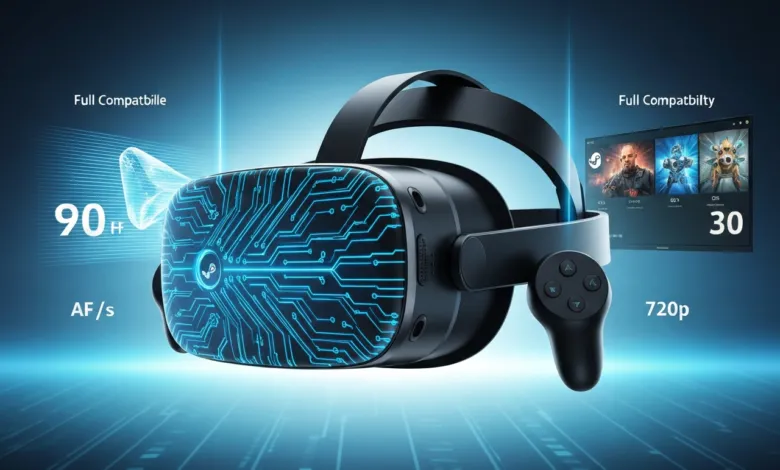
– To earn the ‘Steam Frame Verified’ badge, native VR games must achieve a minimum of 90 fps, which is higher than the headset’s minimum 72Hz refresh rate.
– For non-VR content running natively, the performance requirement is more relaxed, set at a minimum of 30 fps at a resolution of 1,280 x 720.
– Games must also feature a legible user interface and full compatibility with the Steam Frame controllers to be considered for verification.
– Titles already rated ‘Verified’ or ‘Playable’ on Steam Deck are automatically tested for the Frame badge, while games unsupported on Deck are excluded.
– For PC VR gameplay via streaming, no specific verification is needed, as performance depends entirely on the host PC’s capabilities.
Valve has officially outlined the performance benchmarks developers must meet to earn the ‘Steam Frame Verified’ certification for their games on the upcoming standalone headset. These requirements, detailed during a Game Developers Conference presentation, establish clear technical standards for both VR and non-VR experiences. The goal is to ensure a consistent and high-quality user experience, guiding consumers toward content that is fully optimized for the new hardware.
For virtual reality titles running natively on the Steam Frame, the bar is set notably high. Games must maintain a minimum of 90 frames per second. This target exceeds the headset’s own minimum variable refresh rate of 72Hz and represents a significant step up from the 72 fps baseline required for Meta’s Quest platform. Achieving this smoother performance may demand extra optimization work from developers, especially for those porting titles from other standalone systems.
When it comes to standard, non-VR games on the device, the performance expectations are more relaxed. Valve specifies a minimum of 30 fps at a resolution of 1280 x 720. This standard allows a broader library of traditional PC games to be playable on the handheld system in its standalone mode. Beyond raw performance, certified games must also feature a clearly legible user interface and offer full support for the Steam Frame’s built-in controllers.
Valve is streamlining the certification process by leveraging its existing work on the Steam Deck. Titles already rated as ‘Verified’ or ‘Playable’ on the Steam Deck will be automatically evaluated for the Frame Verified badge. Games that are unsupported on the Deck due to performance issues or incompatibility with SteamOS will not be considered for certification on the new headset. This integrated approach helps ensure a degree of quality consistency across Valve’s portable platforms.
For users planning to stream content from a powerful gaming PC, the process is much simpler. Valve states that its direct WiFi 6 connection and Foveated Streaming protocol do not require a separate verification program. The company’s position is straightforward: if a VR or standard game runs well on your host computer, it should run well when streamed to the Steam Frame, with no need for developers to create special integrations.
The push for 90 fps in native VR represents a roughly 25% increase in rendering workload compared to common standalone targets. This gap suggests that developers hoping to bring Quest titles directly to the Steam Frame may need to invest in further optimization. While the two headsets appear broadly comparable in capability, this performance requirement could influence the early library. Initially, there may be a larger number of certified non-VR titles as developers take time to adapt existing SteamVR projects or optimize ports for the new standalone environment.
It is important to note that, similar to the Steam Deck, these certifications are guidelines, not restrictions. Users will likely be free to download and attempt to run any game from their Steam library on the device. The Verified badge acts as a clear signal, informing customers which titles are guaranteed to offer a seamless experience out of the box. The final release timeline for the Steam Frame remains uncertain, as Valve has indicated that global component shortages have impacted its plans for this and other hardware projects.
(Source: ROADTOVR)