Lego’s Smart Bricks: Non-Replaceable Batteries & Missing Sensors
▼ Summary
– The first Lego Smart Brick sets have several key sensors, including the microphone and ambient light sensor, disabled at launch and may require future software updates to unlock.
– Currently functional sensors include an NFC reader that works through multiple Lego plates, a motion sensor used for most interactions, and a color detector for red, green, and blue objects.
– Multi-brick interactions are very limited at present, with only a universal “hit” and “explode” feature for blasters, while other promised features like synchronized lightsaber battles are not yet available.
– The Smart Brick has a very small, non-replaceable 45mAh battery, offering only about 45 minutes of active play and entering a deep sleep mode that requires wireless charging to wake from.
– The device’s design makes battery replacement extremely difficult, leading Lego to recommend disposing of the entire brick rather than attempting repair or putting it in regular trash.
The initial wave of Lego Smart Brick sets, particularly the Star Wars-themed releases, have arrived with notable constraints that may temper enthusiast expectations. While programming and app integration play a role, the hardware itself presents several immediate technical limitations. A significant number of the built-in sensors are not yet operational in these first products. According to Lego’s own sound designer, features like the sound-detecting microphone, ambient light sensor, fine distance measurement, position, and orientation tracking are currently disabled. The company indicates these capabilities are reserved for future products or may require a subsequent software update to activate, as noted within the official Smart Brick app.
This staggered feature rollout might be a strategic choice, especially for components like the microphone. Having it disabled initially could be a prudent move regarding privacy and functionality refinement. The bricks are not entirely inert, however. Several sensors are active and functional. The NFC reader can identify nearby Smart Tiles through several Lego plates, and motion sensing is fundamental to most interactions. A color sensor responds to red, green, and blue objects when prompted by the brick’s LED. There is also a basic multi-brick interaction where one unit firing can trigger a “hit” and “explosion” sequence in others.
That specific blaster interaction is, for now, the sole example of bricks communicating with each other. A company representative confirmed that even a simple two-brick lightsaber duel does not currently synchronize between the units. This is a step back from earlier demonstrations, which showed bricks wirelessly connecting to share colors, sync sounds, and engage in various games.
Beyond the sensor limitations, the Smart Brick’s battery life and design raise practical concerns. The app reveals a system meticulously designed to conserve the very small internal battery. Users can expect roughly 45 minutes of active playtime, with the brick entering a sleep mode after three minutes of inactivity, woken by a shake. If left unused for about 13 hours, it goes into a deep sleep that requires a brief placement on its wireless charger to revive.
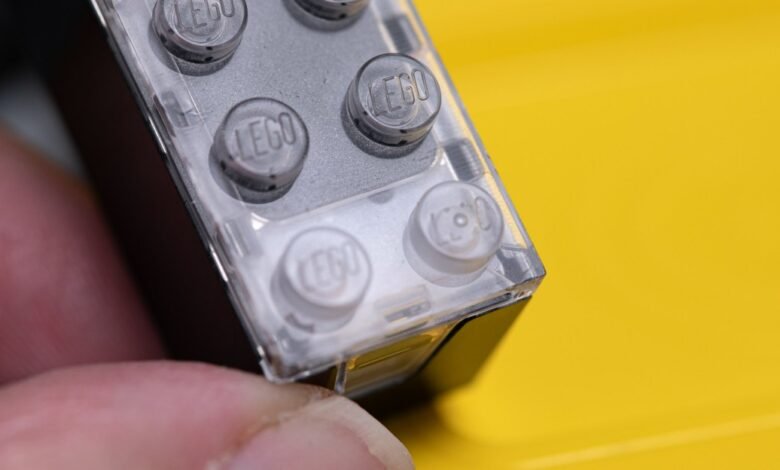
The core of the issue is the battery’s capacity and permanence. At only 45mAh, it is minuscule compared to modern smartphone batteries. Crucially, these batteries are not user-replaceable. Independent teardowns show the battery is buried within the brick, surrounded by delicate antenna wires, making access nearly impossible without destruction. Lego’s official guidance is to dispose of the entire brick safely as electronic waste at its end of life, not in regular household trash.
For those interested in the internal engineering, community resources provide further insight. Detailed X-ray imagery reveals the compact layout of components. Additionally, early technical exploration has demonstrated that it is already possible to clone the NFC-based Smart Tags used with the system. As the community analyzes the encryption, it may open doors for user-created content and modifications, highlighting the ongoing dialogue between official product design and enthusiast innovation.
(Source: The Verge)