Proxima Fusion Aims for €2 Billion to Construct Fusion Test Facility
▼ Summary
– Proxima Fusion, a Munich-based startup, plans to raise €2 billion to build a major fusion test facility in Germany, aiming for a milestone toward commercial fusion power.
– The funding is expected to come from the German federal government (roughly €1.2 billion), regional support, and private investment, with Bavaria already pledging €400 million.
– The company, a 2023 spin-out from the Max Planck Institute, is developing a stellarator reactor, which uses twisted magnetic fields for potentially greater stability than tokamaks.
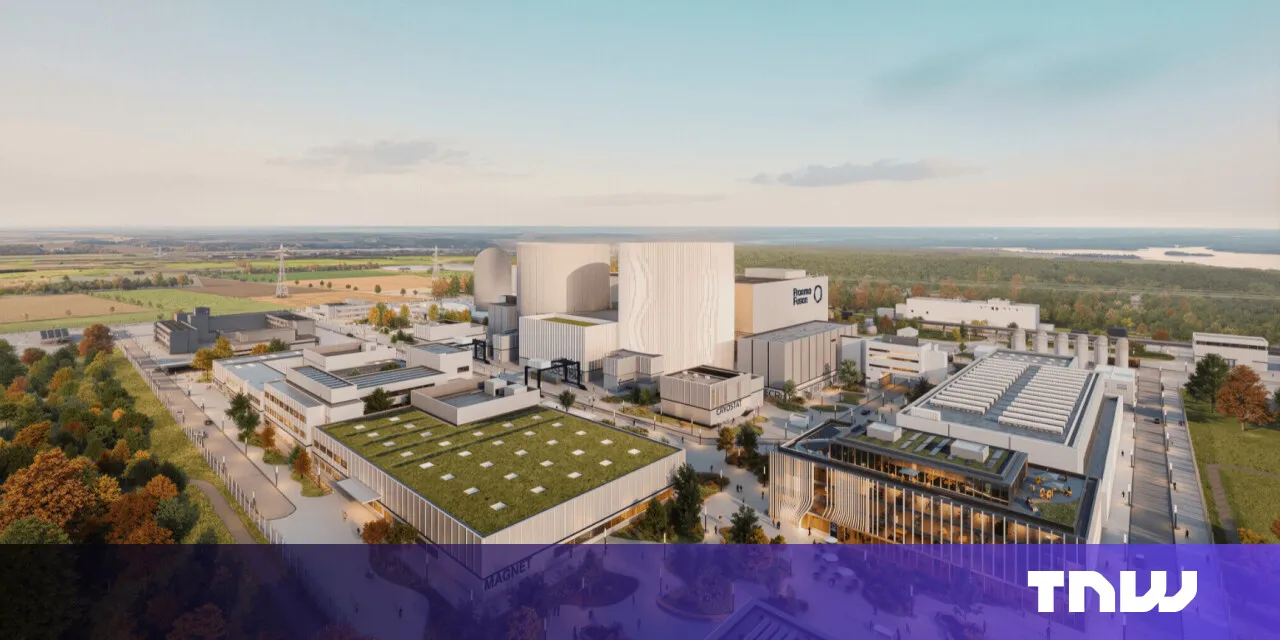
– The planned “Alpha” facility near Munich aims to prove it can safely hold fusion plasma and produce net energy, with success targeted for the early 2030s.
– If supported, this facility could be central to Europe’s fusion energy efforts, though securing such funding is politically and economically challenging due to the technology’s risks and long timeline.
A Munich-based startup in the nuclear energy sector is charting a course to secure approximately €2 billion in funding for a groundbreaking fusion test facility in Germany. This ambitious project represents a significant step toward making commercial fusion power a tangible reality. The company, Proxima Fusion, emerged in 2023 as a spin-out from the prestigious Max Planck Institute for Plasma Physics, assembling a team deeply rooted in Europe’s established fusion research community.
The firm is focusing its efforts on a stellarator reactor design, which employs intricately twisted magnetic fields to confine super-heated plasma. Company leaders advocate that this approach promises greater operational stability and the potential for continuous power generation compared to the more common tokamak design. The planned test site, currently named Alpha and slated for construction near Munich, has a clear dual mission: to demonstrate the safe containment of fusion plasma and to achieve the critical milestone of net energy gain, where the device produces more power than it consumes.
Financial backing for the venture is anticipated from a blend of public and private sources. The company expects over half of the total, around €1.2 billion, to come from the German federal government. Regional support is already materializing, with the state of Bavaria committing €400 million. Proxima Fusion itself intends to contribute a matching €400 million or more through private investment and investor capital. The remaining federal portion is likely to be channeled through Germany’s High-Tech Agenda and its broader fusion research strategy, which already encompasses over €2 billion in planned support through 2029.
Achieving success at this Alpha facility, potentially operational in the early 2030s, would mark a pivotal transition for fusion technology from a purely experimental science to a practical engineering endeavor. Fusion energy is often hailed as the ultimate clean power source, replicating the sun’s process to generate massive amounts of low-carbon energy with minimal long-lived radioactive waste. However, the scientific community has pursued this goal for decades without yet creating a device that sustains a net energy output.
Proxima’s strategy is to build upon extensive stellarator research and translate that scientific knowledge into a scalable, engineered system. Proponents argue that such a bridge from research to industrial application is essential for Europe to remain competitive with large-scale fusion initiatives underway in the United States and Asia. Critics, however, highlight the inherent risks and the considerable political and economic challenges of securing multi-billion-euro investments for infrastructure whose commercial viability may be decades away.
Should the German government fulfill its funding commitments, Proxima Fusion’s test facility could emerge as a cornerstone of Europe’s strategy to harness fusion energy. This effort aims to future-proof the continent’s energy supply, reducing reliance on fossil fuels and imported power while pursuing a transformative clean energy solution.
(Source: The Next Web)