Apple Must End the Era of 60Hz iPhone Displays
▼ Summary
– Apple introduced 120Hz ProMotion displays nearly a decade ago but still treats them as a luxury feature, primarily reserving them for high-end Pro models.
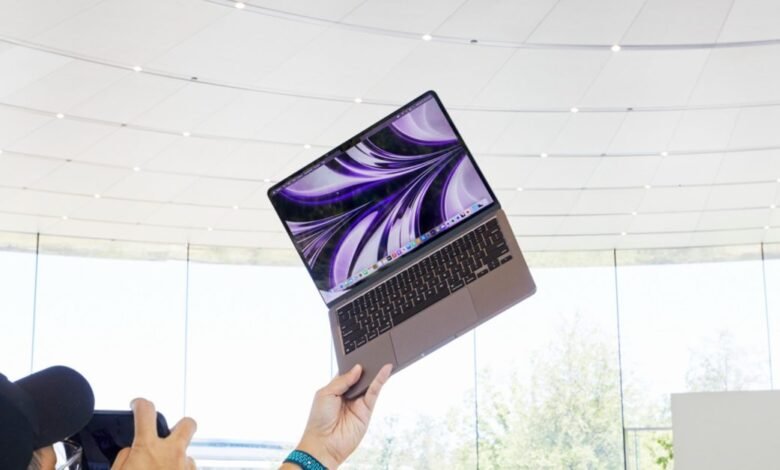
– While Apple recently added 120Hz to the base iPhone, mid-range products like the iPad Air and MacBook Air still use 60Hz displays despite their premium price points.
– A 120Hz display provides a universally smoother and more responsive user experience, even if the average consumer cannot identify the specific cause.
– The significant price gap between Apple’s mid-range and Pro models means most consumers won’t upgrade solely for 120Hz, making its exclusion from mid-tier products feel unjustified.
– The author argues that for mid-range Apple products, which are not cheap, 60Hz displays are outdated and that even a 90Hz option would be a meaningful improvement.
It’s time for Apple to move beyond the 60Hz display standard across its mid-range product lineup. The 120Hz ProMotion display technology, first introduced on the 2017 iPad Pro, has been treated as a luxury feature for far too long. While the recent inclusion of 120Hz in the standard iPhone 17 model is a welcome step, it highlights a broader issue. Apple continues to withhold this fundamental enhancement from devices like the iPad Air and MacBook Air, which are positioned at premium price points themselves. This strategy feels increasingly out of touch in a market where smoother, more responsive screens have become a baseline expectation for quality hardware.
Many will claim the average user doesn’t consciously notice the difference between 60Hz and 120Hz refresh rates. While that might be technically true, the experiential impact is undeniable. A higher refresh rate makes every interaction, scrolling, navigating, and animating, feel significantly faster and more fluid. The device simply responds better, even if the person using it can’t pinpoint the exact technical reason. When a company builds its reputation on seamless user experience, denying this improvement to a wide swath of customers seems counterintuitive.
Apple’s mid-range products, like the iPad Air starting at $599 and the MacBook Air at $999, should not provide the bare minimum in display technology. The price gap to the Pro models is now substantial, often $400 or more. This difference is large enough that most consumers aren’t genuinely cross-shopping the tiers. If someone needs specific Pro features like Tandem OLED or the most powerful Apple Silicon chip, they will buy the Pro model from the start. For everyone else, an extra several hundred dollars just for a smoother screen is a difficult justification, despite the clear improvement it offers.
There was a time when smaller price gaps between models made exclusive features more logical. In 2022, the 11-inch iPad Pro was $799 compared to the $599 iPad Air, a $200 difference. Today, that gap has doubled. The same logic applies to laptops. With the MacBook Air at $999 and the cheapest MacBook Pro at $1599, a $600 premium for features like ProMotion is a steep climb. A thousand dollars is not a budget price, and at that level, consumers rightly expect a modern display standard.
Of course, some level of feature differentiation between product tiers is necessary for any business. Apple will always aim to upsell customers to higher-end models where possible. However, after nearly a decade since pioneering 120Hz in its own products, it’s puzzling why the company would withhold this technology from its mid-range offerings. The cost to incorporate a 120Hz LCD panel into products like the MacBook Air and iPad Air is likely marginal at this stage, yet the payoff in daily user satisfaction would be immense.
It’s reasonable for entry-level products, such as the base model iPad or a potential budget MacBook, to retain 60Hz displays. These devices sit at the bottom of the portfolio and serve as accessible entry points. The issue lies with the mid-tier. Across the wider tech industry, most $999 laptops now include 120Hz displays as a standard feature. While MacBook Air buyers may not switch to Windows over this single specification, it raises the question of whether Apple should be lagging behind a common industry benchmark.
For a company celebrated for perfecting small details that elevate the overall experience, skimping on display responsiveness is a noticeable misstep. Adding 120Hz to the Air lineup wouldn’t drastically alter the perception of Apple’s product ladder, but it would significantly enhance the feel of using these devices daily. If maintaining a strict hierarchy remains a priority, a compromise like a 90Hz display could be a worthwhile middle ground. Ultimately, for Apple’s popular mid-range products, the era of 60Hz displays has run its course.
(Source: 9to5Mac)