SpaceX’s Super Heavy Booster Passes Crucial Cryoproof Test
▼ Summary
– SpaceX’s upgraded Super Heavy V3 booster has successfully completed a multi-day cryogenic proof test, a critical step that its predecessor failed.
– The test involved loading super-cold liquid nitrogen multiple times to validate the booster’s redesigned propellant systems and structural strength.
– This milestone moves SpaceX closer to the first test flight of the Starship V3 rocket, following the partially successful five flights of the previous V2 version.
– The current Booster 19 passed its stress testing, unlike the originally assigned booster which was destroyed in a November pressure test failure.
– The new Raptor 3 engines for the V3 rocket are more powerful, lighter, and have integrated components to improve reliability.
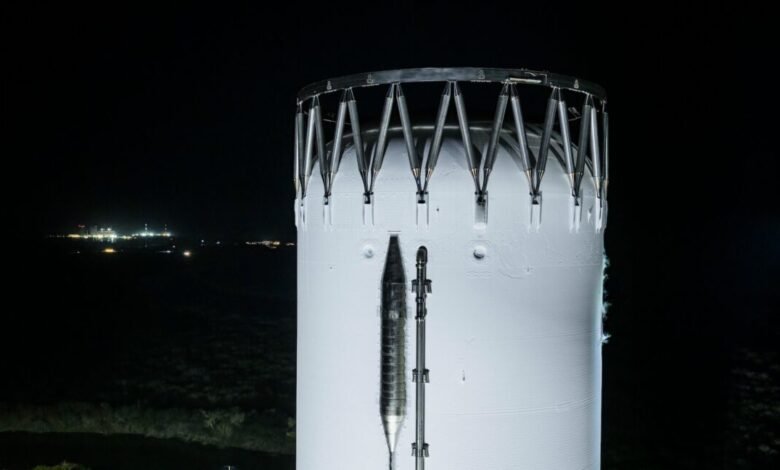
The upgraded Super Heavy booster, a critical component for SpaceX’s next Starship mission, has successfully passed a rigorous cryogenic proof test. This achievement marks a significant step forward, especially considering a similar test led to the failure of the previous booster. The successful multi-day campaign validates the structural integrity and redesigned propellant systems of the new Super Heavy V3 booster, moving the company closer to its next major flight demonstration.
Conducted at the Massey’s Test Site in Texas, the operation involved transporting the massive 237-foot-tall stainless-steel booster from its factory. Over six days, ground teams performed an initial ambient pressure test before subjecting the vehicle to four separate cycles of loading with super-chilled liquid nitrogen. This process simulates the extreme thermal and pressurization conditions the booster will experience when filled with its actual flight propellants: cryogenic liquid methane and liquid oxygen.
This successful test is a pivotal milestone for the Starship V3 or Block 3 program. It follows a series of five test flights last year with the prior V2 iteration, where the final two missions were deemed successful, paving the way for this upgraded design. The booster originally intended for this V3 flight, Booster 18, was destroyed in a November pressure test when its liquid oxygen tank ruptured. The current vehicle, Booster 19, has now cleared this crucial hurdle without incident.
Following the test, the booster was returned to the factory where technicians will begin installing its flight hardware. This includes mounting a full complement of 33 Raptor 3 engines to its base and attaching the booster’s aerodynamic grid fins. The new engines represent a key upgrade, designed to produce greater thrust and enhanced reliability. Engineers have integrated plumbing and sensors directly into the Raptor 3’s main structure, a redesign that reduces weight and eliminates the need for separate heat shields between the engines, streamlining the booster’s aft section.
(Source: Ars Technica)