Declassified: Cold War Spy Satellite’s Secret Mission Revealed
▼ Summary
– The US National Reconnaissance Office has declassified the Jumpseat program, its first-generation fleet of signals-collection satellites that operated from 1971 to 2006.
– Jumpseat’s primary mission was to monitor the Soviet Union by collecting electronic signals, communications, and intelligence related to weapons development.
– The eight satellites used a highly elliptical orbit, allowing them to loiter for extended periods over the Arctic and northern hemisphere to gather persistent coverage.
– This orbit, similar to the Soviet Molniya orbit, positioned the satellites to travel slowly at their highest point, optimizing them for eavesdropping.
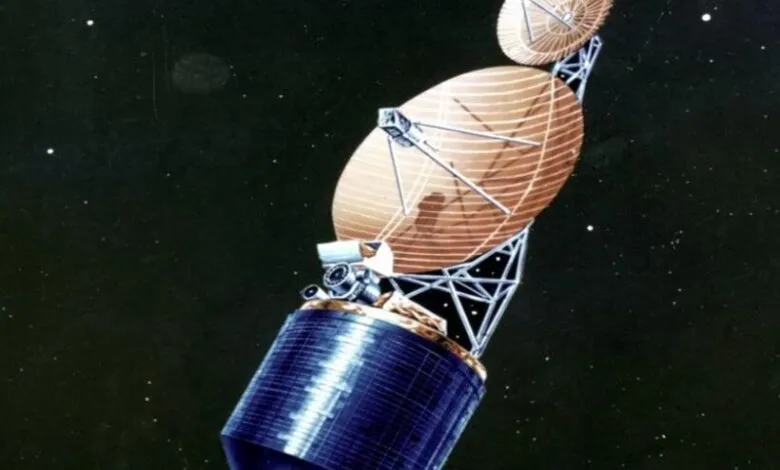
– The declassification now officially confirms the program’s purpose and provides images, though its existence had been previously revealed through leaks and media.
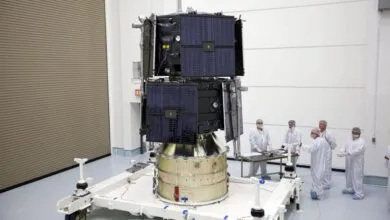
The National Reconnaissance Office (NRO) has officially pulled back the curtain on a long-classified Cold War spy satellite initiative known as Jumpseat. For decades, this program was instrumental in gathering critical signals intelligence from the Soviet Union, and its recent declassification provides a fascinating glimpse into the technological espionage of the era. While the program’s name had surfaced in leaks and media reports over the years, the NRO has now released detailed accounts of its development, operational purpose, and previously unseen images of the satellites themselves.
Operating from 1971 through 2006, the Jumpseat program involved eight satellites launched during a period when the NRO’s very existence was a closely guarded state secret. The agency describes Jumpseat as the nation’s first-generation signals-collection satellite system operating in a highly elliptical orbit (HEO). Its primary objective was to monitor the development of adversarial offensive and defensive weapon systems by collecting electronic emissions, communication signals, and foreign instrumentation intelligence. The intercepted data was then distributed to key national security entities, including the Department of Defense and the National Security Agency.
The Soviet Union stood as the principal target for these intelligence-gathering operations. To achieve persistent surveillance, the Jumpseat satellites were placed in specialized orbits that ranged from a few hundred miles to nearly 24,000 miles above the Earth. Their flight paths were meticulously calculated so that the highest point of their orbit, known as apogee, occurred over the far northern hemisphere. Satellites move slowest at apogee, allowing the Jumpseat spacecraft to loiter for extended periods, often most of their 12-hour orbital period, over strategic areas including the Arctic, Russia, Canada, and Greenland.
This orbital strategy provided the United States with sustained coverage of Soviet territory and Arctic regions, a technique the Soviets themselves had pioneered. Several years before the first Jumpseat launch, the Soviet government began deploying its own communication and early-warning satellites into similar paths, which they termed Molniya orbits, “Molniya” being the Russian word for lightning. The Jumpseat program effectively adopted and adapted this innovative orbital concept for American signals intelligence needs.
The program’s capabilities were hinted at publicly in a 1986 book by investigative journalist Seymour Hersh, which examined the Soviet downing of Korean Air Lines Flight 007. Hersh revealed that Jumpseat satellites possessed the ability to intercept a wide array of communications, including voice transmissions between Soviet ground crews and pilots. The newly declassified information from the NRO now provides the official context and technical details behind those earlier revelations, solidifying Jumpseat’s role as a cornerstone of Cold War electronic surveillance.
(Source: Ars Technica)