Tesla Ends Model S and X Production for Robot Focus
▼ Summary
– Tesla will discontinue production of its Model S and Model X vehicles in the second quarter of 2026.
– Elon Musk stated the cancellation is to free up factory space for the production of the Optimus humanoid robot.
– The Model S and Model X are older, luxury models whose sales have been steadily declining.
– Sales in the “other models” category, which includes these vehicles, fell by over 40% year-over-year in 2025.
– Tesla’s broader transition from an automotive company to one focused on self-driving cars and robots has been challenging, with a sharp recent profit decline.
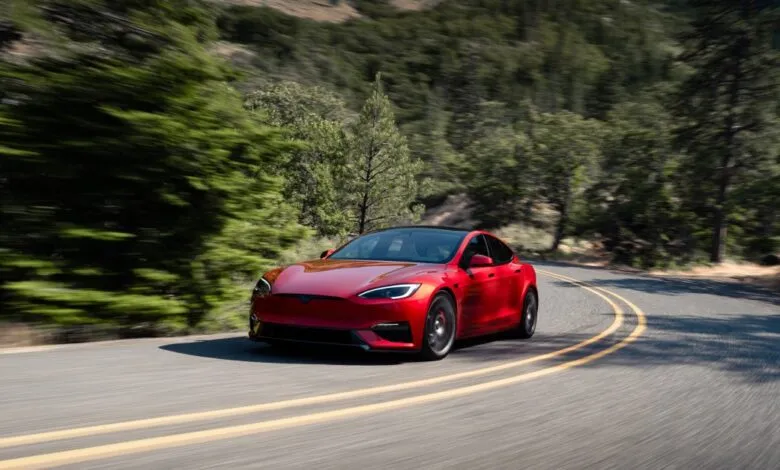
In a strategic pivot that signals a major shift in its long-term vision, Tesla has announced plans to cease production of its flagship Model S sedan and Model X SUV. The decision, confirmed by CEO Elon Musk during a recent investor earnings call, will take effect in the second quarter of 2026. This move is designed to free up critical manufacturing space at the company’s Fremont, California facility, which will be repurposed for the assembly of the Optimus humanoid robot.
The Model S, first launched in 2012, and the Model X, introduced in 2015, have long served as the premium pillars of Tesla’s lineup. However, their sales trajectory has been on a consistent decline for several years. The company’s focus has decisively shifted toward its more affordable, high-volume models: the Model 3 and Model Y. This market realignment has gradually diminished the role of the older luxury vehicles within Tesla’s overall portfolio.
Recent sales figures underscore this trend. Throughout 2025, Tesla reported deliveries of 50,850 vehicles categorized as “other models,” a grouping that includes the Model S, Model X, and the Cybertruck. This number marked a substantial year-over-year sales decrease of 40.2 percent, highlighting the diminishing commercial impact of these legacy products.
Elon Musk’s ambition to redefine Tesla extends far beyond traditional automotive manufacturing. He is steering the company toward a future centered on artificial intelligence, autonomous driving technology, and advanced robotics. The reallocation of the Fremont factory’s resources to prioritize Optimus robot production is a tangible step in this transformation. This strategic redirection has not been without its challenges, as evidenced by Tesla’s reported 61 percent drop in profits for the last quarter, illustrating the financial complexities of such a fundamental corporate evolution.
(Source: The Verge)