The Surprising Rise of Dumbphones
▼ Summary
– The author’s friend Lilah is an extremely “crunchy” person who, after graduating, intentionally switched from a smartphone to a basic “dumbphone” to reclaim her mental focus.
– The author and many peers feel a strong urge to ditch their smartphones due to wasted time, lost sleep, and a desire to withhold personal data from corporations.
– However, the author is terrified to make the switch, feeling their smartphone is a literal extension of their mind and that losing it would cause panic and reduce their competence.
– This feeling is supported by the “extended mind hypothesis,” which argues that tools like smartphones become part of a single cognitive system with our biological brains.
– The author’s experience of losing photos and associated memories illustrates how smartphones function like a “transactive memory” partner, deeply entwined with our personal recollection.
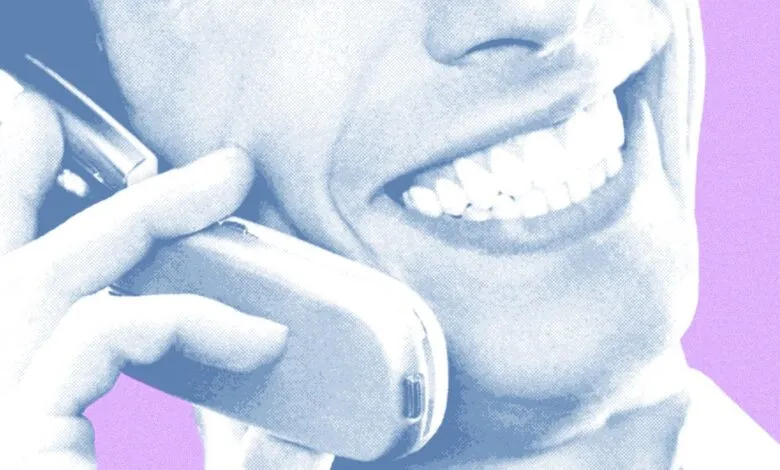
My friend Lilah is the most unapologetically earthy person in my circle. She rescues insects and rodents from harm, once served me a glass of her disastrous homemade wine, and after leaving a nonprofit job, chose to live in a yurt before moving into an attic shared with squirrels. For a while, she even owned an iPhone, though not by choice, a university administrator insisted it was essential for her student duties, citing two-factor authentication and other digital necessities. True to form, after graduating, she celebrated by switching to a dumbphone. This particular model, designed for people distancing themselves from constant connectivity, could use Wi-Fi but not access the open internet, and it definitely didn’t run apps. Navigating life without a smartphone, Lilah explained her decision simply: “I felt like my brain was being consumed.”
Many of my peers in their twenties share this desire to disconnect. I understand the impulse completely. I lose countless hours each day, and sacrifice sleep, to the endless scroll. There’s a real shame in realizing how much precious time I spend watching strangers’ videos until my eyes ache and my head throbs. On principle, the idea of withholding personal data from corporations and escaping a home screen plastered with ads is incredibly appealing.
Yet, I haven’t made the switch. The reason is straightforward: I’m scared. The thought of abandoning my smartphone feels utterly disorienting. It would, I’m convinced, dramatically reduce my overall capability to function in the world. It’s embarrassing to admit, it makes me feel like a helpless child, but I am certain my smartphone has become an extension of myself. I mean that quite literally. The panic that sets in when I can’t find it is visceral and profound, as if I’ve lost a part of my own body.
This feeling is neither crazy nor new. In 1998, philosophers Andy Clark and David Chalmers proposed the “extended mind hypothesis.” Their theory suggests that tools outside our bodies can functionally extend our biological brains. When you check your grocery list in a notes app or use a maps program to navigate to a friend’s house, you’re not just using your phone. You’re engaging a single cognitive system made up of both your mind and the technology. Since I got my first iPhone at fourteen, my mind has progressively fused with Apple’s operating systems. My phone and I are now inextricably linked.
This raises two pressing questions. Is trying to sever this connection a worthwhile goal? And is it even possible, as dumbphone advocates believe?
A psychological concept from 1985 offers a revealing parallel. The late psychologist Daniel Wegner developed a theory about intimate partnerships called transactive memory. He argued that long-term couples store information within each other, creating a shared pool that acts like a joint memory bank, a unified system for acquiring, holding, and using knowledge that is greater than either person alone. This idea applies, perhaps humiliatingly well, to my relationship with my iPhone.
I learned this the hard way at the end of high school. I went to an Apple store to replace my old, worn-out phone with a new model. Like a typical irresponsible teenager, I hadn’t backed up my recent data. In an instant, all my photos from that school year vanished. What I discovered was that my memories of that time, a road trip across the southern states, a friend’s dramatic breakup, faded along with the pictures. I knew, logically, these events had occurred. But without the specific images to trigger recollection, I lost the emotional texture and vivid feeling of those experiences. The external tool had truly become part of my internal memory system.
(Source: Wired)