Amazon Fire TV Omni QLED (2025) Review: A Smart TV Bargain
▼ Summary
– The Amazon Fire TV Omni QLED (2025) is an average TV with a standard 60Hz refresh rate, average brightness, and no Dolby Atmos support.
– Its primary standout feature is the new, hands-free Alexa+ voice assistant, which offers more contextual and conversational control.
– The TV sacrifices features like a mini-LED backlight and high refresh rates found in its predecessor and competing models from brands like Hisense and TCL.
– Picture quality is decent with QLED and full-array local dimming (except on the 50-inch model), but it is outperformed by similarly priced competitors.
– While its initial price is relatively high, it is frequently discounted during Amazon sales events, improving its value proposition.
Finding a smart TV that balances features with affordability can be a challenge, but the Amazon Fire TV Omni QLED (2025) presents itself as a solid, if unspectacular, option for those deeply invested in the Amazon ecosystem. This model delivers a decent QLED picture and the convenience of hands-free Alexa, though it makes noticeable compromises in areas like brightness, audio, and gaming performance to hit its price point.
The standout feature is undoubtedly Amazon’s new AI-powered Alexa+, a more conversational and context-aware version of the familiar voice assistant. For Prime members, this enhanced service is included at no extra cost, allowing for hands-free control that extends beyond the TV to integrate with a wider Alexa smart home setup. You can ask for movie suggestions, check sports schedules, control smart devices, or open apps without ever touching the remote. A physical microphone mute slider on the TV’s bottom edge offers a welcome layer of privacy.
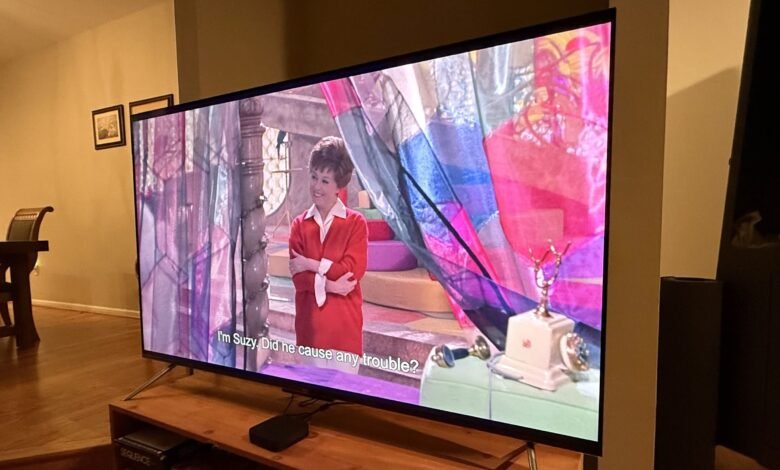
In terms of picture performance, the Omni QLED provides a crisp and vibrant image suitable for everyday viewing. It supports major HDR formats, including Dolby Vision and HDR10+ Adaptive. However, its peak brightness is merely average, measuring around 510 to 598 nits in testing, which means HDR highlights won’t pop as brilliantly as on more premium sets. Full-array local dimming is included on all but the 50-inch model, helping to improve contrast and black levels, though some light blooming can be observed in dark scenes. Color coverage is adequate but not class-leading.
The audio experience is a clear weak point. The built-in speakers lack power and depth, with virtually no impactful bass, making action movies and music feel underwhelming. Furthermore, the TV does not support Dolby Atmos audio. While helpful features like Dialogue Boost and a Volume Leveler are included, most users will want to pair this TV with one of the best soundbars for a satisfying home theater experience.
Gamers should look elsewhere, as the Omni QLED is limited to a standard 60Hz refresh rate, preventing it from taking full advantage of the 120Hz capabilities of modern consoles like the PlayStation 5 and Xbox Series X. It does include a Game Mode that activates automatically and a dedicated app for Amazon’s Luna cloud gaming service, which offers some free titles for Prime members.
The design is functional and straightforward, with thin bezels and a simple stand setup. Connectivity includes four HDMI 2.0 ports (one with eARC), optical audio, and a USB port. The familiar Fire TV remote features quick-launch buttons for major streaming services.
Navigating the Fire TV interface is generally smooth, but be prepared for a heavily Amazon-centric experience. The home screen prominently features Prime Video content and advertisements. There is a robust selection of free, live TV channels, and all major streaming apps are available. One minor frustration is that advanced HDR picture settings are only accessible while content is playing, not from the main menu.
When assessing value, the Omni QLED’s initial retail price feels a bit high for its feature set. However, Amazon’s frequent sales events often see significant price drops, making it a more compelling bargain. Competing models from brands like TCL and Hisense often offer superior specs, such as mini-LED backlights, higher refresh rates, and Dolby Atmos support, for similar or lower prices, though they may lack the deep Alexa+ integration.
This television was tested over several weeks with a variety of content, including 4K HDR films, streaming series, and video games. Benchmark measurements for brightness and color accuracy were conducted in a controlled environment to ensure objective results.
(Source: TechRadar)