Ariane 64 Debuts Soon; India’s Falcon 9 Rival Emerges
▼ Summary
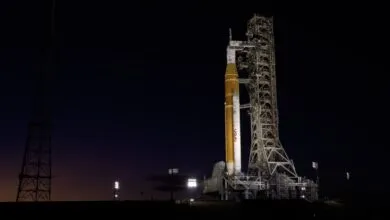
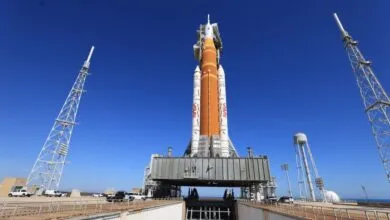
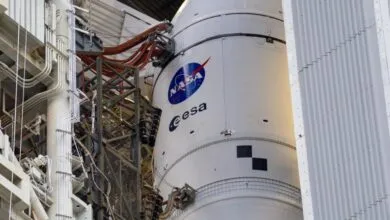
– NASA has rolled out the Space Launch System and Orion spacecraft in Florida for the Artemis II mission, with a launch date dependent on a successful fueling test.
– The likely no-earlier-than launch date for the Artemis II mission is February 8, and coverage of the rollout will be provided.
– The Rocket Report newsletter covers various rocket classes and upcoming launches, inviting reader submissions and subscriptions.
– MaiaSpace, an ArianeGroup subsidiary, secured a major contract with Eutelsat to launch many of its new OneWeb satellites.
– The Maia rocket’s first test is scheduled for late 2026, with operational OneWeb launches expected no earlier than 2027, and it will use liquid oxygen-methane propellant.
All eyes are on Florida this weekend as NASA prepares the Space Launch System rocket and Orion spacecraft for the Artemis II mission. While a launch date remains unconfirmed pending a successful fueling test, a rollout is imminent, with a potential launch window opening in early February. This week’s report also covers significant developments in Europe and India, highlighting new launch vehicles poised to enter a competitive global market.
In a major development for European launch services, MaiaSpace has secured a substantial new contract with satellite operator Eutelsat. According to reports, a large portion of the 440 satellites Eutelsat ordered from Airbus for its OneWeb constellation will be launched by the new Maia rocket. This deal represents a significant win for the ArianeGroup subsidiary, which was established just two years ago. MaiaSpace had previously announced contracts with Exotrail for an orbital transfer vehicle launch and for two satellites related to the Toutatis defense mission.
The inaugural test flight of the Maia rocket is now targeted for late 2026 from the Guiana Space Centre, a slight delay from earlier plans. Consequently, missions carrying the OneWeb satellites are not expected to begin before 2027. The rocket is designed to use a liquid oxygen-methane propulsion system. When its first stage is recovered, Maia aims to deliver up to 500 kilograms to low-Earth orbit; in a fully expendable configuration, that capacity increases to 1,500 kilograms.
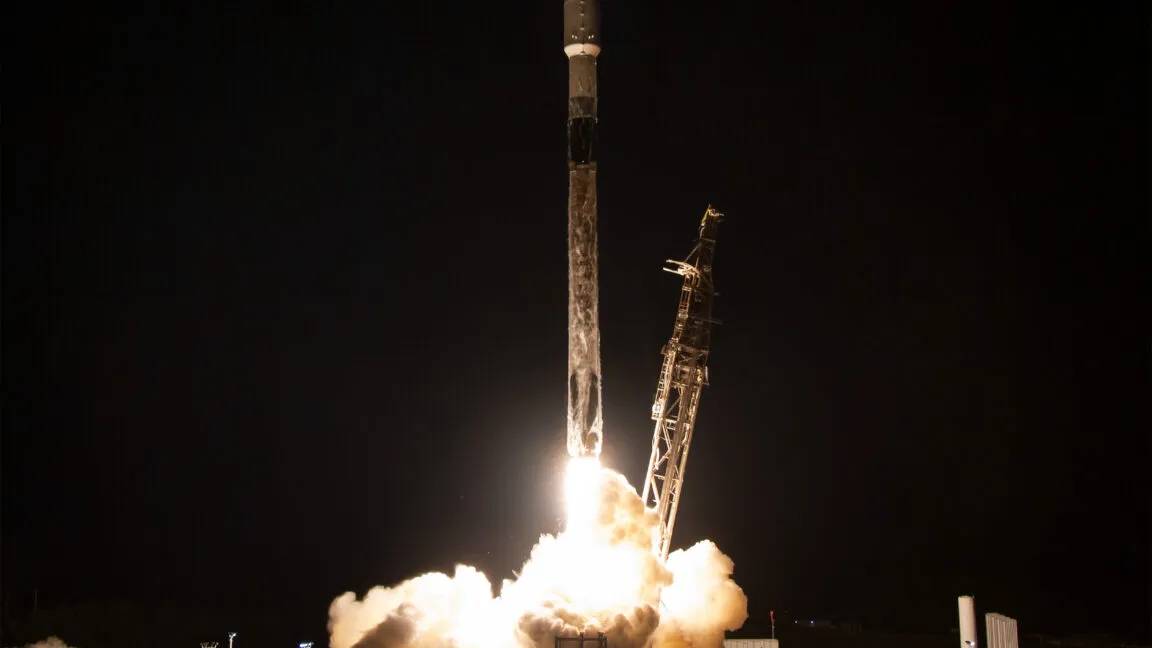
Meanwhile, India is making strides with its own reusable launch vehicle program. The Indian Space Research Organisation (ISRO) recently conducted a successful test of a technology demonstrator for a reusable rocket, often seen as a potential competitor to rockets like SpaceX’s Falcon 9. The test involved a controlled vertical landing of a prototype, a critical step in mastering the technology needed for recovering and reusing rocket stages to reduce launch costs significantly.
This successful demonstration marks a pivotal moment for ISRO as it works to develop a cost-effective, operational medium-lift launch vehicle with reusable capabilities. The agency’s progress signals its intent to capture a larger share of the commercial satellite launch market by offering a more affordable alternative. Further development and full-scale testing will be required before such a vehicle is ready for commercial service, but the foundational technology is now proving itself.
Looking ahead, the global launch calendar remains busy. The next week features a Falcon 9 mission from Florida deploying another batch of Starlink satellites, a Soyuz launch from Kazakhstan with a Progress cargo spacecraft bound for the International Space Station, and an Electron rocket flight from New Zealand carrying a small commercial radar-imaging satellite. This steady pace of activity underscores the growing demand for reliable access to space across government and private sectors.
(Source: Ars Technica)