NASA delays Artemis II launch to March amid hydrogen leak issues
▼ Summary
– NASA’s Artemis II mission launch is delayed by at least a month after a fueling test revealed hydrogen leaks in the rocket’s ground connection.
– The test, a Wet Dress Rehearsal, successfully identified issues, allowing engineers to review data and plan a second test before launch.
– The recurring hydrogen leak problem is similar to one that delayed the uncrewed Artemis I mission in 2022, which was eventually resolved.
– Artemis II will be the first crewed lunar mission since 1972, sending four astronauts around the Moon to prepare for future landings.
– The mission’s next launch opportunity is now targeted for March 6, 2024, dependent on specific orbital conditions for a safe return trajectory.
The highly anticipated Artemis II mission, which will return astronauts to lunar space for the first time in over five decades, has been postponed to March. This decision follows a critical fueling test that identified persistent hydrogen leaks in the rocket’s ground systems at Kennedy Space Center. While the recent Wet Dress Rehearsal successfully met many objectives, the discovery necessitates further analysis and a second test, pushing the earliest launch opportunity into next month.
During the two-day practice countdown, engineers encountered several technical hurdles. The most significant finding was that recurring hydrogen leaks, a problem that also delayed the uncrewed Artemis I mission in 2022, have not been fully resolved. NASA stated that teams worked through the challenges and gathered valuable data, but the need for a thorough review and another rehearsal is clear. The agency will now target March for the next launch attempt.
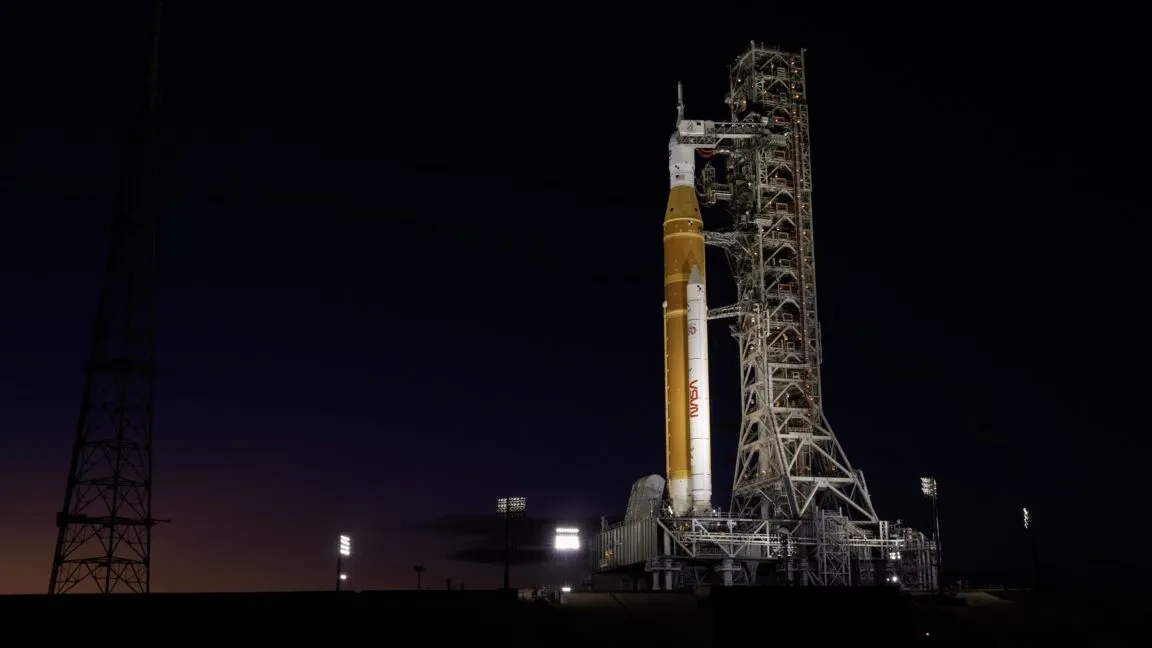
This rehearsal is a standard but vital procedure designed to uncover issues before the actual launch day. It mimics the entire countdown sequence, including loading the rocket’s core stage with super-cold liquid hydrogen and liquid oxygen propellants. The leak occurred at the quick-disconnect interface linking the Space Launch System (SLS) rocket to the mobile launch platform. Resolving these hydrogen leaks is a top priority for mission safety and schedule certainty.
Artemis II represents a monumental step in human space exploration. The mission will send four astronauts aboard the Orion spacecraft on a journey around the Moon, marking the first crewed lunar flight since Apollo 17 in 1972. This flight will test all critical systems with humans on board and pave the way for Artemis III, the mission slated to land astronauts near the lunar south pole.
Prior to the test, NASA officials had hoped a flawless rehearsal would keep the mission on track for a potential launch as early as February 8. The agency’s launch windows are constrained by orbital mechanics; they require the Moon to be in a specific position to enable a free-return trajectory. This passive safety feature allows the Orion spacecraft to loop around the Moon and return to Earth without major engine burns if a problem arises.
The first available launch opportunity for Artemis II is now March 6. A two-hour launch window opens at 8:29 p.m. Eastern Standard Time. Should the mission launch then, the crew would embark on a roughly 10-day journey, venturing farther from Earth than any humans have ever traveled.
(Source: Ars Technica)