Why Sony Can’t Ignore Xbox’s Shooter Fans
▼ Summary
– The console war is effectively over as Xbox plans to transition its future hardware to a full Windows PC platform, blending with its PC operations.
– Despite consistently lower console sales than PlayStation and Nintendo, Xbox maintains a highly engaged user base that punches above its weight for specific genres.
– Data shows Xbox performs nearly neck-and-neck with PlayStation for popular shooter games, a strength likely forged by its historical lineup and marketing.
– In contrast, single-player and RPG titles like Elden Ring show a sales gap more aligned with PlayStation’s larger overall install base.
– Xbox’s strategy includes expanding genre variety via Game Pass, but this may risk training users to wait for subscriptions rather than buying games outright.
The console landscape has shifted dramatically, with Microsoft signaling a future where Xbox blends into the broader Windows PC ecosystem. Yet, despite its well-documented struggles in hardware sales compared to PlayStation and Nintendo, the Xbox platform retains a powerful and specific allure for game publishers. Data reveals that Xbox maintains a fiercely dedicated community, particularly within the shooter genre, a fact even Sony has acknowledged by releasing major titles like Helldivers 2 on the platform. This engagement suggests that raw console sales figures don’t tell the whole story about where valuable, active audiences can be found.
Reaching its 25th anniversary, Xbox’s journey has been unpredictable. The brand carved out a significant space during the Xbox 360 era, capitalizing on a misstep by Sony with the PlayStation 3. Today, the narrative is different. While Microsoft continues to develop hardware, with plans for a future, more open device that runs full Windows, the Xbox Series X|S consoles haven’t captured the market share the company hoped for. The sales race consistently places Xbox in third position, leading to a strategic pivot that increasingly merges its console identity with its growing PC operations.
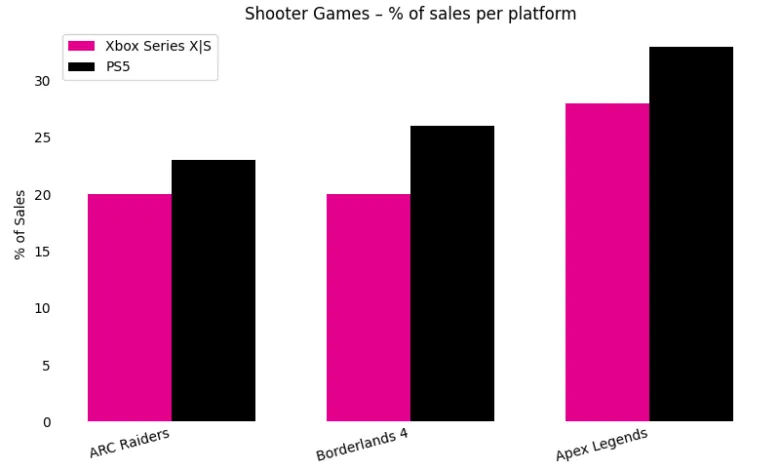
This raises a compelling question: if the platform is underperforming in hardware, why do major publishers continue to support it? The answer appears to lie in user behavior, not just total user numbers. Analysis from firms like Alinea Analytics indicates that while PlayStation’s install base is estimated to be several times larger, Xbox players demonstrate exceptional engagement with specific game types. For popular shooters such as Apex Legends or Borderlands 4, download numbers between PlayStation 5 and Xbox Series X|S are often surprisingly close, defying the expected disparity based on overall console ownership.
This trend seems rooted in history. The legacy of the Xbox 360, heavily marketed with franchises like Call of Duty, Halo, and Gears of War, forged lasting habits. Xbox cultivated an audience that gravitates toward competitive and cooperative shooter experiences. This specialization creates a valuable, concentrated market. In contrast, data shows that for expansive single-player RPGs and narrative-driven action games like Elden Ring or Hogwarts Legacy, PlayStation enjoys a sales lead that more accurately reflects its larger hardware base. Sony’s long-standing focus on these genres, alongside a perhaps younger audience, has secured its dominance there.
Microsoft faces a classic chicken-and-egg scenario in expanding its audience. Efforts to bring major RPG series like Persona and Final Fantasy to Xbox are crucial, but building a comparable fanbase for genres PlayStation owns is an uphill battle. Titles like Final Fantasy XVI reportedly saw low sales on Xbox, likely impacted by later release dates. However, the platform’s strength in shooters, and likely racing games due to Forza, remains a formidable asset. It’s an asset compelling enough for Sony Interactive Entertainment to directly court those Xbox players with its own premier shooter releases.
This phenomenon of platform-specific genres extends beyond consoles. Steam has masterfully cultivated a market for indie games and “variety” gamers who purchase a wide array of titles annually, benefiting from a culture built around discovery and major sales events. Each platform, it seems, develops its own unique ecosystem of player preferences. For Xbox, a significant challenge alongside genre expansion is its subscription model. While Xbox Game Pass offers incredible variety and value, it risks training a segment of users to wait for games to arrive on the service rather than purchasing them outright at launch, a dynamic also seen with Steam sales.
Ultimately, the data suggests there is still substantial revenue to be generated on Xbox when the right game aligns with its community’s tastes. An interesting wrinkle is the role of cloud gaming. While Xbox Cloud Gaming represents a major growth vector, it is not ideally suited for the fast-paced, latency-sensitive shooter games that define the platform’s core strength. This cloud service could, paradoxically, become a gateway for attracting new players to genres like RPGs, offering easy access without a hardware commitment. The upcoming release of Fable may test this very theory.
The evolving strategies of platform holders highlight that success is no longer just about selling boxes; it’s about understanding and serving entrenched player habits. Xbox’s shooter fans prove that a dedicated, engaged audience can command attention from every major player in the industry, shaping release strategies and proving that in the games business, community passion can be as valuable as market share.
(Source: Windows Central)