Samsung, Intel’s SmartPower HDR Cuts OLED Laptop Power by 22%
▼ Summary
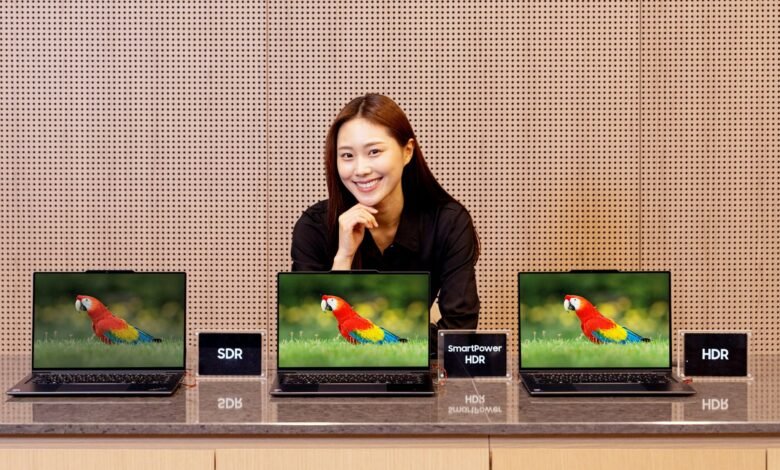
– Samsung Display and Intel have co-developed SmartPower HDR, a new OLED laptop technology that dynamically adjusts panel power to reduce battery consumption by up to 22%.
– The technology uses Intel’s new Core Ultra Series 3 chips to analyze each frame’s luminance and communicate with the display in real-time, ramping up voltage only when brightness peaks are needed.
– SmartPower HDR addresses a key Windows HDR limitation by making the display content-aware, saving power during SDR content instead of constantly expecting HDR peaks.
– The concept is similar to Apple’s EDR technology for Mini-LED displays, which also controls power precisely for individual pixels to save battery and improve image quality.
– Samsung states the power savings could provide 30-40 minutes of extra battery life, with the technology expected to debut in Core Ultra 3 Series laptops like the Galaxy Book6 lineup this year.
A new collaboration between Samsung Display and Intel promises to significantly extend the battery life of OLED laptops. Their jointly developed SmartPower HDR technology dynamically adjusts panel power based on content, cutting energy use by up to 22% compared to standard HDR modes. This innovation addresses a core inefficiency where displays traditionally run at a fixed high voltage to accommodate potential brightness spikes, wasting power during scenes that don’t require them.
The system works by analyzing each video frame in real time. It keeps voltage at a minimum until the content demands a sudden burst of luminance, at which point it ramps up power precisely to meet that need. Even during peak brightness moments, SmartPower HDR manages to consume slightly less energy than a conventional HDR display while delivering identical visual impact. This intelligent, content-aware approach ensures users get the full HDR experience without the usual battery life penalty.
Intel’s role is crucial, as the technology is powered by the upcoming Core Ultra Series 3 processors, codenamed Panther Lake. The integrated Xe2 graphics unit provides refined control over the Samsung OLED panel. A dedicated algorithm on the system-on-chip calculates the optimal voltage required and communicates directly with the display’s timing controller, making instantaneous adjustments to power consumption.
This development is particularly meaningful for the Windows ecosystem, where HDR implementation has often been problematic. In applications not designed for HDR, the operating system can render colors incorrectly, leading to washed-out images. Consequently, many users leave HDR disabled except for specific games or videos, missing out on system-wide benefits. SmartPower HDR tackles the root cause of this hesitation by eliminating the unnecessary power drain when HDR capabilities aren’t actively needed.
The concept shares philosophical ground with Apple’s approach on its Mini-LED MacBook Pro displays, which use Extended Dynamic Range (EDR). That technology also allows precise, zone-based control, brightening only the pixels that require it, which conserves energy. SmartPower HDR applies a similar principle of intelligent, localized power management to OLED screens, making high dynamic range more practical for all-day use.
The fundamental appeal of HDR lies in its capacity for much higher brightness, but those peaks are only utilized in content specifically mastered or enhanced for it. When viewing standard dynamic range material on an HDR-enabled Windows laptop, the display still operates at a higher power state in anticipation of those peaks. Samsung and Intel’s solution makes the display smarter, so it only draws extra power when the content genuinely calls for it.
Samsung estimates this efficiency gain could translate to an additional 30 to 40 minutes of battery life on a typical laptop, complementing the overall efficiency improvements expected from Intel’s Panther Lake platform. While an official launch timeline hasn’t been detailed, the technology is anticipated to debut in laptops featuring Core Ultra 3 Series chips later this year. Likely candidates include Samsung’s own Galaxy Book6 series, which already utilizes OLED displays perfect for this new power-saving innovation.
(Source: Tom’s Hardware)