Hands-On With the LEGO Smart Brick
▼ Summary
– The author was initially skeptical of Lego’s new Smart Bricks but found them to be far smarter and more imaginative than expected, surpassing the limited interactivity of previous products like Lego Mario.
– The Smart Bricks use NFC tiles to program the brick’s identity, enabling complex, spatially-aware interactions between smart parts and minifigures, such as character conversations or context-sensitive vehicle reactions.
– A key design philosophy is for the bricks to be wireless and spatially aware to foster interaction between multiple models in a set, while still relying on user imagination rather than pre-programming every possible action.
– Practical concerns remain, including battery life (45 minutes of active use), the need to periodically recharge, and uncertainty over long-term support and whether the experience will stay engaging to avoid collecting dust.
– The product represents Lego’s biggest innovation since 1978, developed over six years, with the company aiming to integrate technology without centralizing play around a single robotic element.
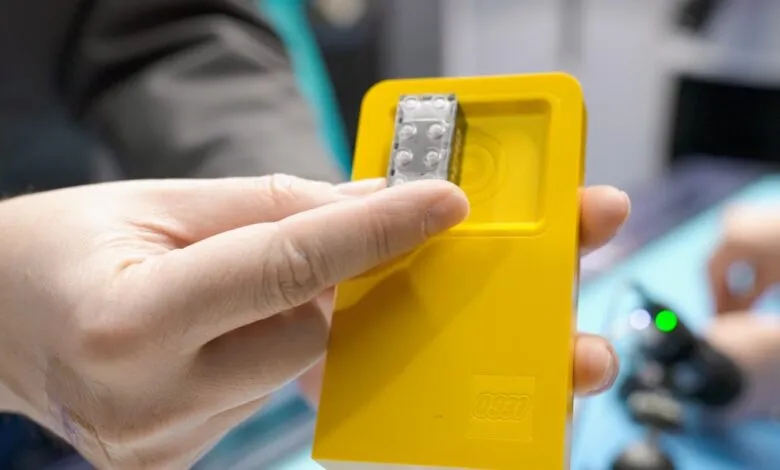
The LEGO Smart Brick represents a significant leap forward in interactive play, blending physical construction with digital intelligence to create dynamic, responsive models. When LEGO first revealed this tiny proprietary computer brick, reactions were mixed. Some worried it signaled the end of pure imagination for a brand built on creativity, while others were instantly intrigued. As someone who approached the announcement with skepticism, my hands-on experience completely changed my perspective. These new Smart Bricks are far more sophisticated and engaging than previous attempts like the LEGO Mario toys, which my own children found predictable and cumbersome.
This system moves beyond simple barcode scanning for sound effects. The new NFC smart tiles act as programs that tell the Smart Brick what kind of vehicle or character it now represents, enabling it to react and interact with other smart components in its vicinity. The potential is immense, though the question remains whether LEGO will fully harness its own invention.
The most flashy demonstration involves a lightsaber duel. Two Smart Bricks embedded in minifigures allow for authentic humming and clashing sounds when they collide, complete with Darth Vader’s ominous breathing. Another obvious application is placing Emperor Palpatine on his throne to trigger The Imperial March. Yet the truly magical moments are less predictable. Stand Vader next to his master by the throne, and they launch into a garbled but characterful conversation, leaving your imagination to decipher the dialogue.
Place a Smart Brick on a Dewback creature, and stroking its tail elicits a reactive sound, as if the beast has been magically animated. In a Mos Eisley Cantina setup, rocking a Smart Brick back and forth lets you control the tempo of the Cantina Band music through a real-time synthesizer, with smart minifigures like Darth Vader able to add vocals if placed near a microphone. Even dogfights between an X-Wing and a TIE Fighter gain depth, with the bricks registering “hits” based on proximity and tracking score until a final explosion.
Perhaps the most compelling demo wasn’t from a Star Wars set at all. A simple police car, explained by interaction designer Maria Salgado, reacted contextually to smart minifigures. A robber approaching triggered the car alarm, while a cop could unlock it with a beep. Placing the cop in the back seat made him snore, but putting a robber in the front seat woke him with a shout. Each smart minifig is programmed with specific traits that govern these interactions, a system developed over six years to move beyond a single central robotic element and create genuine interplay between models.
This philosophy extends to smaller sets. While the X-Wing model is less detailed to accommodate extra elements like a fuel truck and laser turret, the trade-off is a more interactive playset. The turret can battle the X-Wing, and the truck can audibly refuel it. Notably, not every piece needs to be “smart”; the fuel hose uses a standard blue tile, which the brick’s color sensor recognizes to initiate refueling sounds.
The bricks are wireless and spatially aware, enabling complex scenes. However, LEGO’s leadership suggests the company intends for user imagination to drive most of the play, not pre-program every possible interaction. While reassuring to purists, it raises questions about long-term value. Parents will want assurance that these premium bricks won’t gather dust like older electronic toys, especially since they use non-replaceable proprietary batteries instead of standard AAA cells.
Battery life is another consideration. LEGO states the bricks offer 45 minutes of intensive play and can sleep for years, though a biannual charge is recommended for battery health. They enter sleep mode quickly when idle and sometimes require re-introduction to smart tags upon waking. The included wireless charger handles two bricks via USB-C, but the company’s long-term plan for aging batteries is unclear.
Ultimately, the LEGO Smart Brick feels like a transformative product. Its success will hinge on LEGO’s commitment to expanding its interactive ecosystem and ensuring these intelligent bricks continue to surprise and engage builders for years to come.
(Source: The Verge)