Lenovo’s Rollable Concept Laptop: A Gamer’s Dream?
▼ Summary
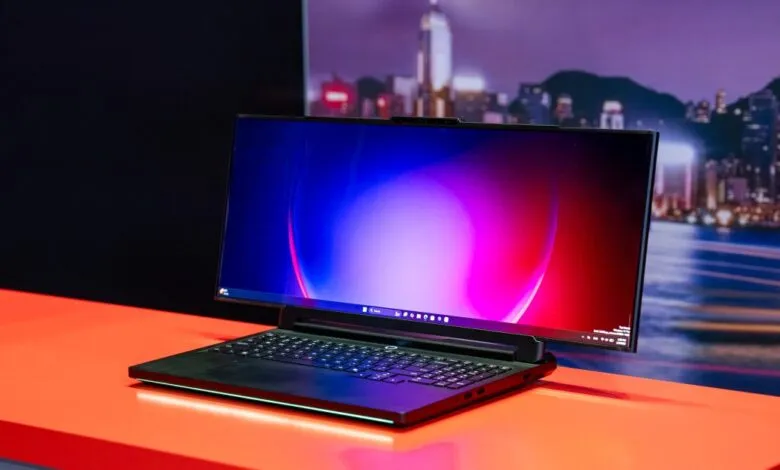
– Lenovo unveiled the Legion Pro Rollable gaming laptop concept at CES 2026, featuring a flexible OLED screen that expands horizontally from 16 inches to an ultrawide 24 inches.
– The concept is based on the Legion Pro 7i and is designed to use an Intel Core Ultra processor and an Nvidia RTX 5090 Laptop GPU.
– Lenovo targets esports professionals with branded screen settings, but the concept appeals broadly to users wanting maximum portable screen space.
– The hands-on demo revealed significant prototype issues, including noisy motors, a stuttering screen, and a large physical gap in the lid.
– Despite its current flaws, the author finds it a compelling concept and expresses a strong desire for similar rollable desktop monitor technology.
The world of gaming laptops is poised for a radical shift with the introduction of truly flexible displays. At CES 2026, Lenovo unveiled its most ambitious concept yet: the Legion Pro Rollable gaming laptop. This machine features a flexible OLED screen that expands horizontally, transforming from a standard 16-inch display into an expansive 24-inch ultrawide panel. This innovative approach offers gamers unprecedented screen real estate in a single, portable device, challenging the very definition of a laptop form factor.
Based on the framework of the Legion Pro 7i, the concept is designed to house powerful internals like an Intel Core Ultra processor and Nvidia’s flagship RTX 5090 Laptop GPU. Lenovo is targeting this device at esports professionals who require versatile training setups, branding the different screen sizes as “Focus Mode” (16-inch), “Tactical Mode” (21.5-inch), and “Arena Mode” (24-inch). For any user who craves a large screen without the hassle of carrying a separate portable monitor, this represents a tantalizing glimpse into the future.
While the company has a solid history of turning concepts into commercial products, the Legion Pro Rollable is very much a work in progress. During hands-on demonstrations, the mechanical operation revealed several areas needing refinement. The motors responsible for extending the screen were notably loud, and the display’s movement was occasionally jerky. A significant technical hurdle was apparent: the screen resolution remained fixed for the 24-inch ultrawide setting. This meant that in the smaller 16-inch and 21.5-inch configurations, users only saw the central portion of that larger canvas, which is far from ideal for gaming or multitasking.
Build quality also presented clear challenges. The laptop’s lid featured conspicuous gaps on the sides where the flexible panel retracts. These gaps were large enough to see internal components, including the underside of the RGB logo. Furthermore, the demo unit lacked any installed games for testing, underscoring its early prototype status. These observations temper immediate excitement but don’t diminish the fascinating potential of the core technology.
The very existence of this concept sparks imagination beyond just laptops. It naturally leads to dreaming about rollable desktop monitors, imagine a 27-inch OLED that elegantly expands to a 34-inch ultrawide, or a panel that starts at 32 inches and stretches to rival the massive scale of monitors like the Samsung Odyssey Neo G9. The Legion Pro Rollable, for all its current rough edges, points toward a future where our screens are no longer rigid, fixed objects but dynamic interfaces that adapt to our needs.
(Source: The Verge)