From Taint Bandaid to Taint Zapper: The Evolution of Anal Care
▼ Summary
– The product “Mor” is an FDA-cleared medical device that evolved from a concept called the “taint bandaid” and uses electrical stimulation to delay male orgasm.
– A key unexpected discovery during development was that the device can also intensify ejaculations by causing further prostate contraction.
– Achieving FDA clearance was a lengthy, multi-year process costing millions, requiring safety data, animal testing, and packaging durability validation.
– The final product is a $300 starter kit with a reusable pulse generator and single-use adhesive patches, controlled via a customizable app for zap strength and pattern.
– The company aims to further develop the device by making it smaller, exploring AI integration, and adapting the technology for female sexual health applications.
The journey from a curious concept at a tech show to a regulated medical device reveals a fascinating evolution in personal wellness technology. What began as a simple “taint bandaid” has now emerged as Mor, an FDA-cleared device designed to address male sexual health. The path to market was neither simple nor swift, highlighting the rigorous demands of bringing an electronic medical product to consumers.
My first encounter with the idea was at CES 2020. Tucked away in a corner booth was a mannequin with a basic bandage placed on its perineum. A slideshow running on a nearby laptop bluntly stated that premature ejaculation was the top male sexual dysfunction. The prototype was crude, the presentation was awkward, and it perfectly encapsulated the strange, hopeful chaos of the event. I wrote about it, thinking that was the end of the story.
The founder, Jeff Bennett, later connected to clarify details, including the important fact that removal wouldn’t be painful for someone with body hair. A beta tester shared their experience, and Bennett hinted at an unexpected discovery during development. The product even earned a moment in the spotlight with a comedic roast on late-night television. Now, six years later, the finished version is in hand. The bandage has transformed into a sophisticated system called Mor, and that unexpected finding? The electrical stimulation can also intensify orgasms.
Navigating the FDA clearance process was the primary reason for the lengthy timeline. Bennett explained that the journey involved brand development, extensive data collection for submission, and a nine-month review by the agency itself. The global pandemic caused further delays and necessitated additional fundraising. A significant hurdle was biocompatibility testing, which the FDA required to ensure the patch was safe for prolonged skin contact. This meant the company had to conduct animal testing, applying the patches to rabbits to monitor for any irritation.
“Those rabbits went through a lot,” Bennett noted. “The patches stayed on for a set period, and they were checked regularly. We hoped to avoid it, but the FDA insisted, and you don’t argue with that.” He emphasized that clearance was about more than just safety; it also involved testing packaging durability and ensuring robust data security and privacy measures were in place. The process cost millions, a step Bennett initially hoped to bypass by classifying Mor as a wellness product. However, because it uses electrical stimulation, the FDA mandated full safety data.
“We decided to bite the bullet,” Bennett said. “We wanted clinicians and consumers to feel confident this was a safe, legitimate product, not just a novelty.” His vision positions Mor in a unique space between a typical sexual wellness item and a prescription medical device.
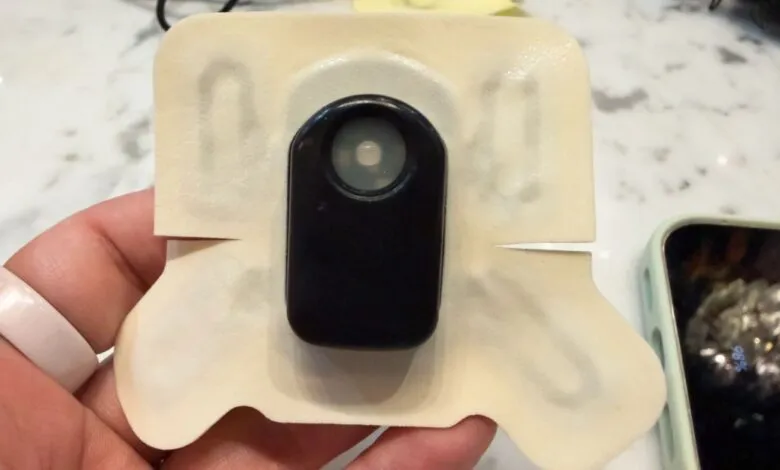
The consumer experience is now far removed from that initial mannequin demo. The starter kit arrives in discreet packaging containing a reusable, rechargeable “pulse generator,” a carrying case, a charging cable, and six single-use patches. The FDA mandated the patches be for one-time use only. The central pulse generator slots into the adhesive patch, which contains the electrodes. The starter pack retails for around $300, with refill patches costing approximately $15 each.
For a demonstration, Bennett applied a new patch to my forearm, inserted the generator, and opened the companion app. It offers two distinct modes: one for delaying ejaculation and another for intensifying orgasm. The intensification effect was the serendipitous discovery during trials, with the theory being that the electrical signal prompts stronger contractions of the prostate. The user has significant control, adjusting the stimulation strength on a scale from 1 to 100, modifying the frequency, and even creating custom patterns. Settings can be locked during use for safety, and preferred configurations can be saved as presets.
The sensation is not a painful shock but a gentle, tingling vibration. Removal is also painless, similar to peeling off a piece of washi tape. Bennett advises users to trim hair with clippers rather than shaving, as nicks could cause discomfort when the device is active.
Looking ahead, Bennett says Morari’s work continues. Goals include reducing the patch size, integrating sensors for automatic adjustment, and exploring the use of AI to personalize settings seamlessly. The company is also investigating ways to make the product eligible for purchase with FSA and HSA funds to improve affordability. Furthermore, Bennett is keen on adapting the technology for multiple genders.
“Orgasm is a neural response, whether male or female,” he explained. “The anatomy differs, so the size and design would change, but we have filed intellectual property for female sexual health applications.” A key aim is to assist women who experience difficulty reaching orgasm.
For now, Bennett’s focus is on awareness. He hopes to encourage couples to explore new avenues of intimacy and to motivate men dealing with premature ejaculation to seek solutions. He doesn’t mind the jokes or the odd origin story, if it sparks a conversation and helps people, the mission is accomplished.
(Source: The Verge)