PC Hardware to Get Excited About in 2026
▼ Summary
– Despite ongoing memory shortages, several promising hardware trends are emerging for PC gaming, including new peripheral technologies and devices that could redefine the platform.
– TMR (Tunnel Magnetoresistance) switch technology is gaining traction in gaming peripherals for its consistent response and lower power, with more keyboards expected to adopt it this year.
– Valve plans to launch three new products in 2026: the Steam Machine PC, the Steam Frame VR headset (powered by an Arm chip), and an updated Steam Controller.
– OLED monitor prices are decreasing, making 1440p models more affordable, while panel brightness continues to improve, though gaming monitors still lag behind announced specs.
– New desktop CPUs are coming, with AMD’s Zen 6 and Intel’s Nova Lake promising performance gains, and the potential for more Arm-powered gaming devices like the Steam Frame is growing.
While the tech world grapples with the ongoing impact of memory shortages and rising component costs, the horizon for 2026 is illuminated by several genuinely exciting hardware developments. From fundamental shifts in processor architecture to clever refinements in everyday peripherals, the coming year promises innovations that could reshape our computing experiences.
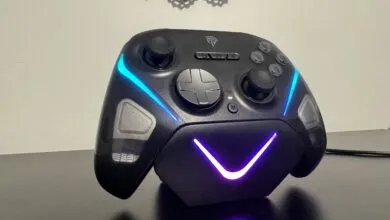
TMR key switches are gaining momentum in the gaming peripheral space. While Hall effect switches currently dominate the market for magnetic, contactless operation, TMR (Tunnel Magnetoresistance) technology offers potential benefits like more consistent response and lower power consumption. We’ve already seen it in some controllers and a handful of keyboards. Major players like Cherry, Razer, and Wooting have their own focused roadmaps, with interests in induction, optical, and sustained Hall effect support, respectively, but the industry often reaches a tipping point when a new component becomes reliably available for mass production. It’s likely only a matter of time before TMR finds a broader home in gaming keyboards.
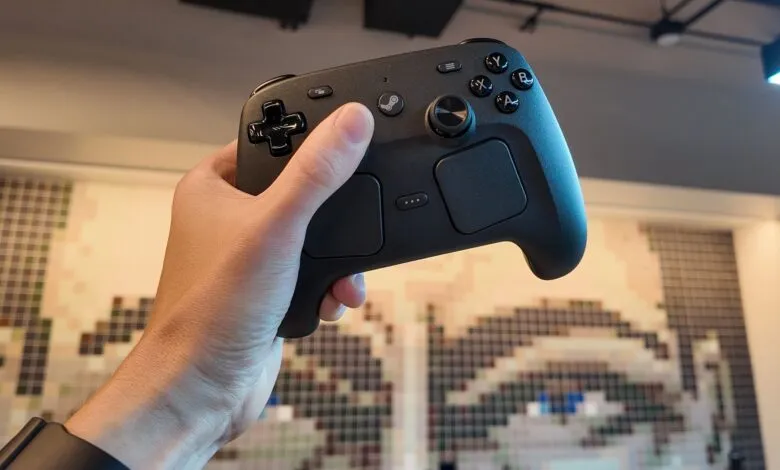
Valve is poised to make a significant splash with a trio of new products. The Steam Frame stands out as a particularly intriguing departure from the Valve Index. This new VR headset, powered by an Arm chip and SteamOS, emphasizes ease of use with inside-out tracking, wireless streaming, and a lightweight design. The Steam Machine aims to revive the dream of living-room Linux gaming with its discrete GPU and compact form factor, though its final price may be influenced by volatile memory markets. Meanwhile, the new Steam Controller refines the original concept, aligning closely with the Steam Deck’s control scheme while offering a more traditional feel and convenient wireless charging. Valve will likely manage demand through a staged preorder system similar to the Steam Deck’s launch.
Display technology continues its steady march forward. The rivalry between Samsung and LG ensures a constant stream of new OLED panels. While year-over-year performance leaps may be subtle, the cumulative improvements are meaningful. Brightness, a historical weakness for OLEDs in monitor form, is gradually increasing, with gaming models now surpassing 300 nits. More importantly, prices are falling dramatically; 1440p OLED monitors have recently dipped below $500. The trend suggests more affordable options, and perhaps even cheaper 4K OLED panels, will arrive in the next year, making the superior contrast of OLED more accessible than ever.
The potential for Arm-powered PC gaming devices is expanding beyond smartphones. Valve’s Steam Frame, using a Snapdragon chip, is a prime example. The appeal lies in excellent battery life, efficient cooling, and lower costs. Through emulation layers like FEX, which Valve has supported for years, these devices can run x86/Windows games. Playing a title like Ghost Town on the Steam Frame’s integrated GPU, despite the emulation overhead, demonstrates real progress. With Valve also releasing SteamOS for Arm and more powerful collaborative chipsets rumored from partnerships like Arm-Nvidia-MediaTek, the foundation for a viable Arm gaming ecosystem is being laid.
On the desktop CPU front, both AMD and Intel have compelling plans. AMD’s Zen 6 is confirmed for 2026, promising performance gains for the existing AM5 platform, which protects users from costly motherboard and RAM upgrades. The subsequent launch of X3D variants with their game-boosting 3D V-Cache has historically followed quickly. However, market pressures from high memory costs could potentially delay some higher-end parts. For Intel, the desktop spotlight is on Nova Lake, expected late this year or early next. Rumors suggest it may employ vertically stacked cache in a move reminiscent of AMD’s X3D technology, potentially offering a significant gaming performance uplift, though it will likely require a new motherboard socket.
Finally, a subtle but impactful trend is emerging for keyboard enthusiasts: the split spacebar. While not a new concept, it’s rare in gaming keyboards. Companies like Wooting are changing that by offering it as an option on popular models like the 60HE v2. This design replaces the single long bar with two shorter keys, creating room for an additional programmable key in the middle. This allows users to maintain a normal space key on one side while mapping the other half to anything from a delete key for typing to an essential game macro. It’s a simple hardware change, empowered by robust software, that adds remarkable flexibility to a compact layout.
(Source: PC Gamer)