Hands-On: The Mui Board, a Wooden Smart Home Controller
▼ Summary
– The Mui Board is a minimalist smart home controller integrated into a piece of wood, designed to blend into the home environment when not in use.
– It functions as a screenless, touch-sensitive interface that displays glowing icons to control lights, music, thermostats, and other connected devices.
– The device supports Matter and integrates with platforms like Sonos and Philips Hue, aiming to provide control without a bright display or voice assistant.
– While praised for its responsive, playful design and calm tech philosophy, the reviewer notes its high price and software that feels incomplete for advanced automations.
– The ideal use case is suggested to be a bedroom, where it can offer convenient control while keeping screens out of the space.
Watching a truly unique piece of technology evolve from a concept into a tangible product you can install in your own home is one of the great pleasures of covering the tech industry. The Mui Board represents this journey perfectly, offering a minimalist smart home controller crafted from wood that aims to integrate technology seamlessly into living spaces. After years of development and appearances at trade shows, the device has finally begun shipping in limited quantities, allowing for a real-world evaluation of its ambitious vision.
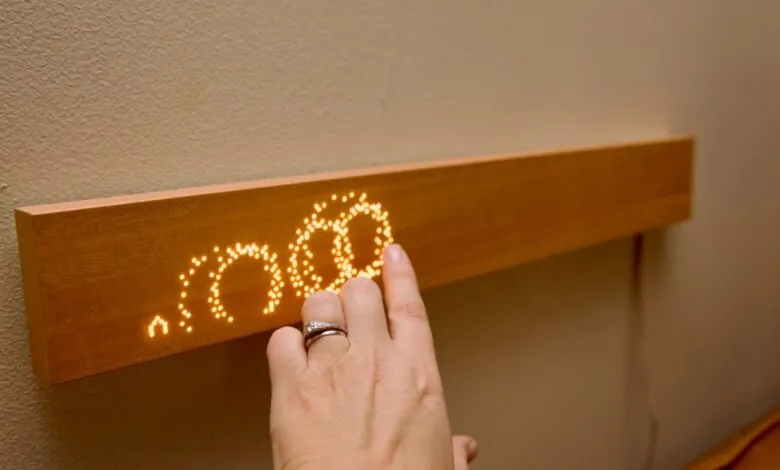
This device functions as a screenless touch interface for managing smart lights, Sonos speakers, and other connected gadgets. When inactive, it appears as nothing more than a simple wooden plank mounted on the wall. A gentle touch on its capacitive surface, however, activates a grid of glowing icons. This lets users adjust lighting, control music playback, set timers, or check information like weather and news headlines—all without the intrusive presence of a traditional bright display.
The philosophy behind the Mui Board centers on creating technology that feels calm and harmonious within a home, a concept reflected in its name, which is a Japanese term for being in tune with nature. For anyone tired of the constant visual noise from screens and smart displays, this offers a compelling alternative. The second-generation model, which became available for purchase earlier this year, demonstrates thoughtful design and responsive performance, though its premium price point positions it as a niche product rather than a mainstream solution.
Available in natural maple or dark cherry finishes, the board presents a simple interface with minimalist icons that provide surprising depth of control. Users can manage lights, adjust thermostats, operate smart plugs, and control window coverings or locks. The key distinction from other controllers is the complete absence of advertisements, a talking voice assistant, or a glaring screen. Interaction is purely through touch, which proves to be intuitive and even playful, with features like a wandering digital cat and a mode that turns the surface into a musical instrument.
On the technical side, the board connects via Wi-Fi and supports the Matter smart home standard, acting as a controller for compatible devices. It integrates with popular platforms like Sonos, Philips Hue, and Ecobee. Setup through the companion app is straightforward, allowing for direct control of music systems and connected lights. While it can configure Matter devices independently of major tech ecosystems, support is currently strongest for lighting, with locks and other categories still under development. Some users may experience slower response times with extensive setups that rely on cloud connections rather than local control.
In practical use, the board serves as an elegant, icon-driven switch panel for the smart home. It requires a brief period to learn the icon layout, but the interface can be customized to prioritize frequently used controls. Its physical form, while beautifully crafted from wood, has a utilitarian profile that some might find overly simple. The necessary power cable also presents a minor aesthetic challenge. Many may find its ideal placement is in a bedroom, where it can offer convenient control over lights and music without introducing a screen into a restful environment.
While the software isn’t yet robust enough to replace comprehensive smart home hubs for creating complex automations, the Mui Board succeeds brilliantly as a tactile and calming interface. It reimagines how we interact with our connected environments, prioritizing subtlety and physical touch. It remains a significant investment, but for those seeking a more organic relationship with their home technology, it delivers a unique and delightful experience. The company continues to innovate, with plans to expand into well-being and lighting features, suggesting this calm tech concept is still evolving.
(Source: The Verge)