The Phone Is Dead. What Comes Next?
▼ Summary
– True Ventures co-founder Jon Callaghan predicts smartphones will not be used as they are today within five years and may be obsolete in ten, viewing them as an inefficient interface for human-computer interaction.
– True Ventures has a successful, low-profile strategy focused on cultivating repeat founders and making early seed-stage investments in companies that enable new human behaviors with technology, rather than just new gadgets.
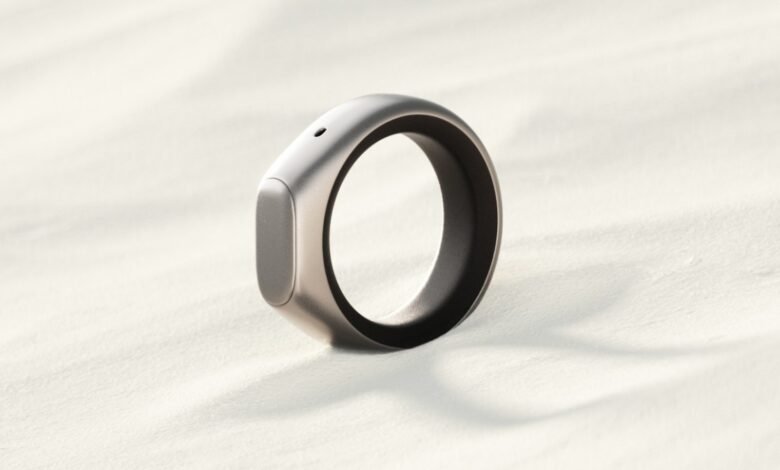
– The firm’s latest investment reflecting this thesis is Sandbar, a voice-activated ring designed as a “thought companion” to capture and organize ideas, emphasizing a single, fundamental behavioral need.
– Callaghan believes the greatest future value in technology lies in the application layer, where new interfaces enable new behaviors, not in the capital-intensive infrastructure layer of the current AI boom.
– True Ventures’ track record includes early, contrarian bets on now-popular hardware like Fitbit, Peloton, and Ring, supporting its thesis as wearable device markets grow rapidly while smartphone growth stagnates.
Jon Callaghan, co-founder of True Ventures, believes the smartphone’s dominance is nearing its end. He predicts that within five years, we will use these devices in radically different ways, and within a decade, we may not use them at all. This isn’t casual speculation from a bystander; it’s a foundational investment thesis for a firm with a notable history of identifying transformative technology shifts long before they become mainstream.
True Ventures has built its reputation by avoiding the herd. While many venture capital firms chase visibility, True has cultivated a discreet, powerful network of serial entrepreneurs. This approach has yielded substantial results: over its 20-year history, the firm has seen 63 profitable exits and seven IPOs from a portfolio of roughly 300 companies. A significant number of these successes involve repeat founders who return to partner with True again, a testament to the firm’s collaborative model. Amidst the current frenzy around artificial intelligence and massive funding rounds, Callaghan’s perspective on the future of how we connect with machines stands apart.
He argues that the smartphone is a deeply flawed intermediary. “The way we take them out right now to send a text or write an email is super inefficient and not a great interface,” Callaghan states. He views them as error-prone and disruptive to daily life. This conviction has driven True to spend years investigating alternatives, focusing on interfaces that feel more natural and integrated. This instinct led to early bets on companies like Fitbit, Peloton, and Ring, investments that seemed questionable at the time but ultimately capitalized on new, intuitive ways for people to engage with technology.
The latest expression of this vision is Sandbar, a hardware device Callaghan describes as a “thought companion.” It is a voice-activated ring designed for a single purpose: capturing and organizing thoughts through audio notes. Unlike devices aiming to be multi-functional assistants, Sandbar focuses on doing one thing exceptionally well. “That one thing is a fundamental human behavioral need that is missing from technology today,” Callaghan explains. The goal is not constant recording, but providing an immediate, seamless way to preserve ideas or information the moment they occur.
True’s investment in Sandbar was driven by more than the product itself. Founders Mina Fahmi and Kirak Hong, who previously collaborated on neural interfaces at CTRL-Labs, shared a profound alignment with True’s vision. Their focus was on enabling a new behavior, one that users would soon find indispensable. This philosophy mirrors Callaghan’s past insight about Peloton: “It’s not about the bike.” The value was in the behavior and community the bike facilitated, not merely the hardware.
This principle of backing new behaviors over mere gadgets has also helped True maintain capital discipline. In an era where AI startups routinely secure hundreds of millions, True continues its core strategy of leading seed rounds with checks between $3 million and $6 million for meaningful equity stakes. Callaghan sees no need to amass enormous funds, questioning the rationale behind raising billions when it isn’t necessary to build something extraordinary.
His view of the broader AI landscape is similarly measured. While acknowledging the transformative power of this computing wave and the potential for companies like OpenAI to reach staggering valuations, he expresses concern about the capital intensity fueling the sector. The massive projected spending on data centers and chips gives him pause. However, he remains optimistic about where genuine value will be created. Callaghan believes the most significant opportunities lie not in the infrastructure layer, but in the application layer, where novel interfaces will unlock entirely new user behaviors.
This outlook stems from a core investing philosophy that embraces uncertainty. “It should be scary and lonely and you should be called crazy,” Callaghan says of successful early-stage investing. “And it should be really blurry and ambiguous, but you should be with a team that you really believe in.” The validation, he notes, comes years down the line.
Given True’s track record of identifying hardware trends others overlooked, from fitness trackers and connected bikes to smart doorbells, Callaghan’s forecast about the smartphone’s decline demands attention. Market trends support his thesis: smartphone growth has stagnated at around 2% annually, while wearables like smartwatches, rings, and voice-enabled devices are expanding at double-digit rates. A fundamental shift in how we prefer to interact with technology is underway, and True Ventures is strategically positioning its investments to meet that future.
(Source: TechCrunch)