One Charger for Laptop and Phone?
▼ Summary
– Charging a phone with a laptop’s USB-C charger is generally acceptable, with the process being simplest when both devices support the USB Power Delivery (USB-PD) standard.
– USB-PD is a standard that allows the charger and phone to communicate, enabling the charger to provide the optimal power level the phone can accept.
– A key benefit of USB-PD is its universality, allowing any USB-PD charger to work seamlessly with any other USB-PD-capable device, like phones, tablets, or laptops.
– USB-PD support is now widespread, found in recent Apple, Google, Samsung, and Chromebook devices, as well as many Windows laptops and Android phones.
– The charging process can become more complicated when one or both of the connected devices does not support the USB-PD standard.
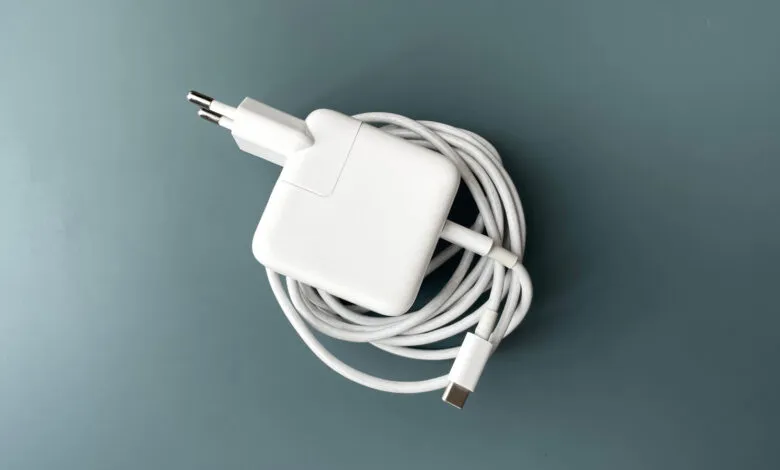
Charging your phone with your laptop’s USB-C charger is generally a safe and convenient practice, thanks largely to the widespread adoption of the USB Power Delivery (USB-PD) standard. This universal protocol allows compatible devices to communicate and negotiate the optimal power level for safe, efficient charging. When both your laptop charger and your smartphone support USB-PD, the process is seamless: the charger identifies the phone’s maximum power acceptance and delivers exactly what it can handle.
The real advantage of this system is its interoperability. A single USB-PD charger can power a wide range of devices, from phones and tablets to handheld gaming consoles and laptops. Conversely, a USB-PD-compatible phone can be charged by any compliant power source, whether it came with another phone, a laptop, or a portable battery pack. This flexibility reduces clutter and the need to carry multiple chargers.
USB-PD support is now common across major brands and device categories. You’ll find it in all recent Apple products like iPhones, MacBooks, and iPads, as well as in Google Pixel phones, Samsung Galaxy devices, and nearly all Chromebooks. Many Windows laptops and Android smartphones from other manufacturers also incorporate the standard. This broad compatibility makes mixing and matching chargers straightforward for most modern gadgets.
However, the charging process can become less predictable when one of the devices lacks USB-PD support. In such cases, the system may default to a slower, basic charging speed as a safety measure. While it usually still works, you might not get the fastest possible charge your phone is capable of achieving. It’s always a good idea to check your device specifications to understand its charging capabilities and ensure you’re getting the best performance from your power accessories.
(Source: BGR)