▼ Summary
– Antonio Forenza identified a gap in the consumer health market for a wearable device to manage stress, inspired by his own experience with fitness trackers.
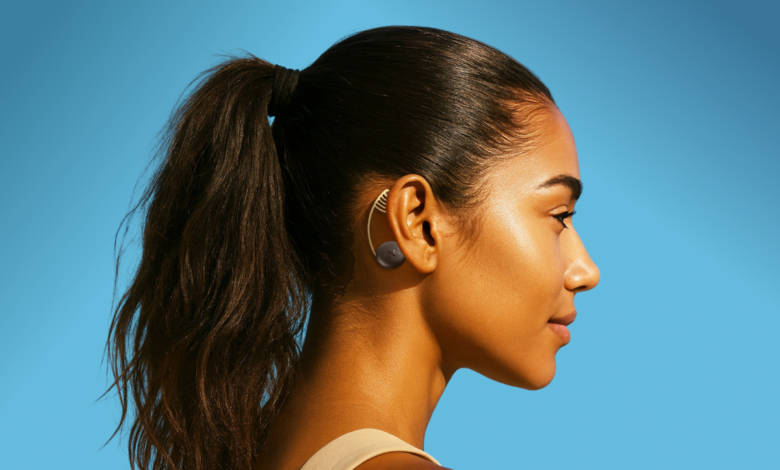
– He developed Awear, a device worn behind the ear that uses EEG technology to monitor brainwaves and detect psychological stress via beta wave activity.
– The device connects to an app that provides mood information and AI-powered coaching to help users manage stress and build emotional resilience.
– Awear is currently in an early-access program for consumers and is also being tested by Stanford University for post-surgical monitoring in elderly patients.
– The company has secured pre-seed funding, plans a $5 million seed round in 2026, and will launch a Kickstarter campaign following a strategy used by other successful wearables.
The search for effective stress management tools has led to a novel wearable technology that monitors brain activity directly. Antonio Forenza, a former telecom R&D head, conceptualized this device after his own experience using a fitness tracker for weight loss. He identified a significant void in the market for a consumer product that could quantify mental strain, leading him to develop what he calls a “Fitbit for your brain.” His solution leverages established electroencephalogram (EEG) technology to provide users with real-time insights into their psychological state.
Forenza’s personal journey was the catalyst. After successfully managing his physical health with a smartwatch, he sought a comparable tool for mental well-being. He recognized that while the body’s signals are often visible, the brain’s stress responses can be insidious and self-masking. This realization sparked the creation of Awear, a discreet device worn behind the ear. It continuously measures brainwave patterns, specifically tracking beta waves associated with heightened alertness and stress. The core premise is that persistent high-frequency beta activity is a key indicator of chronic stress, which can precipitate exhaustion, anxiety, and other health issues.
The wearable functions by transmitting its EEG data to a companion smartphone application. This app interprets the neurological signals to assess the user’s mood and stress levels. More than just a monitor, it includes an AI-powered coaching system designed to build emotional resilience. The platform offers personalized advice and interventions to help users manage their stress proactively, aiming to prevent the negative spiral from acute pressure into chronic conditions. Forenza emphasizes that short-term stress is natural, but the danger lies in a constant state of “fight or flight.”
Awear has already gained notable traction. It was selected as a finalist in the Startup Battlefield 200 at TechCrunch Disrupt 2025, where it also won the health category pitch competition. Beyond the consumer focus, its potential clinical applications are being explored; Stanford University’s psychiatry department is testing the device for post-operative monitoring in elderly patients. The startup has secured pre-seed funding from investors including Hustle Fund and Techstars, with plans for a larger seed round in early 2026.
Currently, the device is available through an early-access program priced at $195, which includes a lifetime subscription to the app. This initial user base reportedly includes many fellow startup founders. Looking ahead, the company plans to launch a Kickstarter campaign after its seed funding round, following a crowdfunding strategy proven successful by other wearable brands. This approach is intended to build market visibility and acquire a broad customer base, moving Awear from a specialized tool into the mainstream wellness conversation.
(Source: TechCrunch)