The AI Profitability Test: Can Labs Turn Innovation Into Income?
▼ Summary
– The AI industry is experiencing a unique moment with a new generation of labs founded by experienced veterans and researchers, whose commercial ambitions vary widely.
– A proposed five-level scale measures a foundation model company’s ambition to make money, not its current financial success, ranging from purely philosophical (Level 1) to highly profitable (Level 5).
– Established companies like OpenAI are at Level 5, while newer labs are harder to place, and this ambiguity is a source of much industry drama and confusion.
– The article analyzes four contemporary labs: Humans& is placed at Level 3, Thinking Machines Lab may be downgraded from Level 4, World Labs has rapidly progressed toward Level 4, and Safe Superintelligence is a classic Level 1.
– A key dynamic is that founders can often choose their ambition level due to abundant AI investment, allowing some to prioritize research over commercialization without pressure.
The landscape for companies developing their own foundational AI models is currently defined by a fascinating mix of seasoned veterans branching out on their own and renowned researchers with varying appetites for commercial success. This environment creates a spectrum where some organizations are poised to become industry giants, while others may happily focus on pure research. This ambiguity makes it increasingly challenging to distinguish which labs are genuinely pursuing profitability versus those content with exploration. To clarify this, a simple five-level scale can be useful, focusing not on current revenue but on the underlying ambition to generate income.
At the highest tier, Level 5, you find established entities like OpenAI and Anthropic, which are already generating significant daily revenue. Level 4 describes firms with a concrete, multi-stage strategy aimed at achieving massive financial dominance. Level 3 is for those with promising product concepts they plan to unveil eventually. Level 2 applies to organizations with only a vague notion of a future plan. Finally, Level 1 represents a purely philosophical or research-driven approach, where commercial gain is not a motivator.
Much of the current tension in the AI sector stems from uncertainty about where a given lab falls on this spectrum. High-profile shifts, like OpenAI’s rapid transition from a non-profit to a commercial powerhouse, illustrate how disruptive such moves can be. Conversely, a company like Meta may have initially pursued AI research with modest commercial outlines (Level 2) while ultimately harboring much grander financial ambitions (Level 4).
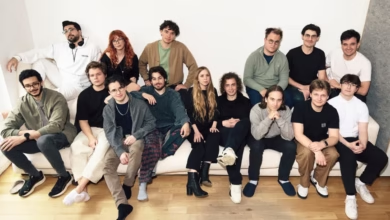
Applying this framework to several prominent new labs reveals their distinct positions. The recently launched Humans& has generated excitement with its vision for next-generation models focused on communication. However, its path to monetization remains unclear beyond broad statements about reinventing workplace tools like Slack and Google Docs. This places them firmly at Level 3, as they have identifiable product ideas but lack specific, committed plans.
Thinking Machines Lab (TML) presents a more complex case. With a former ChatGPT lead at the helm and a massive seed round, it initially appeared to be a clear Level 4 contender with a detailed roadmap. Recent executive departures and reported internal concerns, however, suggest potential instability in its long-term plan. While not enough to officially downgrade its rating yet, these developments indicate it may be grappling with the reality of operating at a Level 2 or 3, discovering its original strategy was less solid than envisioned.
In contrast, World Labs, founded by AI pioneer Fei-Fei Li, has demonstrated a remarkable trajectory. Starting with a substantial raise for spatial AI, it might have been pegged at a lower level. Yet, within a year, it has shipped both a world-generating model and a commercial product, capturing unmet demand in gaming and special effects. This execution strongly positions it as a Level 4 company with clear potential to reach Level 5.
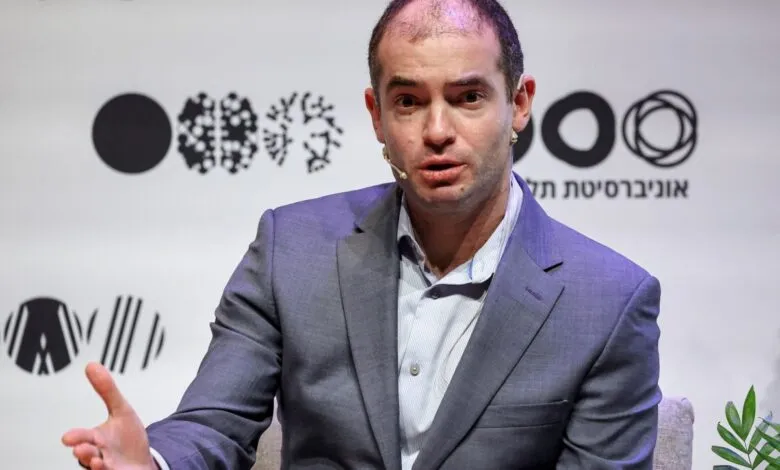
Then there’s Safe Superintelligence (SSI), founded by Ilya Sutskever. It stands as a classic Level 1 endeavor, intentionally insulated from market pressures with no product cycles and a sole focus on researching superintelligent AI. Despite this non-commercial pitch, it secured billions in funding. Sutskever himself has acknowledged scenarios that could trigger a pivot, such as prolonged research timelines or a recognition of the value in deploying powerful AI. This means that depending on how its core scientific mission progresses, SSI could rapidly ascend the ambition scale.
(Source: TechCrunch)