▼ Summary
– Gestala, a new Chinese company, is developing a non-invasive brain-computer interface using ultrasound technology to stimulate the brain, starting with a device to treat chronic pain.
– This follows OpenAI’s recent investment in Merge Labs, another startup exploring ultrasound for brain interfaces, highlighting growing industry interest in this approach.
– Ultrasound can modulate neural activity without surgery and is already used in approved treatments for conditions like Parkinson’s disease and certain tumors.
– Gestala’s long-term vision includes a wearable helmet for home use and expanding from pain treatment to conditions like depression, Alzheimer’s, and eventually reading brain activity via blood flow.
– A key challenge is that reading brain activity with ultrasound is ambitious, as the skull distorts signals, and current research requires a skull “window” for clear interpretation.
The field of brain-computer interface technology is witnessing rapid expansion, with a new Chinese startup pioneering a non-invasive approach using ultrasound. Gestala, a recently established company based in Chengdu with additional offices in Shanghai and Hong Kong, is developing systems designed to both stimulate and, eventually, read neural activity without surgical implants. This initiative places it alongside other ventures, such as OpenAI-backed Merge Labs, in exploring ultrasound’s unique potential for interacting with the human brain.
While commonly associated with medical imaging, ultrasound technology utilizes high-frequency sound waves that can be harnessed for therapeutic purposes. Depending on the intensity applied, these waves can modulate neural activity or even destroy targeted tissue. Focused ultrasound treatments are already clinically approved for conditions like Parkinson’s disease, demonstrating a foundation upon which new applications can be built.
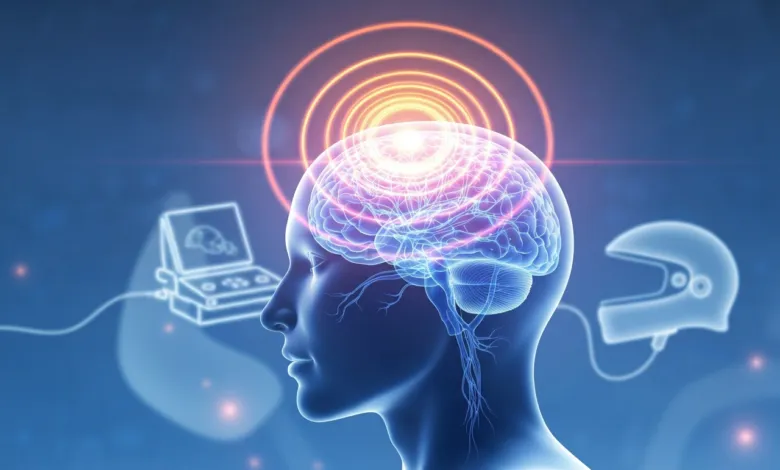
Gestala’s initial goal is to create a device for treating chronic pain. Research indicates that stimulating a specific brain region known as the anterior cingulate cortex can reduce pain perception for extended periods. The company’s first planned product is a stationary benchtop unit for clinical use, with discussions already underway with interested hospitals in China. A subsequent generation is envisioned as a wearable helmet, allowing for at-home treatment under medical supervision. The long-term roadmap includes expanding into other neurological and psychiatric conditions, including depression, stroke rehabilitation, and sleep disorders.
A core ambition for Gestala, shared by Merge Labs, is to evolve from simply delivering stimulation to also reading brain activity. The ideal future device would detect states associated with disorders and automatically provide precise therapeutic intervention. CEO Phoenix Peng emphasizes that the objective is restoring healthier neural function, not human enhancement. This reading capability would be achieved not by detecting electrical signals, as with most neural interfaces, but by measuring changes in cerebral blood flow, a fundamentally different approach.
Peng’s background includes co-founding NeuroXess, a company developing an implantable electrical brain-computer interface. His shift to ultrasound technology stems from a belief in its broader access. He notes that while electrical interfaces typically record from localized areas like the motor cortex, ultrasound appears to offer the potential to access activity across the entire brain.
The company’s other co-founder is Tianqiao Chen, founder of Shanda Interactive Entertainment and a prominent philanthropist in neuroscience through the Tianqiao and Chrissy Chen Institute. The name Gestala is derived from Gestalt psychology, reflecting the principle that a unified whole is more significant than its individual components.
Experts in the field acknowledge the significant technical hurdles ahead. Professor Maximilian Riesenhuber of Georgetown University points out that reading brain activity with ultrasound is far more challenging than delivering targeted stimulation. The skull significantly weakens and distorts ultrasound signals, and current research methods for interpreting neural activity often require creating a physical window in the skull. Overcoming this barrier non-invasively remains a pivotal challenge for the technology’s success.
(Source: Wired)