▼ Summary
– The Southwestern US drought is projected to persist throughout the 21st century and beyond due to global warming’s impact on Pacific Ocean heat distribution.
– Researchers used sediment cores, paleoclimatology records, and climate models to link greenhouse gas emissions to altered North Pacific Ocean heat patterns resembling the negative phase of the Pacific Decadal Oscillation (PDO).
– Unlike the typical 30-year PDO cycle, the current changes in sea surface temperatures may be a long-term shift rather than random variability.
– The Southwestern US is experiencing a megadrought, causing aridification, reduced river flows, and declining groundwater supplies due to climate change and water overconsumption.
– States, tribes, and federal agencies are negotiating water management strategies as farmers and cities adapt to dwindling water resources like the Colorado River.
The Southwestern United States faces an unprecedented drought that could continue through 2100 and beyond, driven by shifting Pacific Ocean heat patterns linked to climate change, according to new research. A study led by scientists at the University of Texas at Austin reveals that rising greenhouse gas emissions are altering atmospheric and marine conditions in ways that mirror long-term ocean cycles, but with far more lasting consequences.
By analyzing sediment cores from the Rocky Mountains, historical climate records, and advanced modeling, researchers found that warming temperatures disrupt the Pacific Decadal Oscillation (PDO), a natural fluctuation in sea surface temperatures that typically lasts 30 years. However, human-induced climate change appears to be locking the region into a prolonged dry phase, drastically reducing winter precipitation.
“This isn’t just bad luck, it’s a fundamental shift,” explained Victoria Todd, the study’s lead author and a geosciences doctoral candidate. Unlike temporary PDO cycles, these changes could persist indefinitely, forcing communities to adapt to a permanently drier landscape.
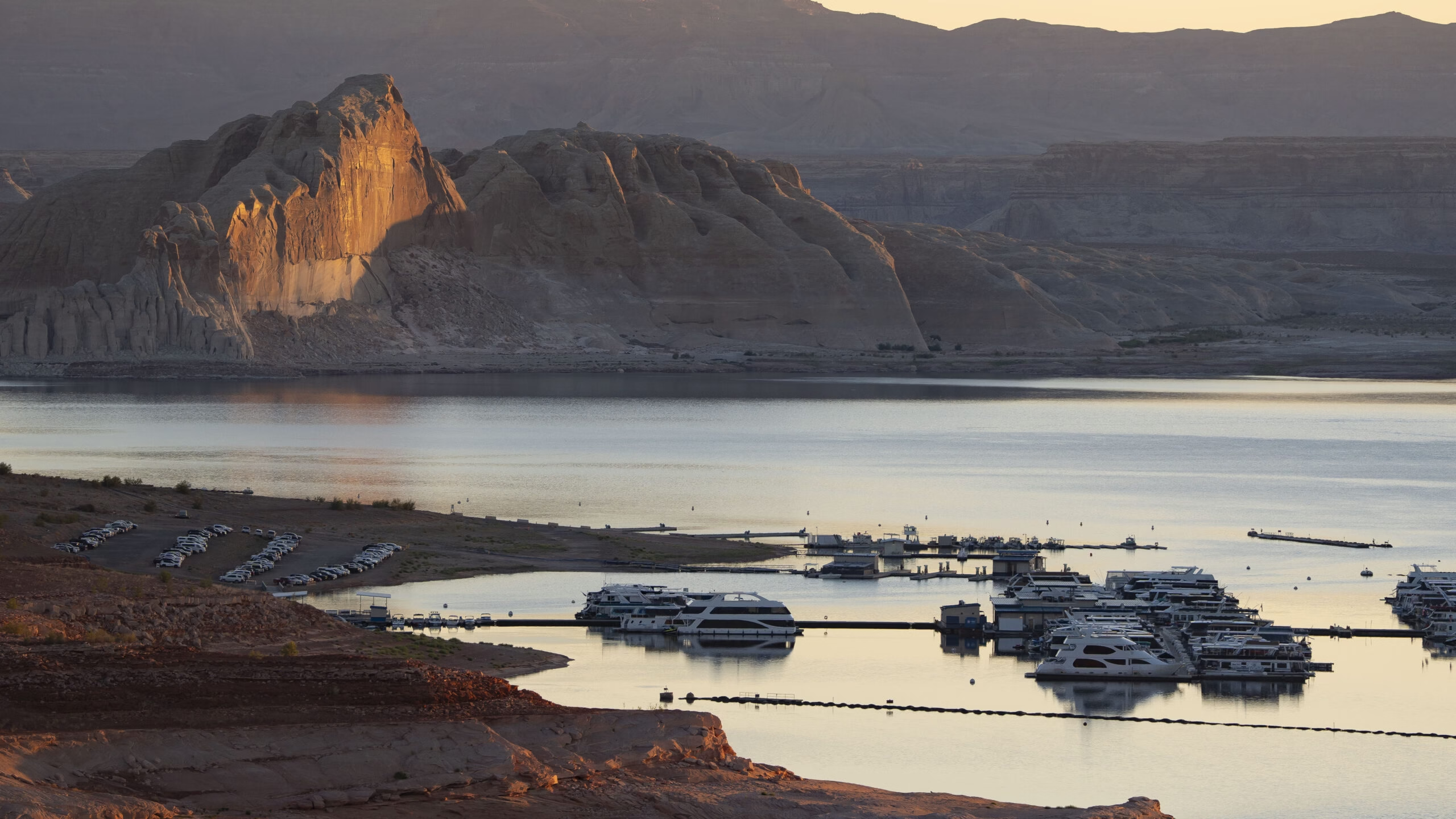
The Southwest is already grappling with a megadrought, the worst in over 1,200 years, fueled by rising temperatures and unsustainable water use. Major river systems like the Colorado and Rio Grande are dwindling, while underground aquifers, critical reserves during dry spells, are being depleted faster than they can recharge. States, tribal nations, and federal agencies are locked in difficult negotiations over water rights, while farmers and cities scramble to secure dwindling supplies.
Without drastic reductions in emissions and innovative water management strategies, the region’s future looks increasingly arid. The findings underscore the urgent need for long-term planning to mitigate the economic, agricultural, and ecological impacts of this prolonged drought.
(Source: Ars Technica)