Switch 2 Proves Its Staying Power Six Months In
▼ Summary
– The Nintendo Switch 2, despite using older, less powerful hardware than more expensive handheld PCs, remains competitive in 2025 due to Nvidia’s DLSS upscaling and developer optimization.
– Unlike PC-based consoles, the Switch 2 uses a distinct Nvidia ARM chip, making ports more challenging but demonstrating the value of hardware-specific optimization over raw power.
– The device involves hidden costs like expensive storage and high-priced games, and its $450 price may not last due to potential RAM shortages.
– Performance comparisons show the Switch 2 delivers playable, visually acceptable versions of demanding games at a fraction of the cost and power draw of premium handheld PCs.
– The system’s success relies on strong first-party titles and developer support for optimization, with its unique, dockable design remaining uncopied in the market.
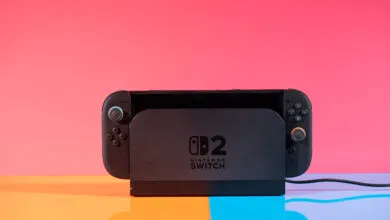
Half a year after its release, the Nintendo Switch 2 continues to demonstrate a compelling value proposition in the crowded handheld gaming market. While its on-paper specifications may appear modest next to more expensive portable PCs, a combination of smart hardware design, developer support, and Nvidia’s DLSS technology allows it to deliver a surprisingly competitive gaming experience. This approach highlights a different philosophy, one where optimization and ecosystem cohesion can rival raw horsepower.
Many observers expected the novelty to fade, but the device’s unique position is becoming clearer. Nintendo naturally wants the spotlight on its exclusive games, while the PC handheld community often prioritizes the latest silicon. The Switch 2 operates on a different principle. It isn’t trying to be a pocket-sized computer; it’s a dedicated gaming console you can take anywhere. Its console-based architecture, centered on a custom Nvidia Tegra T239 chip, presents a distinct challenge for developers compared to the AMD APUs found in rivals and home consoles. This requires specific effort to port games, but the payoff is a tailored experience that maximizes the available hardware.
This focus comes with certain trade-offs. The system isn’t without hidden costs, such as the frequent need for high-speed microSD cards to expand its built-in storage. Nintendo’s shift toward digital distribution and higher software pricing, including the first $80 game, reflects broader industry trends that add to the total cost of ownership. With potential price increases on the horizon due to component shortages, the current price point may not last.
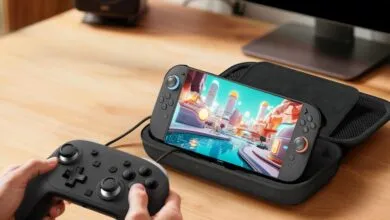
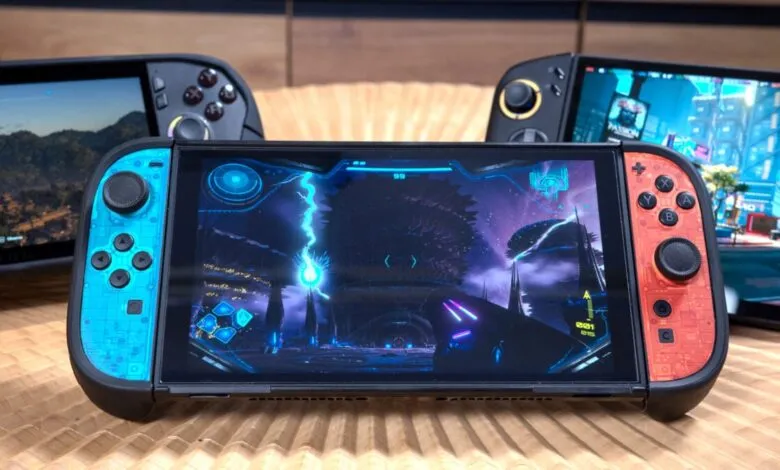
When placed side-by-side with premium handheld PCs like the Lenovo Legion Go series or the Asus ROG Ally X, the performance comparisons are fascinating. These Windows or Linux-based devices boast more modern AMD RDNA architecture, significantly more RAM, and much higher thermal design power (TDP) limits, often 30 watts or more versus the Switch 2’s conservative 13 watts. On paper, it’s no contest.
Yet, actual gameplay tells a more nuanced story. Testing demanding titles like Cyberpunk 2077 reveals the efficiency of Nintendo’s model. While a high-wattage handheld PC might achieve 40-45 frames per second, the Switch 2 holds a steady 30 fps in Quality mode or targets 40 fps in Performance mode. The secret weapon is Nvidia’s DLSS upscaling, which intelligently boosts the image to 1080p from a lower base resolution, preserving visual detail while maintaining smooth performance. The graphical compromises, like reduced crowd density, are noticeable but often less impactful than the raw frame rate numbers might suggest.
Third-party support has been crucial. Publishers like Ubisoft have invested heavily in creating dedicated Switch 2 versions of major games. Star Wars Outlaws runs at a consistent clip with impressive lighting, while Assassin’s Creed: Shadows was described by its developers as an “ambitious technical undertaking.” These ports may lack some environmental flourishes and ray tracing, but they deliver the core experience at a stable framerate. This level of optimization isn’t optional; games like Borderlands 4 and Elden Ring have seen delays specifically to ensure they run properly on the platform.
Nintendo’s own software lineup in 2025 has been a mix, but it includes standout titles that showcase the hardware. While Mario Kart World is a fun pack-in and Donkey Kong Bananza is visually impressive, it was Metroid Prime 4: Beyond that truly leveraged the system’s unique capabilities. It is the only major title to fully utilize the enhanced Joy-Con 2 controllers, blending gyro and precision pointer controls seamlessly. Furthermore, it achieves a true 4K resolution at 60 fps when docked, proving the system’s potential when developers target its strengths.
Ultimately, the Switch 2’s greatest advantage remains its foundational design. No other company has successfully replicated the seamless hybrid experience of a console that instantly transitions from TV to handheld play. The convenience of local multiplayer with detachable controllers is still unmatched. While PC handhelds offer vast libraries and deep customization, they lack this intuitive, unified experience.
The Switch 2 stands as a testament to what dedicated gaming hardware can achieve with strong first-party direction and committed third-party partnerships. It proves that hardware-specific features like DLSS and a focused ecosystem can bridge the gap with more powerful devices. As rumors of new consoles swirl, the Switch 2’s performance six months in suggests that the traditional console model, when executed with clear vision, still holds immense power in the handheld space.
(Source: Gizmodo)