I’m Starting to Trust Microsoft’s Handheld Xbox
▼ Summary
– The author reports significant improvement in the sleep function and battery drain for the high-end black Xbox Ally X, allowing reliable game resumption after days.
– However, the cheaper white Xbox Ally with an AMD Z2 A chip continues to have severe, unreliably fixed sleep issues, often waking and draining battery spontaneously.
– Sleep functionality is critically important for handheld gaming, as it enables a lifestyle of playing in short, pausable sessions without saving and quitting.
– The author also notes improved sleep performance on an MSI Claw 8 AI Plus handheld after a BIOS update, suggesting the core sleep problem may be chip-specific.
– The article suggests that for the problematic white model, installing the Linux-based Bazzite OS is a viable alternative to Windows, offering better reliability and performance.
For gamers seeking a true portable experience, the ability to instantly suspend and resume a game is non-negotiable. This feature has long been the exclusive domain of consoles like the Nintendo Switch and the Steam Deck, leaving Windows-based handhelds in a frustrating second place. After months of testing and numerous updates, however, the landscape is finally shifting. While significant problems persist with some models, there’s growing evidence that Microsoft and its hardware partners are making tangible progress on one of the platform’s most notorious weaknesses: reliable sleep and resume functionality.
My initial skepticism toward devices like the Xbox Ally was well-founded. The software felt unpolished, and the core promise of seamless handheld gaming was broken by a Windows operating system that couldn’t manage power states properly. Yet, persistent use tells a different, more nuanced story. After installing every available update on multiple devices, including the high-end Xbox Ally X and the more affordable white Xbox Ally, a clear divergence in performance has emerged.
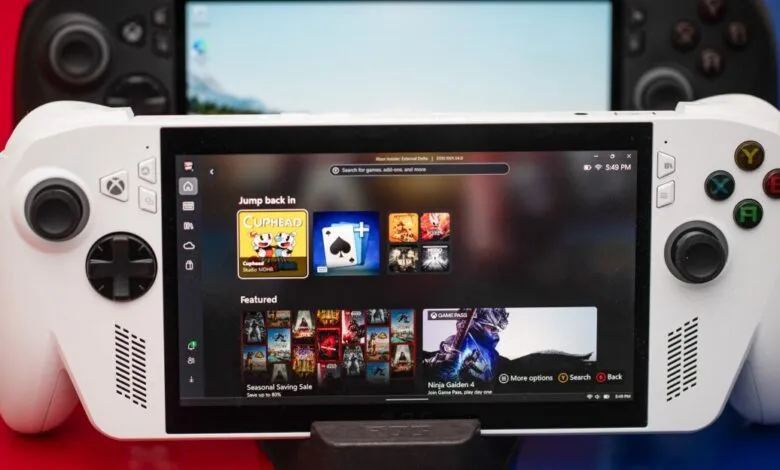
The Xbox Ally X has become surprisingly dependable. In recent weeks, it has not once failed to save my game state when put to sleep. In a particularly telling test, I left a game running and put the device to sleep for over nine days. Upon waking it, I was immediately back in the action. Battery drain during extended sleep periods is also now reasonable, typically dropping only a few percentage points per day. This is a monumental improvement that fundamentally changes how the device can be used, allowing for genuine pick-up-and-play sessions without the fear of losing progress.
This isn’t to say the experience is flawless. Bugs still surface. Occasionally, control inputs are delayed after resuming, or system buttons become unresponsive during background updates. There was also an odd incident where Windows demanded PIN re-authentication after that long sleep test. Furthermore, a hardware reliability concern arose when a colleague’s unit suffered a complete SSD failure, though sleep functioned perfectly until that point.
The story is starkly different for the standard white Xbox Ally with the AMD Z2 A chip. Despite receiving the same barrage of software updates, this model continues to struggle with erratic behavior. The most glaring issue is spontaneous wake-from-sleep. I have repeatedly observed units powering on by themselves while sitting idle on a desk, completely draining their batteries. In a side-by-side comparison, a white Ally drained from 93% to 0% in 13 hours while sleeping next to an Ally X that only lost 5%. Another test over nearly four days yielded similar disastrous results for the cheaper model.
Even after a factory reset, problems persist. One unit recently woke itself in my bag overnight, turning off its display but never re-entering sleep, causing it to overheat. On another occasion, it mysteriously stopped charging at 54%. The root cause may be hardware-deep; the Z2 A chip is known to support fewer low-power states, which has even posed challenges for alternative operating systems like Linux. This suggests a fundamental hurdle that Microsoft and Asus are still working to overcome.
Interestingly, progress isn’t limited to one chipset. The MSI Claw 8 AI Plus, powered by an Intel Lunar Lake processor, has also seen dramatic improvement. After a manual BIOS update, a device I once couldn’t trust now sleeps reliably, with observed battery drain as low as 2% per day. This indicates that the sleep issue, while severe on the Z2 A, is being addressed across the Windows handheld ecosystem.
The evolution of the Steam Deck showed that these platforms need time to mature. Microsoft appears to be on a similar path. If the company has largely solved the sleep dilemma, with the vanilla Xbox Ally as a notable but addressable exception, it reshapes the entire value proposition of Windows handhelds. For those willing to venture beyond Windows, the standard Ally’s frequent discounts make it a compelling candidate for installing a third-party operating system like Bazzite, which offers superior sleep reliability and performance, barring anti-cheat or Xbox library dependencies. The journey is far from over, but for the first time, trusting a Windows handheld with your game progress is starting to feel like a reasonable bet.
(Source: The Verge)