Steam Machine vs. PS5: Can Valve’s PC Rival Consoles?
▼ Summary
– The Steam Machine is Valve’s upcoming compact gaming PC, designed to compete in the console market dominated by Sony, Microsoft, and Nintendo.
– While the Steam Machine offers access to the vast Steam library and functions as a full Linux computer, the PS5 is expected to be cheaper and more performant with better-optimized AAA games.
– The PS5’s hardware advantage stems from developers tailoring games for its specific components, whereas the Steam Machine runs standard PC games not optimized for its unique build.
– A key consideration is library access: the Steam Machine provides decades of Steam games at launch, while the PS5 offers exclusive titles not available on other platforms.
– The final price and value comparison is currently a tie, heavily dependent on the Steam Machine’s final cost and the size of a user’s existing Steam library versus their desire for PS5 exclusives.
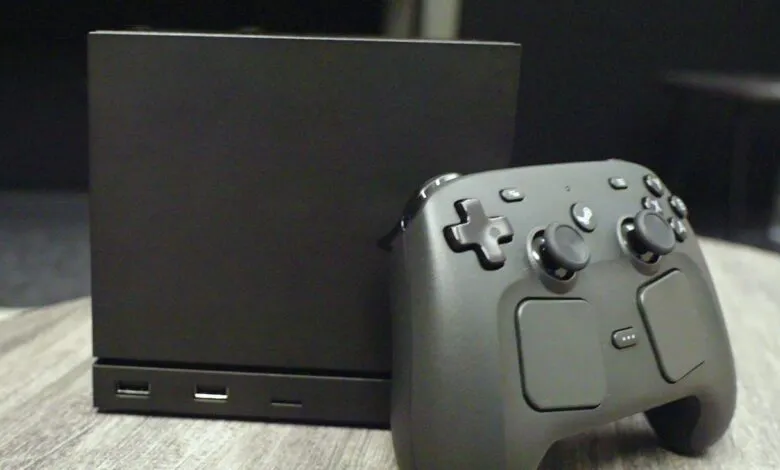
A new contender is preparing to enter the living room, challenging the long-standing dominance of Sony, Microsoft, and Nintendo. Valve’s Steam Machine, a compact PC designed for the television, is set to launch early next year, prompting a direct comparison with the established PlayStation 5. This isn’t a simple decision between two boxes. The choice reflects a deeper shift in how we access games, balancing a vast existing library against curated exclusives and raw power.
Comparing these devices means looking beyond basic specifications. The gaming landscape itself is changing, with rising costs and shifting development cycles making a console purchase a significant commitment. For most people, buying every available system isn’t an option, so understanding the core differences is crucial.
When examining raw performance, the PlayStation 5 appears to hold an advantage. The Steam Machine utilizes modern but mobile-oriented components, including a custom GPU comparable to a laptop RX 7600 and a six-core Zen 4 processor. While efficient, this hardware operates within a very small form factor. The PS5, despite using an older Zen 2 CPU and RDNA 2 graphics architecture, packs more computational power into its larger chassis. The critical factor, however, is optimization. Game developers create titles specifically for the PS5’s fixed hardware, often leading to superior performance and visual fidelity. The Steam Machine runs a full Linux-based PC operating system, meaning games are rarely built with its exact specifications in mind, which can impact efficiency and graphical polish.
The area where the Steam Machine presents a massive potential benefit is its game library. It provides instant access to a user’s entire Steam catalog, which could encompass decades of titles. This existing investment is a powerful incentive. The PS5, conversely, offers a more limited backward compatibility scope, primarily with the PS4 generation. Its main draw is a roster of high-profile exclusive games, such as Ghost of Yotei and Death Stranding 2: On the Beach. While Sony has occasionally released former exclusives on PC, their core strategy continues to leverage these unique experiences to sell consoles.
User experience also differs. The PS5 is designed as a pure plug-and-play device. You insert a disc or download a game and start playing with minimal setup. The Steam Machine, running SteamOS, aims for a similar simplicity but remains a PC at heart. Players may need to adjust graphics settings for certain titles, especially those not officially verified by Valve for the system. Physical design is another contrast: the Steam Machine is remarkably small, while the PS5 is notably large. Furthermore, the PS5 offers a model with a disc drive, appealing to collectors of physical media, an option absent on the all-digital Steam Machine.
Price is a major point of consideration and current uncertainty. The PlayStation 5 starts at $499, while estimates suggest the Steam Machine could cost between $700 and $800. This significant difference gives Sony a clear edge. However, the value calculation changes if a buyer already owns an extensive Steam library, reducing the need for new game purchases. For someone building a library from scratch, the PS5’s lower entry cost is compelling, though buying new AAA titles can quickly narrow the overall spending gap. The final pricing of the Steam Machine will ultimately tip these scales.
For now, the PlayStation 5 secures a slight overall lead. Its performance potential for major AAA releases, backed by developer optimization, gives it an edge for gamers seeking the highest-fidelity experiences from dedicated console titles. The Steam Machine’s appeal is fundamentally different, serving as a bridge for PC gamers to the living room and leveraging an existing digital ecosystem. The “better” choice depends entirely on individual priorities: an optimized, exclusive-driven console experience or the expansive, open library of a compact gaming PC. The arrival of the Steam Machine doesn’t declare a winner; it simply offers a compelling alternative path.
(Source: IGN)