Assassin’s Creed Shadows: Is the Switch 2 Port Any Good?
▼ Summary
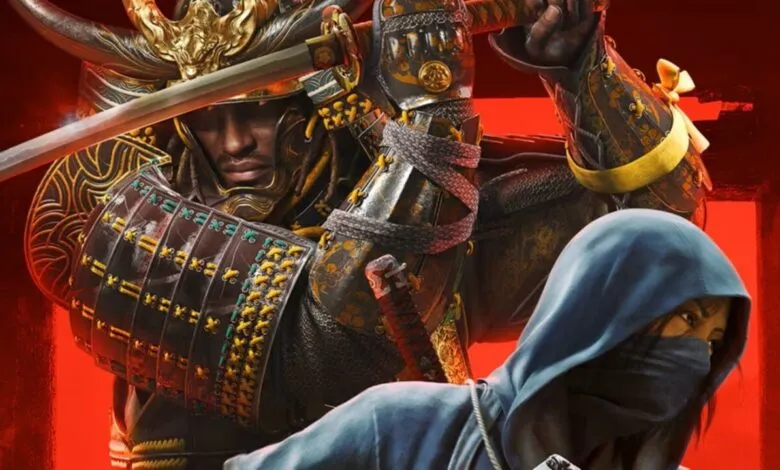
– Assassin’s Creed Shadows is a major franchise installment set in feudal Japan, featuring two distinct protagonists: the stealthy shinobi Naoe and the powerful samurai Yasuke.
– The game represents a significant technical achievement as a large, current-gen title ported to the Nintendo Switch 2, performing solidly overall with some visual and frame rate compromises.
– Its core gameplay hook is the stark mechanical contrast between its two heroes, offering players a choice between stealth and brute-force approaches to missions.
– The experience is massive, filled with an 80-100 hour main story, hundreds of side quests, and endless activities, though some quests feel repetitive and stretched.
– The Switch 2 port utilizes DLSS and VRR for performance, looks impressive despite visual cutbacks, and includes all current patched content but not the upcoming expansion.
For the first time in over a decade, a major new Assassin’s Creed title has launched simultaneously on a Nintendo platform. Assassin’s Creed Shadows brings its massive feudal Japanese open world to the Switch 2, presenting a significant technical challenge. The result is a largely successful port that delivers an engrossing, if familiar, adventure with some expected visual compromises to ensure it runs.
The game arrives at a crucial moment for the franchise. Following the mixed reception to Mirage, the long-awaited shift to a feudal Japanese setting feels like a pivotal move. It largely pays off, offering one of the series’ most captivating worlds, brought to life through two distinct and engaging protagonists. Set near the end of the Sengoku period, the story follows Naoe, a shinobi seeking vengeance, and Yasuke, a legendary African samurai navigating a life of duty and conflict. Their parallel journeys eventually converge into a shared mission against a corrupting force.
The core innovation lies in the dramatically different playstyles of the two heroes. Naoe is the classic assassin, relying on stealth, agility, and her hidden blade. She navigates shadows, extinguishes light sources, and uses tools to avoid direct confrontation. Yasuke is her polar opposite, a heavily armoured powerhouse built for frontal assaults, capable of smashing through obstacles and dominating groups of enemies in combat. Unlike previous dual-protagonist entries, there is no parity here; each character has a unique feel and an expansive, separate upgrade tree. This contrast introduces a welcome layer of strategic choice, allowing players to assess objectives and decide on a stealthy infiltration or a brutal, direct assault.
Combat is satisfyingly deep, with a variety of main weapons and projectiles for each character. Naoe can wield a fluid Kusarigama, while Yasuke can specialise in powerful Teppo firearms and explosives. The world is packed with gear to collect, upgrade, and customise, though an optional microtransaction store exists for cosmetic items. You will need to master both styles, as the game is enormous. The main story alone can span 80 to 100 hours, supplemented by hundreds of side quests and endlessly refreshing Animus missions. New enemy factions constantly appear, ensuring the map is always brimming with objectives for players seeking a truly long-term commitment.
This scope, however, highlights the game’s familiar pacing issues. Many quests devolve into lengthy treks across the map for brief conversations, followed by a journey back to collect the next errand. While activities like a charming animal-painting minigame or a light base-building mechanic offer distraction, the experience can feel stretched thin, sometimes evoking nostalgia for the more focused narratives of the series’ earlier days.
The pressing question is how this technically demanding game performs on Nintendo’s hardware. The answer is mostly positive. Ubisoft has been transparent about the optimisations made for the Switch 2, employing techniques like DLSS upscaling and VRR support to maintain stability. To achieve this, visual sacrifices are evident. Character models can appear somewhat flat in close-up dialogue, and environmental textures occasionally lack detail, especially when compared to other versions. The frame rate targets 30fps and generally holds, though busy urban areas like Osaka can cause noticeable dips, particularly in handheld mode. Despite these compromises, the game remains visually impressive overall. Combat with Yasuke remains fluid even during chaotic battles, and the camera control for Naoe’s stealth is consistently smooth.
The technical ambition shines through in the beautifully realised open world. Galloping through the Kansai countryside, with dynamic weather stirring leaves and grass, creates a powerfully atmospheric experience. The use of colour and detail is often stunning, enhanced by a compelling seasonal cycle that gradually transforms the landscape. The port includes all post-launch content available on other platforms, though the Claws of Awaji expansion is a separate purchase. Touch controls are limited to menus and base-building, and mouse support is absent, but the useful Ubisoft Connect feature allows for cross-progression with other consoles.
Ultimately, Assassin’s Creed Shadows on Switch 2 is a commendable achievement. It delivers a vast, content-rich adventure with a compelling dual-hero dynamic, successfully adapted to a portable system. While it bears the expected visual trade-offs and some repetitive open-world trappings, it stands as a robust and impressive port that finally brings a flagship Assassin’s Creed experience back to a Nintendo audience.
(Source: Nintendo Life)