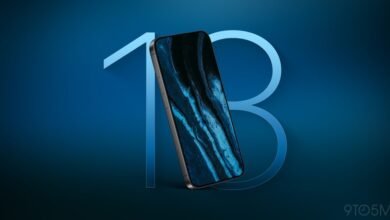
iPhone Air: The Ultimate Purity in Design

▼ Summary
– The author criticizes recent smartphone trends for prioritizing larger sizes over usability and aesthetics, with the iPhone mini being a rare exception.
– The iPhone Air is described as Apple’s most polarizing recent release, featuring significant compromises in features and battery life but appealing to design-focused users.
– Its design evokes nostalgia for Apple’s “Think Different” era and early iPod products, emphasizing thinness and premium materials like titanium.
– Despite having a larger screen than the mini, the iPhone Air’s thinness and lightness make it comfortable to hold and use without feeling bulky.
– The author concludes the iPhone Air targets users who prioritize design over utility, but early sales struggles suggest it may not appeal to the mainstream market.
For those who feel modern smartphones have become unwieldy and uninspired, the iPhone Air represents a refreshing departure from the oversized glass slabs dominating the market. While its announcement last month sparked debate over its target audience and its admittedly compromised feature set, after a week of use, it’s clear this device was made for users like me who prioritize aesthetic elegance above all else.
This phone is an exercise in pure design philosophy. In an era where most handsets look virtually identical, the iPhone Air stands out as the first Apple product in years to evoke a genuine sense of delight. Unboxing it and holding its slender form transported me back to the excitement of my first iPod, not my first iPhone. I’ve long maintained that Apple’s design prowess peaked in the 2000s, and this device feels like the closest we’ve come to recapturing that “Think Different” spirit.
In previous writing, I’ve suggested that technological homogenization stems from our devices evolving into all-purpose tools. Earlier gadgets, even if not single-function like the original iPod, were designed for specific lifestyles, allowing for more expressive and varied designs. Today’s smartphones are essentially just screens that do everything. The iPhone Air, while still a multi-purpose device, feels different because every element serves a singular objective: achieving an incredibly thin and light profile. There’s a remarkable purity in this focused simplicity.
From its ultra-thin silhouette to the refined titanium edges, this is arguably the most premium-looking and feeling iPhone ever created, easily surpassing the more scratch-prone iPhone 17 Pro. It embodies Steve Jobs’ original vision of a device that is essentially all-display, so thin and lightweight that it seems to vanish, leaving you with just the brilliant 3,000-nit screen. Surprisingly, I haven’t found the larger 6.5-inch display to be a problem. Although it’s significantly taller and wider than the beloved mini, the exceptional thinness and reduced weight eliminate the usual hand-stretching gymnastics required to hold it comfortably.
This isn’t a technical assessment, that will come later when I compare the design against its specifications and performance. These are just initial impressions about something difficult to quantify: my physical and, yes, emotional response to the device. Design matters deeply to me; it’s literally my job as Design Editor. I often care more about the pleasure of handling an object than its raw utility. The iPhone Air may not be the most practical iPhone available, but it’s the first in a long time that has made me smile simply by picking it up.
So yes, the iPhone Air is designed for me, and for others who place design at the forefront. Regrettably for Apple, it appears we remain a niche group. The iPhone mini was discontinued due to low sales, and early indicators suggest the Air is facing similar challenges. I suppose I’ll just have to savor this beautifully crafted device while it’s still around, even if I’m one of the few who truly appreciates it.
(Source: Creative Blog)